

Top Lenses for Architectural Photography: Facades, Interiors, Distortion-Free Perspective
January 21, 2026
Architecture is not the most forgiving genre. It doesn't forgive a tilted horizon, crooked geometry, or soft corners. Even a simple facade requires a precise lens, especially when it comes to commercial or interior photography. Here, it's not just about the width of the angle, but also about controlling distortions, sharpness at the edges, and the ability to work with lines rather than against them. Some issues can be fixed in post-processing, but many things are simpler and more reliable to get right in-camera - with the proper glass.
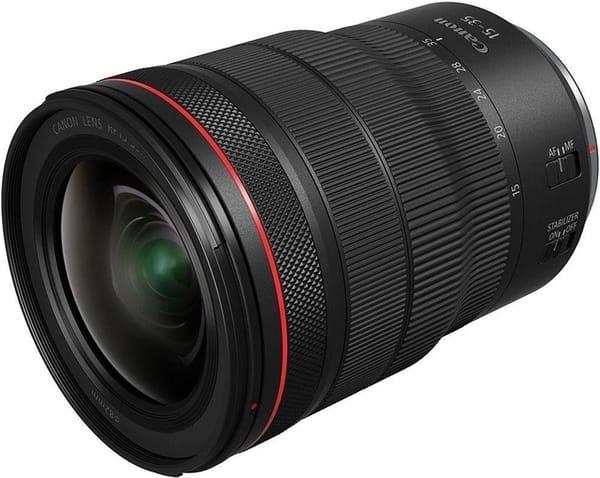
1. Canon RF 15-35mm f/2.8L IS USM
Canon RF 15-35mm f/2.8L IS USM is a zoom that's convenient for architecture in the city and indoors. The angles fit even at 15 mm, while the perspective remains reasonable without strong tilts. Constant f/2.8 aperture throughout the range allows working in different lighting without adjustments.
Stabilization comes in handy for handheld shooting, and autofocus engages smoothly without jumps. The lens isn't lightweight, but it's solidly built, the rings feel nice, and sharpness holds confidently even at the edges. It's most often chosen for facades, street architecture, and interiors where you need a wide but not ultra-wide coverage.
Key Features:
15-35 mm zoom with good geometry
f/2.8 aperture throughout the range
Image stabilization included
Excellent corner sharpness
Specifications:
Focal length: 15-35 mm
Aperture: f/2.8
Minimum focus distance: 0.28 m
Filter: 82 mm
Size: 127 x 89 mm
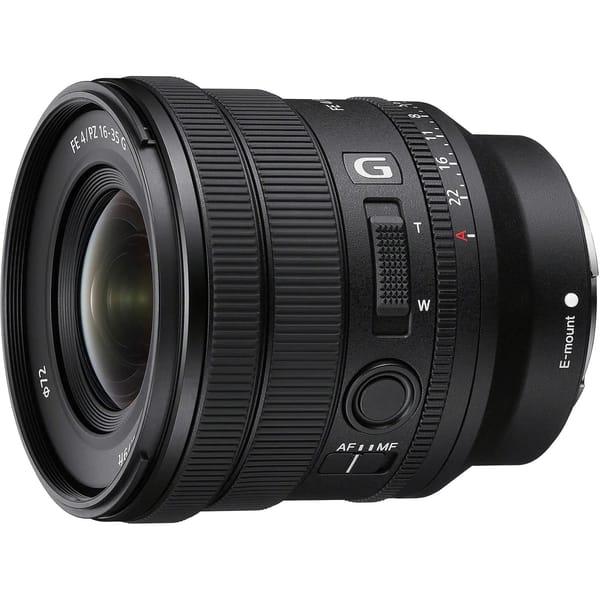
2. Sony FE PZ 16-35mm f/4.0 G
Sony FE PZ 16-35mm f/4.0 G suits those looking for a more compact and controllable option with motorized zoom. It has slightly less aperture speed, but it's lighter and better balanced on mirrorless cameras. The zoom isn't just mechanical - it can be controlled smoothly, which is convenient if you're shooting architecture for both photos and video.
Sharpness is consistent, focus is fast, and the minimum distance lets you get close to details. Even at f/4, it performs confidently for facades or shaded subjects. Native to Sony E-mount, weather-sealed body, standard 72 mm filter - building a compact setup is very feasible.
Key Features:
16-35 mm coverage for wide shots
Constant f/4 aperture and motorized zoom
Smooth focusing without jerks
Lightweight body for everyday shooting
Specifications:
Focal length: 16-35 mm
Aperture: f/4
Minimum focus distance: 0.28 m
Filter: 72 mm
Size: 80.5 x 88.1 mm
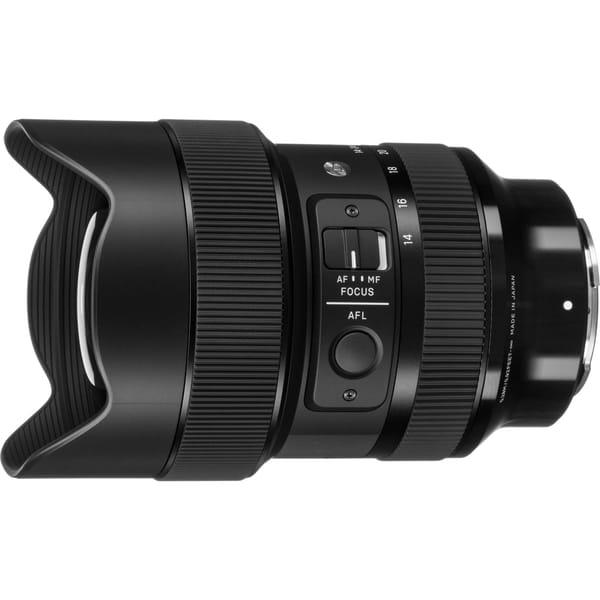
3. Sigma 14-24mm f/2.8 DG DN Art
Sigma 14-24mm f/2.8 DG DN Art gets closer to ultra-wide territory. At 14 mm almost everything fits in the frame, while distortions stay within reasonable limits. The lens is large and heavy, but in return it delivers excellent optics: sharpness, contrast, edge performance - everything is there.
f/2.8 across the range is useful not only for architecture but also for interiors or evening facades. It focuses from 28 cm, has a programmable button, and lens coatings help suppress flare from glass or metal. A great choice for those who love big angles and don't mind the weight.
Key Features:
Ultra-wide coverage starting at 14 mm
f/2.8 aperture throughout the range
Flare-resistant coatings and weather sealing
Excellent sharpness even wide open
Specifications:
Focal length: 14-24 mm
Aperture: f/2.8
Minimum focus distance: 0.28 m
Size: 85 x 131 mm
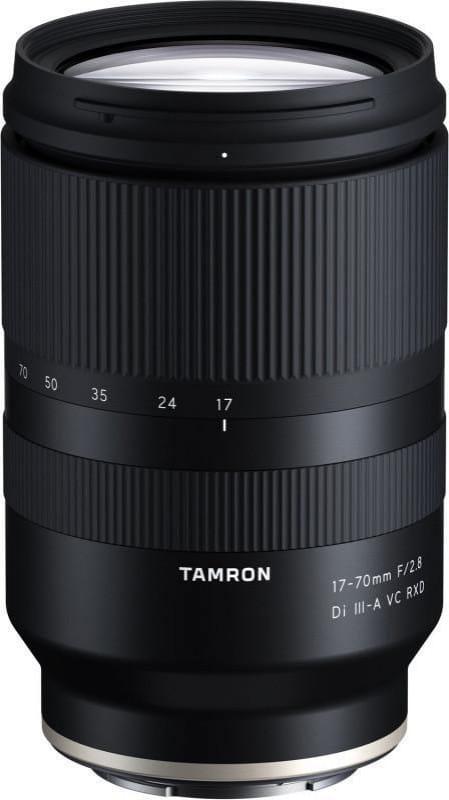
4. Tamron AF 17-70mm f/2.8 Di III-A VC RXD
Tamron AF 17-70mm f/2.8 Di III-A VC RXD is often chosen as a working all-rounder for architecture when you need more than just a wide angle but also some reach. At the short end it's great for facades and wide shots, while closer to 70 mm it's convenient for details, windows, and line rhythm. Constant aperture helps maintain consistent exposure when zooming.
Stabilization noticeably simplifies handheld shooting, especially indoors. Autofocus works calmly without sudden jerks, and the minimum focus distance allows getting quite close. Overall, it's a lens for those who shoot architecture not only wide but also more variably.
Key Features:
Versatile 17-70 mm range
Constant f/2.8 aperture
Built-in image stabilization
Great for architecture and details
Specifications:
Focal length: 17-70 mm (equiv. 25-105 mm on APS-C)
Aperture: f/2.8
Minimum focus distance: 0.19 m
Filter: 67 mm
Size: 119 x 75 mm
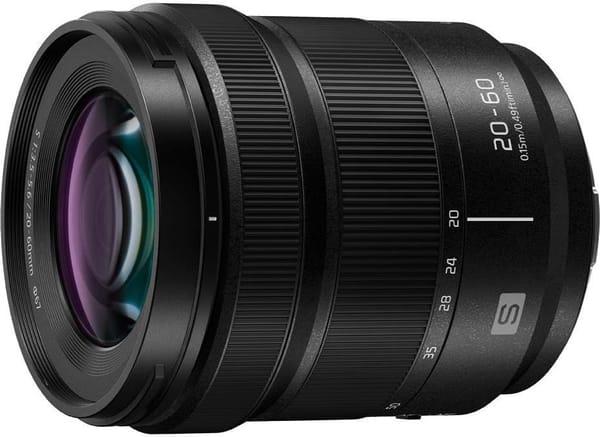
5. Panasonic S-R2060E 20-60mm f/3.5-5.6
Panasonic S-R2060E 20-60mm f/3.5-5.6 looks simple, but it has its advantages for architecture. 20 mm at the wide end allows confident shooting of interiors and tight spaces, while the range up to 60 mm is useful for calmer compositions without strong distortions.
The lens is lightweight, compact, focuses closely - convenient for working with textures and small elements. It's not about extreme angles but about clean geometry and predictable results. Often used as an everyday option for shooting buildings and urban environments.
Key Features:
Wide start at 20 mm
Compact and lightweight body
Great for interiors
Calm autofocus performance
Specifications:
Focal length: 20-60 mm
Aperture: f/3.5-5.6
Minimum focus distance: 0.15 m
Filter: 67 mm
Size: 77 x 87 mm
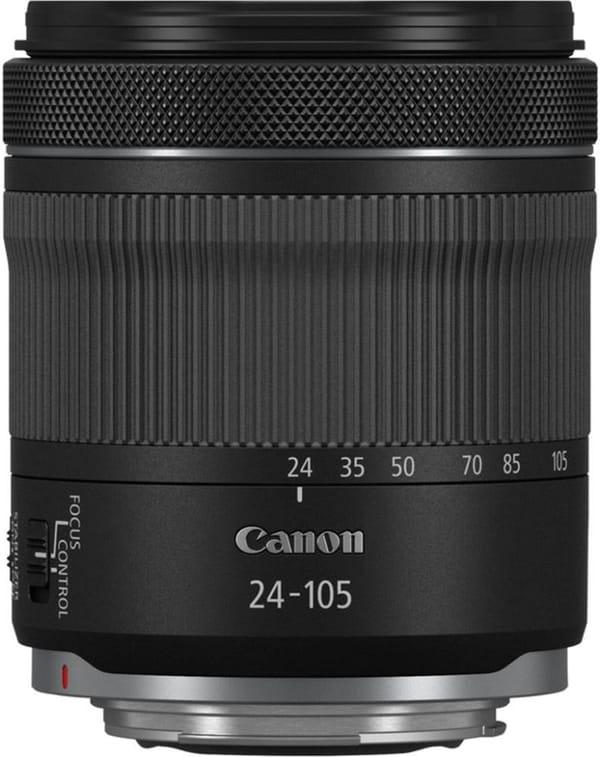
6. Canon RF 24-105mm f/4-7.1 IS STM
Canon RF 24-105mm f/4-7.1 IS STM is more perceived as a general-purpose lens, but it's also used in architecture. At 24 mm you can comfortably shoot buildings and streets, while the long end helps isolate facade fragments or individual elements without swapping lenses.
Stabilization assists handheld shooting, autofocus is quiet and smooth. It's not a tool for ultra-wide perspectives, but rather a practical option when architecture is shot alongside city life and surroundings.
Key Features:
24-105 mm range for various tasks
Built-in stabilization
Compact and lightweight
Suitable for urban architecture
Specifications:
Focal length: 24-105 mm
Aperture: f/4-7.1
Minimum focus distance: 0.13 m
Filter: 67 mm
Size: 89 x 77 mm
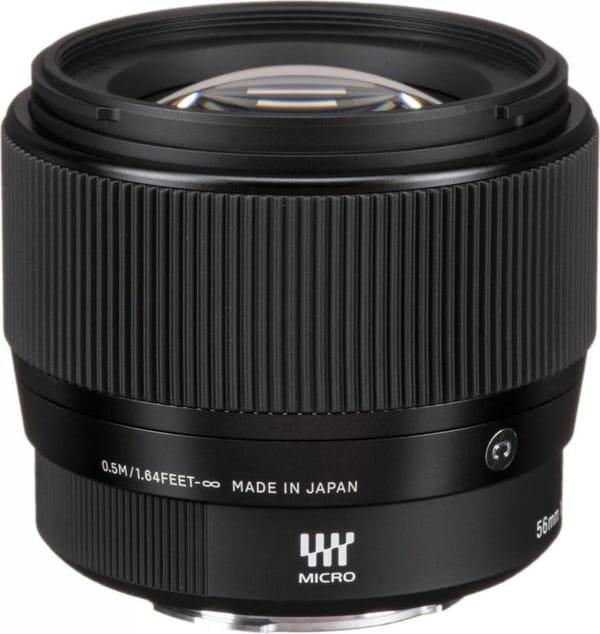
7. Sigma AF 56mm f/1.4 DC DN
Sigma AF 56mm f/1.4 DC DN is a prime that's often chosen when you want tight detail without distortions. It handles building geometry well, especially from a distance, and delivers noticeable sharpness right from wide open. It lacks stabilization, but the compactness and f/1.4 aperture more than make up for it.
For architecture on crop-sensor cameras, it can be an unexpected but interesting solution. Especially when emphasizing fragments, textures, or perspectives with slight compression. The result is not clichéd wide-angle shots, but more expressive and graphic images.
Key Features:
Bright prime with compact body
Smooth autofocus and manual focus
Delivers characteristic "filmic" depth of field
Great for facade details and interior fragments
Specifications:
Focal length: 56 mm (equiv. 84 mm on APS-C)
Aperture: f/1.4
Minimum focus distance: 0.5 m
Filter: 55 mm
Size: 60 x 67 mm
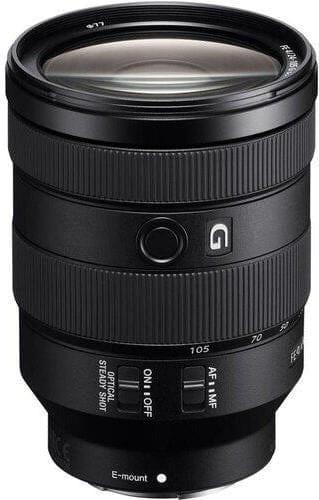
8. Sony FE 24-105mm f/4 G OSS (SEL24105G)
Sony 24-105mm f/4 G OSS is a versatile zoom that covers almost all architectural scenarios, from wide shots to fragments. It delivers predictable results at any focal length and handles perspective distortions well - especially in the 24-35 mm range. Stabilization helps when shooting handheld in low light.
The 105 mm reach allows capturing details and compositions without rushing. Constant f/4 aperture isn't record-breaking, but it's sufficient for daytime facade or interior shooting in good light. Considering the weight and build, the lens is convenient to carry without overloading your bag.
Key Features:
Covers a wide focal range
Optical stabilization included
Consistent sharpness across the frame
Great for travel and city walks
Specifications:
Focal length: 24-105 mm
Aperture: f/4
Minimum focus distance: 0.38 m
Filter: 77 mm
Size: 113 x 83 mm
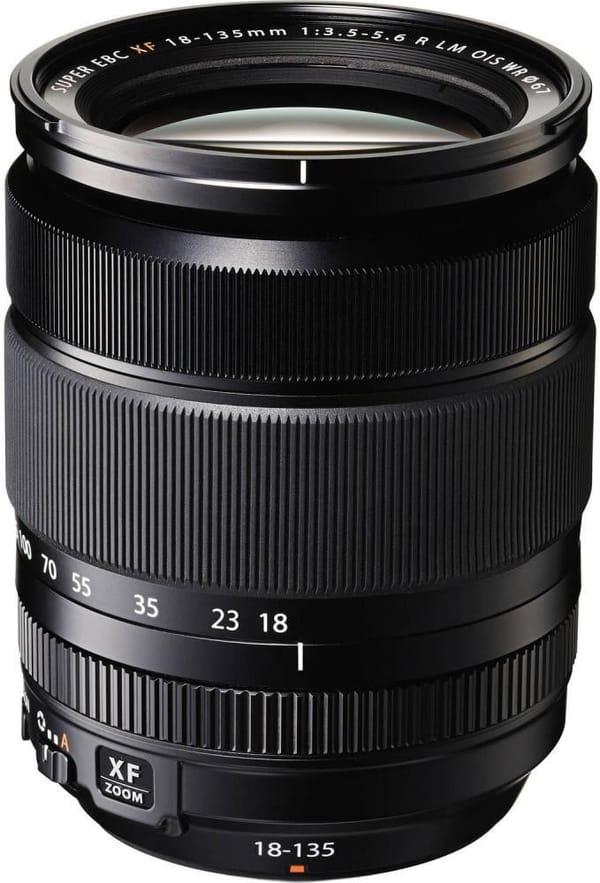
9. Fujifilm XF 18-135mm f/3.5-5.6 OIS R
Fujifilm XF 18-135mm f/3.5-5.6 is a workhorse for those shooting architecture and landscapes on Fujifilm. It covers everything - from wide angles to telephoto, so you can capture both a building facade and decorative molding from across the street. Even when zooming, stabilization performs well, especially useful in low light.
The lens isn't the lightest, but it feels well-balanced. Smooth zoom action, good detail, and accurate color rendition make it convenient for travel. In architecture, the 18-35 mm range is especially valued - it provides wide coverage without pronounced distortion.
Key Points:
Large zoom range from wide to tele
Reliable image stabilization
Convenient for street and travel architectural photography
Universal solution for everyday use
Specifications:
Focal length: 27-202 mm
Aperture: f/3.5-5.6
Minimum focus distance: 0.45 m
Filter: 67 mm
Size: 76 x 98 mm
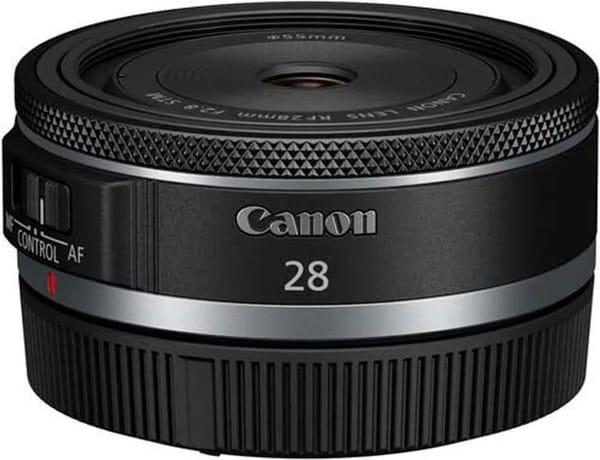
10. Canon RF 28mm f/2.8 STM
Canon RF 28mm f/2.8 STM - this is a lightweight and quite compact wide-angle lens that's convenient to take with you around the city. Its focal length works well for shooting streets, facades, and tight interiors where every centimeter in the frame counts. Despite its simple appearance, the lens delivers sharp images with characteristic geometry and minimal edge distortion.
Thanks to the STM stepping motor, autofocus is quite quiet and fast, and manual mode can be engaged as needed. The minimum focus distance of 23 cm provides some flexibility if you want to capture textures or details. It weighs just 120 grams - practically nothing, especially if you're carrying it on the camera all day.
Key Points:
Field of view ideal for architectural photography
Very lightweight and easy to carry
Quiet and smooth STM autofocus
Good geometry rendering with minimal distortion
Convenient for both street and indoor shooting
Specifications:
Focal length: 28 mm
Aperture: f/2.8
Minimum focus distance: 0.23 m
Filter: 55 mm
Size: 69.7 x 24 mm
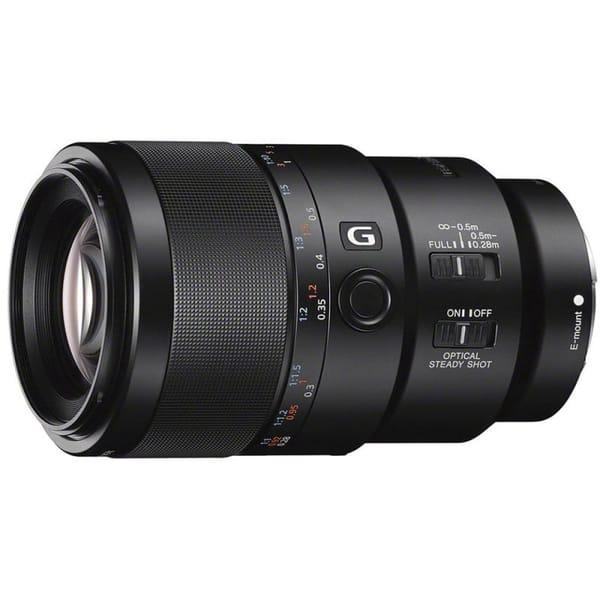
11. Sony FE 90mm f/2.8 Macro G OSS
Sony 90mm f/2.8 Macro G OSS - this is not just a macro lens as the name might suggest. Thanks to its sharp optics and controlled distortion, it handles architectural subjects excellently, especially when you need to capture textures, bas-reliefs, or building fragments. It performs consistently at both wide-open and stopped-down apertures.
The image stabilizer helps achieve sharpness even when shooting handheld. And with a minimum focus distance of just 28 cm, it's versatile for close-up shots. It weighs a fair amount, but the balance on a full-frame camera holds up well, especially when paired with a tripod.
Key Points:
Versatile for macro and architectural detailing
Sharp rendering of textures, tiles, bas-reliefs
Built-in stabilizer useful in low light
Soft bokeh for accent shots
Reliable build and smooth focus ring
Specifications:
Focal length: 90 mm
Aperture: f/2.8
Minimum focus distance: 0.28 m
Filter: 62 mm
Size: 131 x 79 mm
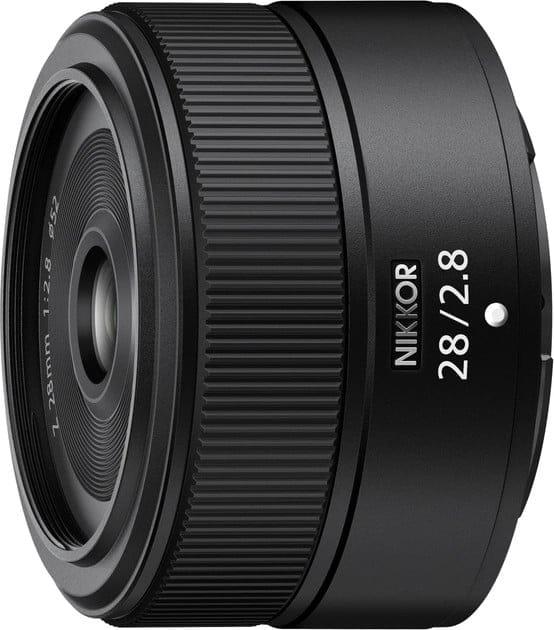
12. Nikon Nikkor Z 28mm f/2.8
Nikkor Z 28mm f/2.8 - this is a modest-looking but fully functional tool for architectural walks. It's lightweight, simple, and focuses quickly, making it convenient in dynamic conditions. The focal length is versatile for streets, buildings, and even interiors if they're not too cramped.
It doesn't try to deliver a "wow effect," but it confidently maintains sharpness across the frame and barely softens the edges. The aperture range isn't record-breaking, but f/2.8 is perfectly sufficient in daylight. At just 155 grams, you hardly notice it in your bag.
Key Points:
Compact and lightweight - convenient for everyday carry
Suitable for architecture, city scenes, and walks
Fast autofocus with manual override
Almost no geometric distortion
Great option for daily shooting
Specifications:
Focal length: 28 mm
Aperture: f/2.8
Minimum focus distance: 0.19 m
Filter: 52 mm
Size: 71.5 × 43 mm
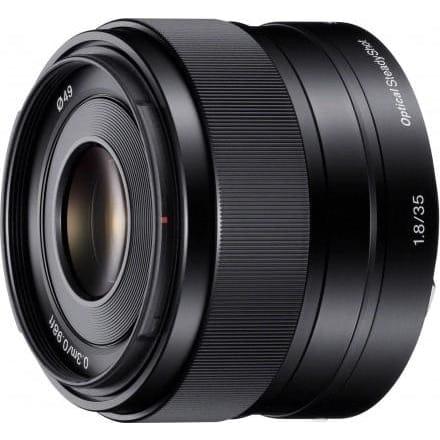
13. Sony E 35mm f/1.8 OSS (SEL35F18)
Sony E 35mm f/1.8 OSS - this is a simple and convenient prime for those who shoot architecture on the move. Thanks to its compact body and built-in stabilization, it's easy to carry even on long walks. It provides a natural perspective close to the human eye, so buildings in photos look realistic - without excessive distortion.
The f/1.8 aperture makes it convenient in evening conditions and allows highlighting details against soft background blur. It's quite sharp even wide open. Perfect for those who like to shoot the city leisurely without swapping lenses.
Key Points:
Compact prime with natural perspective
f/1.8 aperture for low-light shooting
Built-in stabilization
Quiet and fast focusing
Convenient for travel
Specifications:
Focal length: 52 mm
Aperture: f/1.8
Minimum focus distance: 0.3 m
Filter: 49 mm
Size: 63 x 45 mm
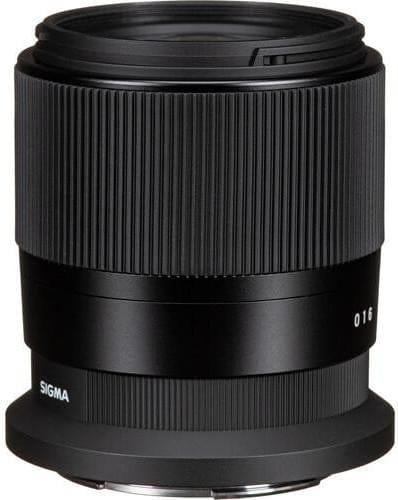
14. Sigma AF 30mm f/1.4 DC DN
Sigma 30mm f/1.4 DC DN - this is a fast prime that's excellent for architecture, especially in evening and nighttime conditions. With this lens, you can easily capture facade details, street elements, and textures. The image comes out lively with soft bokeh when shooting from a short distance.
The build is solid, autofocus is fast and quiet. 30 mm on a crop sensor gives an angle suitable for working with space - buildings don't look flattened, yet there's no extreme perspective distortion. Great for both casual walks and more deliberate architectural series.
Key Points:
Fast f/1.4 prime
Soft bokeh and sharp detail
Moderate wide angle on crop camera
Compact and reliable body
Fast autofocus
Specifications:
Focal length: 45 mm
Aperture: f/1.4
Minimum focus distance: 0.3 m
Filter: 52 mm
Size: 73 × 65 mm
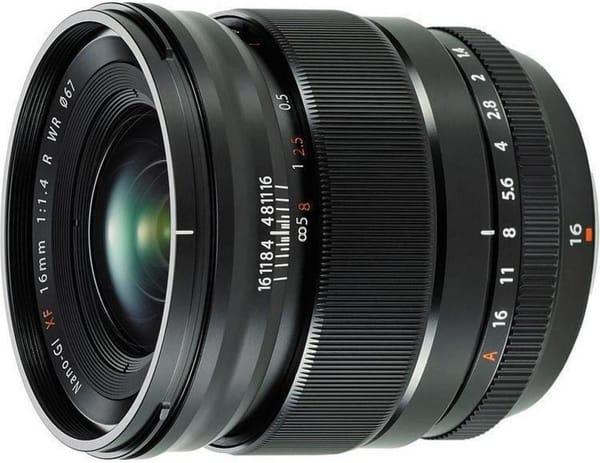
15. Fujifilm XF 16mm f/1.4 R WR
Fujifilm XF 16mm f/1.4 - this is closer to a classic for architecture. The wide angle, high aperture, and excellent sharpness across the frame allow confident shooting of both exteriors and interiors. Even in low light it performs well without excessive noise, especially paired with a Fujifilm crop camera.
Solid construction, manual and autofocus, minimum focus distance of just 15 cm - you can get very close to the subject and play with perspective. Weather sealing and included hood make it convenient for outings and urban shooting in any weather.
Key Points:
Wide angle with good geometry
f/1.4 aperture suitable for night architecture
Supports shooting from very close distances
Durable, protected construction
Convenient for both facades and details
Specifications:
Focal length: 24 mm
Aperture: f/1.4
Minimum focus distance: 0.15 m
Filter: 67 mm
Size: 73 × 73 mm
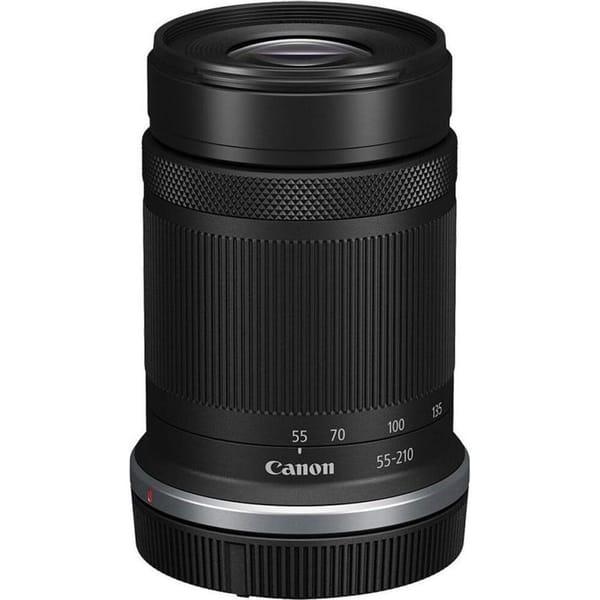
16. Canon RF-S 55-210mm f/5-7.1 IS STM
Canon RF-S 55-210mm f/5-7.1 IS STM - this is a lens often used for architectural details, especially when you need to reach something distant - domes, facades, individual elements. Yes, it's a bit dark at the long end, but for its price it performs excellently and doesn't require complex tripod setup - especially thanks to the built-in stabilization.
It's lightweight, quiet, with STM motor and decent center sharpness. Of course, the corners drop off a bit, but for large architectural shots - it's just right. Convenient for travel, doesn't take up much space in the bag.
Key Points:
Compact telephoto lens reaching up to 210 mm
Optical stabilizer helps with handheld shooting
Suitable for architectural details and city views
Compatible with Canon RF-S mount
Specifications:
Focal length: 88-336 mm
Aperture: f/5-7.1
Minimum focus distance: 0.73 m
Filter: 55 mm
Size: 69 × 135 mm
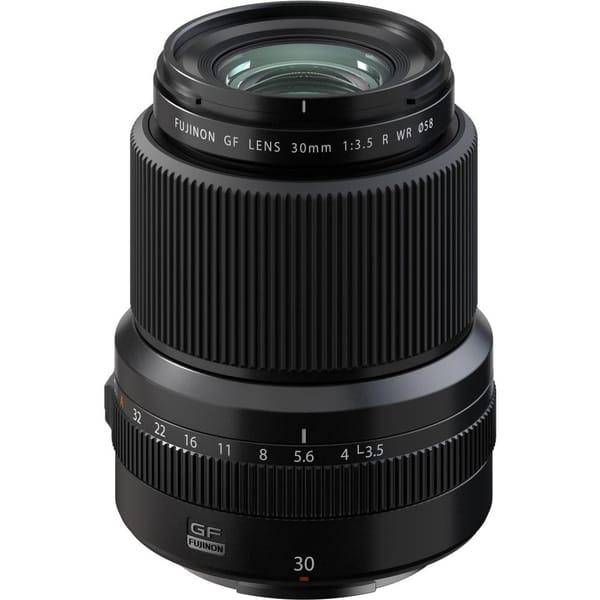
17. Fujifilm GF 30mm f/3.5 R WR
Fujifilm GF 30mm f/3.5 R WR - this is a wide-angle prime for medium format cameras that's excellent for architectural photography in the city and beyond. It's sharp almost across the entire frame, with minimal distortion and crisp edges - exactly what you want when shooting buildings, interiors, or streets.
Solid build, weather-sealed body, the aperture ring turns smoothly. The downside is no stabilization, but on a tripod or in good light that's not an issue. If you have a GFX system and architecture is your theme, this lens will be a frequent visitor in your backpack.
Key Points:
Wide angle on medium format system
Practically no distortion - ideal for facades
Dust and weather-sealed body
High sharpness from center to corners
Specifications:
Focal length: 30 mm
Aperture: f/3.5
Minimum focus distance: 0.32 m
Filter: 58 mm
Size: 99 × 84 mm
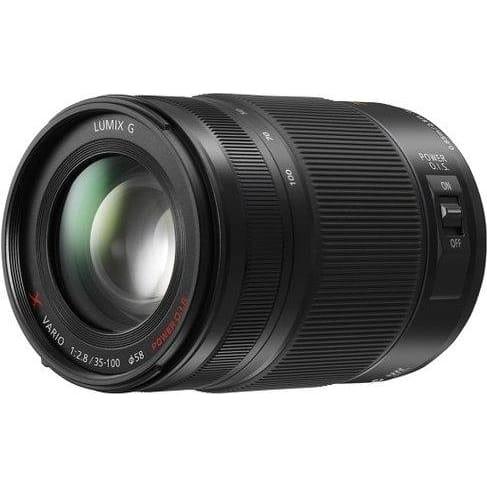
18. Panasonic Leica DG Vario-Elmarit 35-100mm f/2.8
Panasonic Leica DG Vario-Elmarit 35-100mm f/2.8 is a versatile bright zoom that is often used in architectural photography thanks to its range and stable image quality. It is especially valued for its compactness and constant f/2.8 aperture, which is useful in morning and evening conditions.
It handles backlighting well, does not produce strong flares, and thanks to optical stabilization allows comfortable handheld shooting even at the long end. The autofocus system is fast, the body is dust- and weather-resistant - convenient for street shooting when everything changes in a minute.
Key Points:
Convenient range for urban architecture
Constant f/2.8 aperture
Compact size and light weight
Built-in stabilization for handheld shooting
Specifications:
Focal length: 70-200 mm
Aperture: f/2.8
Minimum focus distance: 0.85 m
Filter: 58 mm
Size: 67 × 100 mm
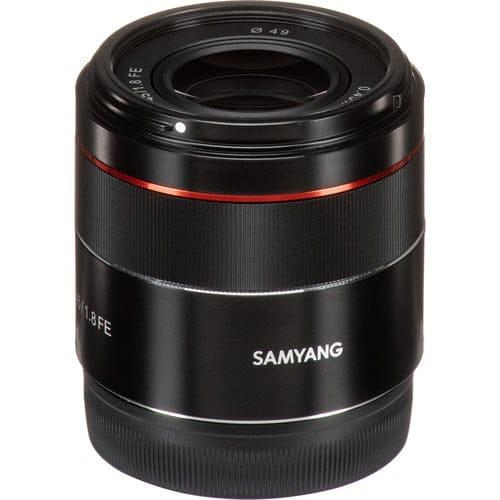
19. Samyang AF 45mm f/1.8 FE
Samyang AF 45mm f/1.8 FE is a lightweight prime for everyday use, but it also works well for architecture, especially when you want to preserve natural perspective without obvious wide-angle distortion. It captures the scene as the eye sees it, and sometimes this is an advantage - especially in street photography where lines, proportions, and soft background blur are important.
The optical design is simple but delivers decent sharpness even wide open. Bokeh is smooth, focus is fast and reliable. Metal mount, compact body, only 162 grams - convenient to carry without overloading your bag.
Key Points:
Focal length close to "natural eye" perspective
f/1.8 aperture with pleasant bokeh
Suitable for architecture without distortion
Compact body and light weight
Works with full-frame and APS-C Sony cameras
Specifications:
Focal length: 45 mm
Aperture: f/1.8
Minimum focus distance: 0.45 m
Filter: 49 mm
Size: 62 × 56 mm
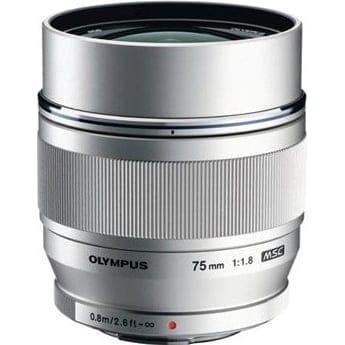
20. Olympus ZUIKO DIGITAL 75mm f/1.8
Olympus 75mm f/1.8 is closer to a telephoto lens often used for architectural fragments: stucco, roof details, compositions with window or balcony rhythms. Thanks to the narrow angle and bright aperture, it performs well both during the day and at sunset, especially when you want to isolate the subject.
The lens is lightweight but precisely built. Focus is fast and accurate, as expected from the Micro 4/3 system. Sharpness is confident even wide open, so you can shoot comfortably in both reportage and more deliberate, composed styles.
Key Points:
Narrow angle of view for architectural details
f/1.8 aperture - convenient in low light
Suitable for portraits and street architecture
Fast and quiet focusing
Compatible with Micro 4/3 systems
Specifications:
Focal length: 150 mm
Aperture: f/1.8
Minimum focus distance: 0.84 m
Filter: 58 mm
Size: 64 × 69 mm
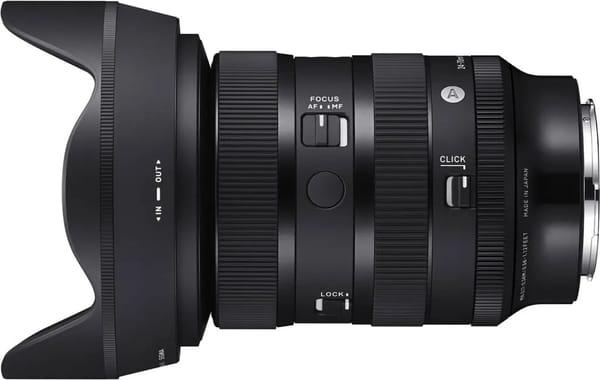
21. Sigma AF 24-70mm f/2.8 DG DN II Art
Sigma 24-70mm f/2.8 Art is the lens that simply covers many tasks, including architecture. From the wide 24 mm angle for buildings and streets to 70 mm for isolated facade fragments, decor, or light elements. Constant f/2.8 aperture throughout the zoom range makes it flexible in different conditions.
The build is solid, elements are well-fitted, focusing is fast. Despite its size, the lens is comfortable to hold even on walks. It is a workhorse for those who shoot architecture in different genres and do not want to constantly change lenses.
Key Points:
24-70 mm zoom covers most architectural scenes
Constant f/2.8 aperture
Suitable for shooting buildings, streets, interiors
Compatible with Sony E-mount and Leica L
High sharpness across the frame
Specifications:
Focal length: 24-70 mm
Aperture: f/2.8
Minimum focus distance: 0.34 m
Filter: 82 mm
Size: 87 × 122 mm
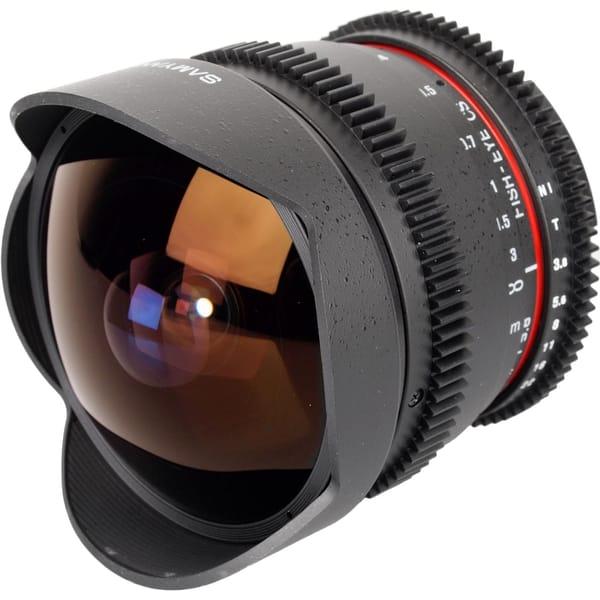
22. Samyang 8mm T3.8 Cine AS IF UMC CS II
Samyang 8mm T3.8 Cine is a lens from the world of cinema, but architects and photographers often pay attention to it when they want to show space differently. This fisheye creates a powerful perspective - everything rounds and pulls into the frame, and that's exactly why people choose it. Especially when you want to artistically emphasize the volume of a building or interior.
It is fully manual, focus is smooth, aperture ring is clickless - everything like in cinema lenses. Use it carefully, but in architecture it gives an effect you cannot achieve with other glass. On APS-C it gives about 12 mm equivalent, and this really expands the usual frame dramatically.
Key Points:
Ultra-wide angle with strong perspective
Fully manual control
Cinematic construction with T-aperture
Suitable for architectural interiors and experiments with form
Available for different mounts (Canon, Sony, Nikon)
Specifications:
Focal length: 12 mm
Aperture: T/3.8
Minimum focus distance: 0.3 m
Size: 75 × 75 mm
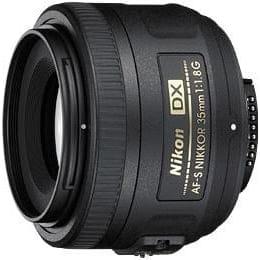
23. Nikon AF-S DX Nikkor 35mm f/1.8G
Nikon 35mm f/1.8G is glass loved for its balance. On DX sensor it gives an angle close to classic 50 mm - convenient, familiar, calm. In architecture it is used when you do not want to distort perspective, but need clarity and simplicity of lines. Especially good in city shooting - streets, doors, windows, scenes with people.
Focus is fast, quiet, compactness is a separate advantage. Weighs just over 200 grams, fits in any bag. It will not let you down on walks or trips where every gram and centimeter matters.
Key Points:
Universal focal length for everyday architectural shooting
f/1.8 aperture - convenient in different lighting
Compact and lightweight
Fast SWM autofocus
Suitable for Nikon cameras with F-mount (DX)
Specifications:
Focal length: 52 mm
Aperture: f/1.8
Minimum focus distance: 0.3 m
Filter: 52 mm
Size: 70 × 52 mm
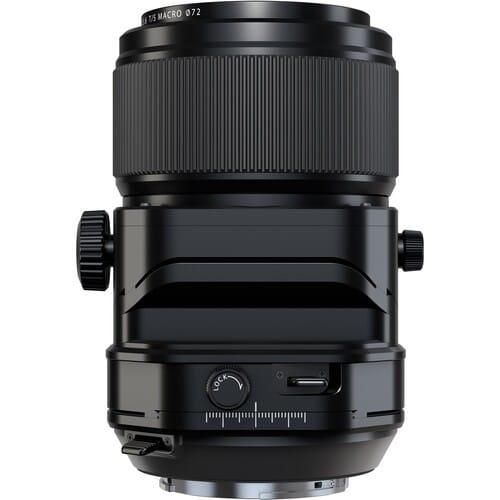
24. Fujifilm 110mm f/5.6 GF T/S Macro Fujinon
Fujifilm 110mm f/5.6 T/S is already a serious tool for architecture, macro, and product photography. Shift and tilt give precise control over perspective - verticals stay straight, focus plane can be adjusted. Everything needed for architectural shooting.
The lens is heavy, not for spontaneous walks. But in the studio or on location where there is time and a tripod, it shows its maximum. Works with the GFX system, which is already about top-level detail - you can calmly shoot facades, textures, stained glass, and then enlarge it all to billboard size.
Key Points:
Shift up to ±15 mm and tilt up to ±10°
Suitable for architecture, macro, product shooting
1:2 macro with high sharpness
Records tilt/shift parameters in EXIF
For Fujifilm GFX medium format cameras
Specifications:
Focal length: 110 mm
Aperture: f/5.6
Minimum focus distance: 0.43 m
Filter: 72 mm
25. Hasselblad XCD 75mm f/3.4 P
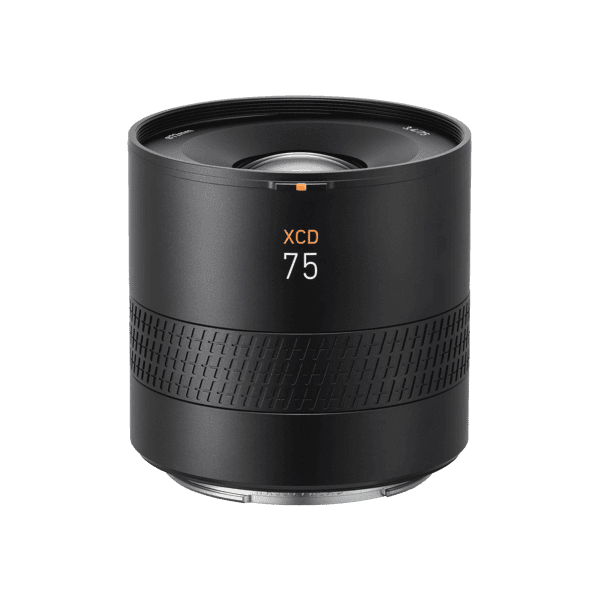
Hasselblad XCD 75mm f/3.4 P is a lens chosen by those who work with the Hasselblad X system. It is not about extremes or experiments - it is calm, precise glass for architecture, portraits, street photography. In architectural shooting it is valued for detail, natural proportions, and good sharpness across the frame.
It is lightweight (by X-system standards), does not take up much space, and does not strain the hand. The focal length makes it convenient both indoors and outdoors - especially when you want to shoot facades or details without resorting to wide angle.
Key Points:
Medium format optics with soft volume rendering
Compact and lightweight for Hasselblad system
Suitable for street and architectural shooting
Supports flash sync up to 1/2000
Quiet autofocus on stepping motor
Specifications:
Focal length: 75 mm
Aperture: f/3.4
Minimum focus distance: 0.55 m
Filter: 72 mm
Conclusion
A good lens for architectural photography is not about "wider" or "more expensive", but about how you look at space. Some prefer a prime with natural perspective, some cannot do without an ultra-wide, and some need tilt/shift to keep everything perfectly straight. And that's normal.
The main thing is to understand how your camera works and what exactly you want to show: scale, geometry, texture, light? Choose the glass for these tasks. And then - just shoot. With crooked lines, tilted horizons, reflections in puddles. Because architecture is not only facades, it is also how we live in all of this.