

3 kW Charging Stations: Top Models for Serious Tasks
January 17, 2026
When it comes to off-grid power, 3 kW stations are no longer just “in case the lights go out”. This is equipment you can confidently run a heater, coffee machine, charge an e-bike, or even keep a small office running. These models are taken not only to the countryside or into a van, but simply into the home — as part of the basic energy reserve.
If you need stability and real output — it makes sense to look precisely at this class. And then — just choose according to the details: size, battery, inverter type, connection method.
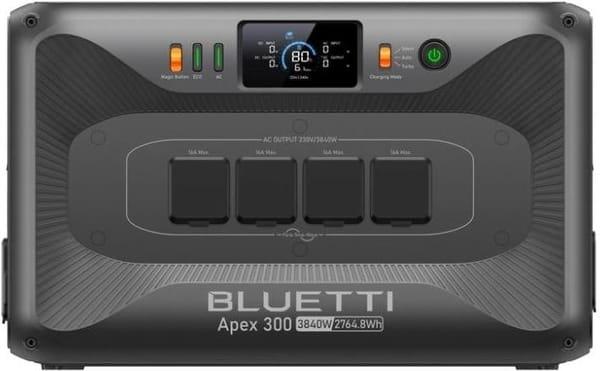
1. BLUETTI Apex 300
BLUETTI Apex 300 is usually chosen as a compact yet powerful station for home or fieldwork. It is noticeably smaller than stationary systems, yet designed for serious loads. This form factor is convenient if you need to move the station periodically or use it in different locations.
It behaves calmly in operation, without sudden surges or excessive noise. Suitable for powering household appliances, tools, and networking equipment. This is an option for those who want power in a compact body.
Key points:
Compact format for its class
Suitable for home and mobile tasks
Designed for stable load
Can function as a backup power source
Specifications:
Battery capacity: 2764.8 Wh
Continuous power: 3840 W
Battery type: LiFePO4
Device connections: AC, USB-A, USB-C, DC, XT60, car cigarette lighter
2. BLUETTI Apex 300 3840W
BLUETTI Apex 300 is the kind of case where everything is built with a margin. The model can handle multiple devices connected at once — not just small things like laptops and routers, but more serious gear like power tools or lighting. It runs on LiFePO₄, giving confidence in longevity and stability.
The station is convenient to use at home as a backup UPS or to take on trips — it’s heavy, but it has handles and a sturdy body. There’s a display showing where power is going and how much is left. Active cooling, Bluetooth monitoring, fast charging — everything is in place. It feels like a well-thought-out product, not just marketing fluff. It simply works.
Key points:
Support for external battery and solar panels
USB-C Power Delivery, XT60, car socket — everything is there
Bluetooth support and display control
Specifications:
Battery capacity: 2764.8 Wh
Continuous power: 3840 W
Battery type: LiFePO4
Device connections: AC, USB-A, USB-C, DC, XT60, car cigarette lighter
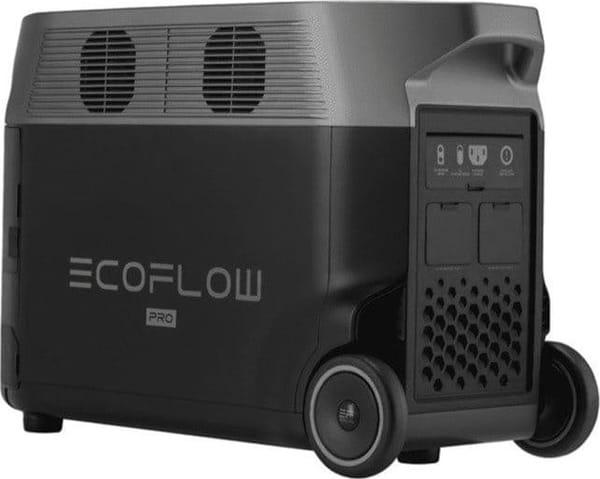
3. EcoFlow DELTA Pro (DELTAPro-EU)
EcoFlow DELTA Pro is usually considered as a base for home backup rather than a classic portable station. These models are placed in an apartment or house and used when you need to power several appliances at once without constant load monitoring. It already feels closer to a full system than a temporary backup.
In daily use it behaves calmly and predictably. You can move the station around the house, connect solar panels or extra batteries, and use it as a UPS. Ideal for situations where outages happen regularly and you want to solve the issue for a long time.
Key points:
Suitable for backup power of an apartment or house
Designed for long-term operation under load
Supports connection of additional modules
Can be used as a UPS
Specifications:
Battery capacity: 3600 Wh
Continuous power: 3600 W
Battery type: LiFePO4
Device connections: outlets, USB, DC
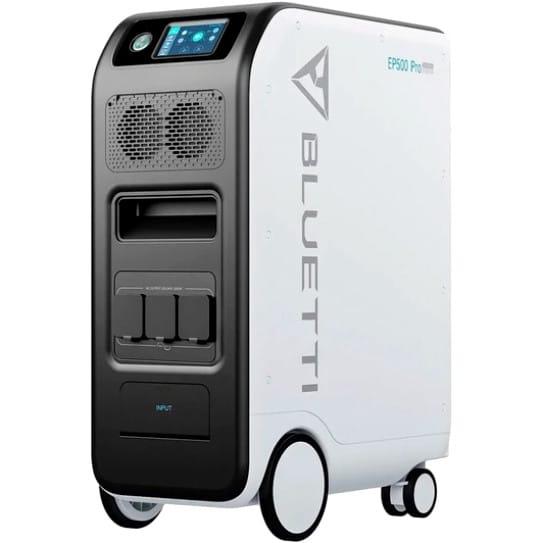
4. BLUETTI EP500Pro
BLUETTI EP500Pro is more often chosen when you need a powerful, long-running autonomous power source without compromises on runtime. This is a large station usually used stationary — in a house, workshop, or office. It’s not designed for frequent moving, but for stability and capacity.
In use, it feels like an independent energy hub. It has wheels for movement, clear indicators, and a wide range of outputs. Perfect for scenarios where power availability is critical at all times, not just for short periods.
Key points:
Oriented toward stationary use
Suitable for home, office, and workshop
Has built-in wheels for movement
Works as a backup power source
Specifications:
Battery capacity: 5100 Wh
Continuous power: 3000 W
Battery type: LiFePO4
Device connections: outlets, USB, DC, wireless charging
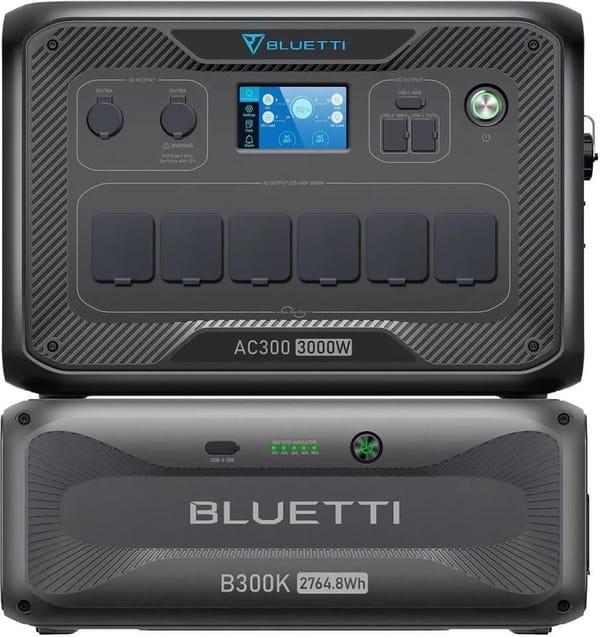
5. BLUETTI AC300 + B300K
BLUETTI AC300 with B300K battery is a powerful combo most often chosen for serious tasks. It can power not only lights and appliances like a fridge, but also high-draw equipment. Plenty of outlets and ports: USB-C with 100 W PD, car socket, wireless charging, and even a 30A DC output for specialized needs. Supports up to 6000 W peak, runs on LiFePO₄ — so long-term reliability is assured.
The unit works well both at home and on the go when autonomous power is needed. The display shows everything you need, the body is durable, and it has carrying handles. Capacity can be expanded with additional modules. It has UPS functionality — everything keeps running seamlessly during outages. A confident baseline that can be scaled to your needs.
Key points:
LiFePO₄, 2764 Wh, up to 4000 cycles
Support for solar panels and extra batteries
Pure sine wave and up to 6000 W peak power
UPS mode, display, and all fast-charging options
Specifications:
Battery capacity: 2764 Wh
Continuous power: 3000 W
Battery type: LiFePO₄
Device connections: AC, USB-A/C, DC, wireless charging
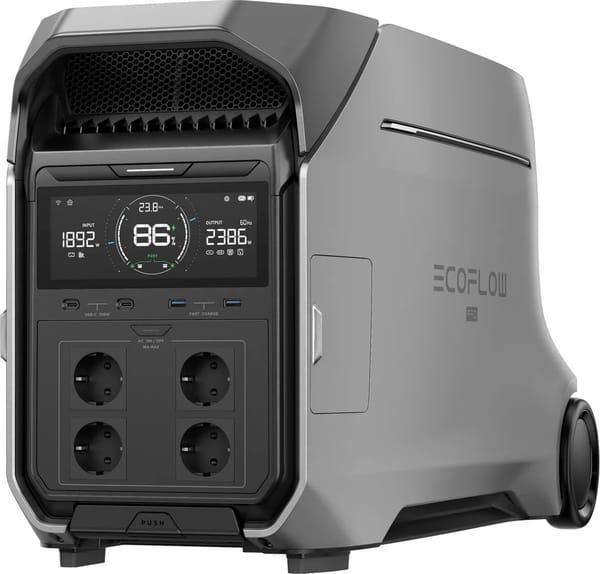
6. EcoFlow DELTA Pro 3 EU-Version
EcoFlow DELTA Pro 3 is designed for situations where people expect more than just charging a couple of gadgets — they want full home or workshop operation. These models are usually installed stationary and used as backup power — powering household appliances, lighting, power tools. It already feels closer to a home energy system than a portable battery.
At the same time, they tried to keep everyday convenience. You can roll the station around, monitor status on the screen, connect external batteries or solar panels. Ideal when you need stable, surprise-free power — not just “just in case”.
Key points:
Designed for serious loads in a house or on-site
Suitable for backup power and long runtime
Supports connection of additional batteries
Can work as an uninterruptible power supply
Specifications:
Battery capacity: 4096 Wh
Continuous power: 4000 W
Battery type: LiFePO4
Device connections: 230V, USB-A, USB-C, DC, car outlet, XT60, Anderson
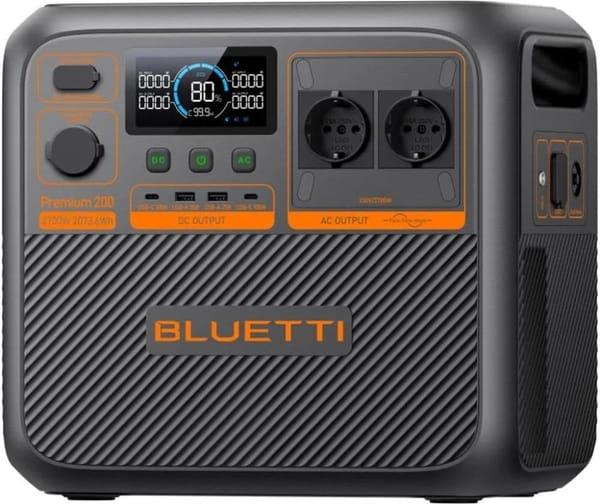
7. BLUETTI Premium 200 V2
BLUETTI Premium 200 V2 is often chosen as a universal option between home and mobile use. It is noticeably more compact than large stationary solutions, yet easily handles household appliances, power tools, and work equipment. This format is convenient if you plan to occasionally move or take the station with you.
In everyday use it behaves predictably — charges quickly, doesn’t overheat under load, and works fine with sensitive electronics. A good choice for those who want power without unnecessary bulk.
Key points:
Balance between power and size
Suitable for home, cottage, and travel tasks
Quiet operation without sudden surges
Convenient for regular use
Specifications:
Battery capacity: 2073 Wh
Continuous power: 2600 W
Battery type: LiFePO4
Device connections: AC, USB-C, USB-A, car cigarette lighter
How to choose a 3 kW charging station: what really matters
3 kW stations are no longer just “camping recharge”. This is the level where you can connect heaters, refrigerators, welders, or power part of a house. But power on paper isn’t everything. Stations with the same numbers can behave very differently: under load, in daily use, and even in how easy they are to store. Below are the things worth paying attention to so you don’t make a mistake.
1. Where and how you plan to use it
If the station will stay at home or in a workshop — go for a larger model with big battery capacity and wheels. But for a cottage or trips, a more compact version is better, even if it has slightly less runtime.
2. Capacity and battery type
Power rating shows how much the station can deliver at once. Capacity shows how long it can keep doing it. For household appliances and extended runtime, capacity is what really matters. LiFePO4 is preferable: longer lifespan, temperature tolerance, and safer in daily use.
3. Ports and connection options
Think ahead about what you’ll be connecting. Some models offer wireless charging, car outlets, fast USB-C charging. Multiple AC outlets are also very helpful. All of this makes life easier, especially when using different devices at home or on the road.
4. Charging speed and methods
Most stations charge from a wall outlet. But some can also charge from solar panels — very useful when outages last longer. Charging time matters too: some reach full charge in 1.5 hours, others need six. In areas with frequent blackouts this can be critical.
5. Everyday convenience
Wheels, clear display, handles, mobile app control, overload protection — all of these affect daily use. The best stations are intuitive: plug in and you immediately understand what’s happening.
Conclusion
3 kW stations are serious equipment capable of more than just charging gadgets — they can power full household appliances. Some use them as insurance against outages, others as the main power solution at a cottage or private house. The key is understanding what your actual needs are. Sometimes compactness matters most, sometimes it’s capacity and the ability to connect everything at hand.
Numbers alone don’t decide anything. What really matters is how the station behaves in real life: does it stay quiet, charge quickly, easy to move, doesn’t overheat under load? These are the details worth focusing on so you won’t be disappointed later.