

Artificial Intelligence in Smart Glasses: Ray-Ban Meta and Oakley Meta in 2026
April 3, 2026
Quick Summary: Meta Smart Eyepieces from Ray-Ban and Oakley revolutionize wearable technology by integrating custom intelligence into a stylish frame. The Oakley Meta HSTN is designed for athletes and active sports enthusiasts, just like the Ray-Ban Meta is suitable for everyday sports. Both models feature video recording, voice control, music streaming and a computer-controlled camera - ushering in a new era of personal assistants in eyepieces.
Wearable technologies have come a long way from the first intelligent ones to today's intelligent devices. In 2026, smart eyepieces with piecemeal intelligence have become not just gadgets, but valuable tools for work, sports and everyday life.
Meta continues to lead this segment by introducing two lines of smart glasses in partnership with legendary optical brands. Ray-Ban Meta is a stylish eyepiece for everyday sports, and Oakley Meta HSTN is a sporty model for active people.
Both models feature advanced computer vision technologies and neural networks to provide hands-free assistance. This is not just a camera on a frame - it is a full-fledged II-platform that brings light to your eyes and helps interact with it.
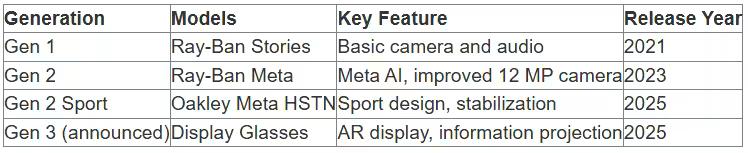
Evolution of Meta Smart Eyepieces: From the First Generation to Revolution II
If Meta first introduced smart glasses in a partnership with Ray-Ban, there are a lot of people who were skeptical about them. The first generation was more of an experiment - a camera for capturing the first individual, basic functionality, but without any intelligence.
Everything changed with the appearance of another generation of Ray-Ban Meta. The company integrated its Meta AI II assistant directly into the eyepieces, adding the ability to recognize objects in real time, translate text and provide contextual understanding of text.
Now eyepieces can not only record video, but also understand what you see. With the publication of Carleton College in anticipation of 2025, Meta AI Ray-Bans could open up new possibilities for artificial intelligence and wearable technology, turning glasses into a lighting tool.
In 2025, Meta completed its offensive by merging with Oakley. The new Oakley Meta HSTN model has been specially designed for athletes and content creators, which require valuable design and the ability to capture dynamic minds.
Key Milestones in Technology Development
IEEE Spectrum at November 2025 has indicated that smart eyepieces have now become a widespread personal device. If food is deprived, let us ask: why do you want useful technology, what to wear around, how to deal with everyday life, and what to do with devices with cluttered displays?
Meta vibrated the first way. Ray-Ban Meta and Oakley Meta look like original eyepieces without bulky displays or futuristic design. All the magic happens in the middle: the use of cameras, microphones, speakers and chips for processing in real time.
This strategic decision allowed Meta to create a product that people are ready to wear today. In addition to VR headsets or AR eyepieces with massive displays, Meta smart eyepieces organically fit into the style of the photographers.

Select smart eyepieces and buy JustBuy
After a review, you usually want to get down to business: look at current devices, compare specifications, and figure out what you can buy without unnecessary research. JustBuy is an online tech store where you can find gadgets, smartphones, laptops, audio equipment, accessories, and other devices. Here you can easily check availability, price, delivery, payment, and warranty terms.
Looking for where to view and buy smart glasses or other gadgets?
At JustBuy you can:
View current devices and their specifications
Compare models and choose the right option
Check availability, price, delivery, and warranty
Place an order online or get advice before purchasing
👉 Contact JustBuy to select equipment and clarify the terms of purchase.
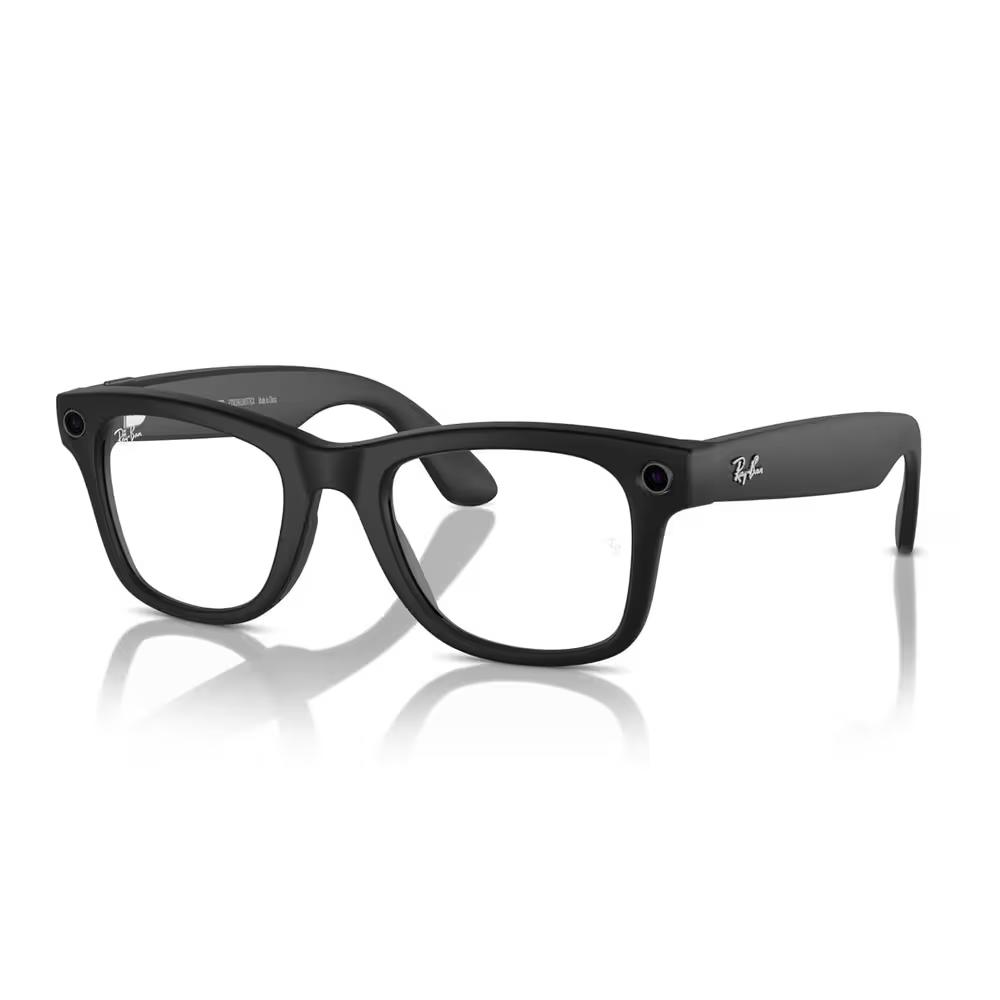
Ray-Ban Meta: Smart Glasses for Everyday Life
Ray-Ban Meta is Meta's flagship line of smart glasses, designed for everyday use. Three frame styles are available: the classic Wayfarer, the sporty Headliner, and the women's Skyler. Each looks like a pair of regular sunglasses or prescription glasses.
But beneath these stylish frames lies serious technology. The built-in 12-megapixel camera can take photos and record video for up to three minutes. Recording quality reaches 3K—enough for professional social media content.
Built-in microphones ensure sound recording even in windy conditions. Beamforming speakers let you listen to music and podcasts without blocking out surrounding sounds. This is important for safety—you can hear approaching cars and conversations around you.
Meta AI: Intelligence in Every Glance
The real magic of Ray-Ban Meta is its Meta AI integration. The voice assistant is activated by the command "Hey Meta" and can perform a wide range of tasks without even reaching for your smartphone.
You can ask the AI to identify an object in front of you. See an interesting plant? Meta AI can recognize the species and tell you about it. Need to translate a sign in a foreign language? Just ask, and the AI will read and translate the text in real time.
According to Carleton College, this functionality opens up new educational opportunities. Students can use the glasses to instantly access information during field trips or fieldwork.
Meta AI also helps with navigation, answers weather questions, creates to-do lists, and even generates creative ideas. It's like having a personal assistant who sees what you see.
Ray-Ban Meta Specifications
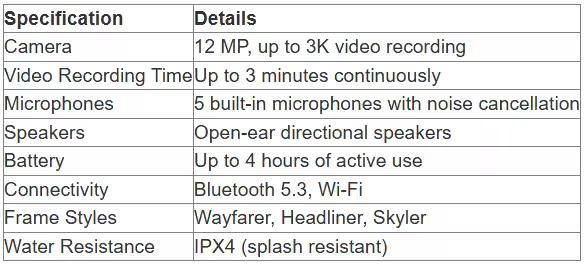
The glasses are charged in a special portable case, which holds up to 8 additional charges. This means you can use the glasses for several days without access to a power outlet.
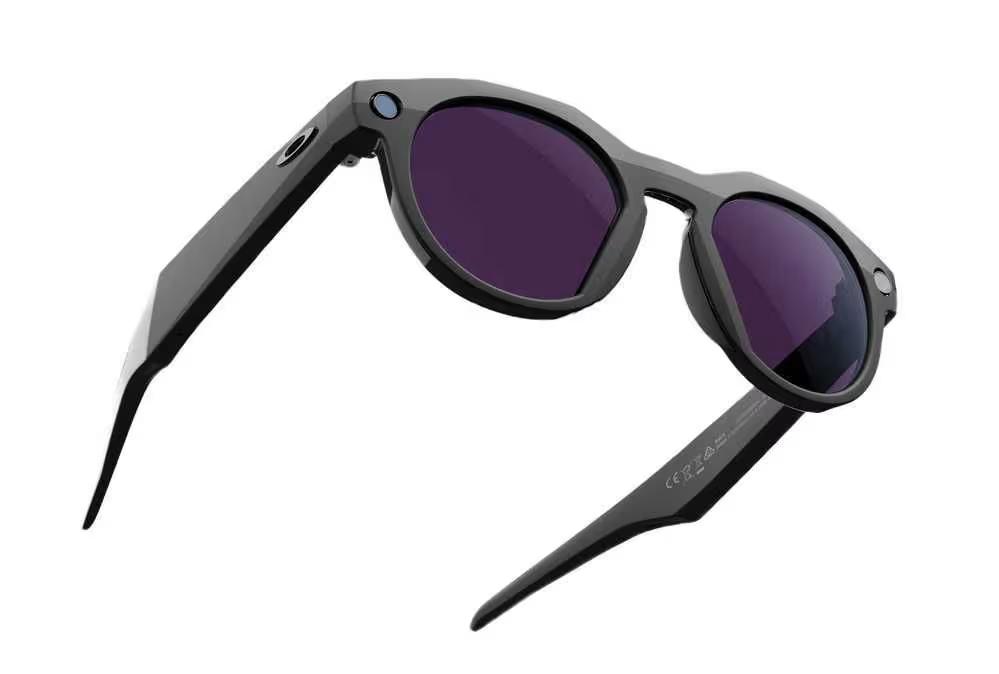
Oakley Meta HSTN: Next-Generation Sports Smart Glasses
In the summer of 2025, Meta introduced the Oakley Meta HSTN—a completely new approach to smart glasses. While the Ray-Ban Meta is designed for style and everyday use, the Oakley Meta HSTN is a tool for athletes, travelers, and active content creators.
The frame is made of durable materials that are resistant to impacts and drops. The sporty and aggressive design—these glasses don't pretend to be ordinary. They declare their technological capabilities.
As stated in June 2025 sources, the Oakley Meta HSTN is designed not just for everyday use, but as a fully-fledged tool for those who need to capture content on the move and focus on dynamic scenarios.
Specialized for Active Lifestyles
Oakley Meta HSTN features an improved video stabilization system, ensuring smooth footage even while running, cycling, or climbing. This is critical for sports content—no one wants to watch shaky videos.
Enhanced water resistance allows the glasses to be used in the rain, near bodies of water, and even in light splashes. The shock-resistant design withstands drops and impacts that would destroy ordinary glasses.
The glasses also feature improved Oakley Prizm lenses, which adapt to light and improve contrast perception. For athletes, this means better visibility on the track or during training.
According to Ultralytics, Oakley Meta AI uses computer vision and artificial intelligence to provide hands-free assistance, performance tracking, and easy content recording.
How Computer Vision Works in Meta Smart Glasses
Behind all these capabilities lies a sophisticated computer vision system—the technology that allows the glasses to "see" and interpret the world around them. This isn't just a camera that records video. It's an intelligent system that analyzes images in real time.
When a user activates Meta AI and asks about something in their field of view, the following happens: the camera captures the image, the built-in processor performs the initial processing, and then the data is sent to the cloud, where Meta's neural networks analyze the content.
Deep learning systems, trained on millions of images, recognize objects, text, faces (with permission), scenes, and even the emotional context of situations. The response is returned to the glasses within seconds, and the voice assistant verbalizes the result.
Neural Networks and Real-Time Processing
According to research from the University of North Carolina, published in 2026, this technology can help detect changes in mental states. This technology from the startup Carolina Instruments offers insight into the neural networks that regulate behavior.
While this specific technology has not yet been integrated into Meta's commercial models, it points to the direction the industry is heading. Smart glasses of the future will be able to not only see the outside world but also understand the user's internal state.
IEEE has published several studies on the use of computer vision in smart glasses for the visually impaired. The technology can describe scenes, read text aloud, warn of obstacles, and even recognize the faces of familiar people.
Meta uses multimodal vision-language models—AI systems that understand both images and natural language. They can answer complex questions like, "What breed of dog is this?" or "How many calories are in this meal?"
Practical Applications of Vision AI
Computer vision in Meta glasses opens up a variety of practical applications:
Education: Students can instantly get information about historical monuments, works of art, or natural features during excursions
Travel: Real-time translation of menus, signs, and directions without having to reach for a phone
Shopping: Compare prices, get product information, and read reviews right in the store
Cooking: Follow recipes with voice instructions while your hands are busy
Repair and DIY: Visual instructions for assembling furniture or repairing appliances
Accessibility: Assisting people with visual impairments in navigating and interacting with their surroundings
According to Ultralytics, Oakley Meta AI glasses provide hands-free assistance, which is especially important for professionals whose hands are constantly busy, such as mechanics, surgeons, and engineers.
Privacy and Security: Cameras Everywhere?
One of the most pressing issues surrounding smart glasses is privacy. When a person wears a camera on their face, others don't always know whether they're currently recording them. This raises legitimate concerns.
Meta has implemented several mechanisms to address this issue. The first is an LED recording indicator on the frame. When the camera is active, a white LED lights up.
An indicator visible to others. This indicator cannot be turned off—it is built into the hardware.
The second mechanism is a sound signal when a photo or video is taken. This provides additional notification to those nearby.
The third is a limitation on video recording length to three minutes. This prevents prolonged covert surveillance.
Regulation and Ethical Issues
In its documents on mass surveillance technologies, the European Commission considers smart glasses with cameras as a potential surveillance tool. Regulators are concerned about the potential for such devices to violate privacy in public spaces.
Some establishments, such as movie theaters, gyms, and locker rooms, have already banned the use of smart glasses. Some jurisdictions are considering laws requiring more explicit labeling of devices with cameras.
Meta states that it takes these concerns seriously and is working with regulators around the world. The company emphasizes that the glasses are designed for personal use, not for mass surveillance.
Users should comply with local laws and social norms. Most places prohibit the covert recording of people without their consent, and this rule applies to smart glasses just as it does to smartphones.
Ecosystem and Integration: More Than Just Glasses
Meta smart glasses don't exist in isolation. They are part of a broader ecosystem of devices and services. Using the glasses requires a smartphone with the Meta View app installed.
The Meta View app serves as the control center for the glasses. Here, you can view and edit photos and videos, share them on social media, adjust the glasses' settings, and update the firmware.
The glasses sync with your smartphone via Bluetooth and Wi-Fi. All captured content is automatically uploaded to the app, from where it can be exported to Instagram, Facebook, WhatsApp, or any other app.
Integration with Meta AI and Social Media
Deep integration with Meta AI means the glasses can leverage the full power of Meta's cloud computing. When you ask the voice assistant a question, it can access relevant information from the internet, use context from previous conversations, and even remember your personal preferences.
This integration is especially valuable for content creators. Users can capture first-person videos while playing sports, traveling, or experiencing exciting events, and then instantly share them in Stories or posts.
Meta is also experimenting with live streaming features. In some regions, users can stream directly from the glasses to Facebook or Instagram Live, showing viewers the world through their eyes in real time.
Future Possibilities: Display Glasses
Meta isn't stopping with the current generation. In 2025, the company announced work on Display Glasses—smart glasses with built-in augmented reality displays.
These glasses will be able to project information directly into the user's field of view: navigation prompts, notifications, real-time captions, and data visualizations. This is the next step in the evolution of wearable technology.
According to IEEE Spectrum, the future of AR glasses depends on what consumers want: technology that blends into everyday life or devices with immersive displays. Meta is experimenting with both approaches.
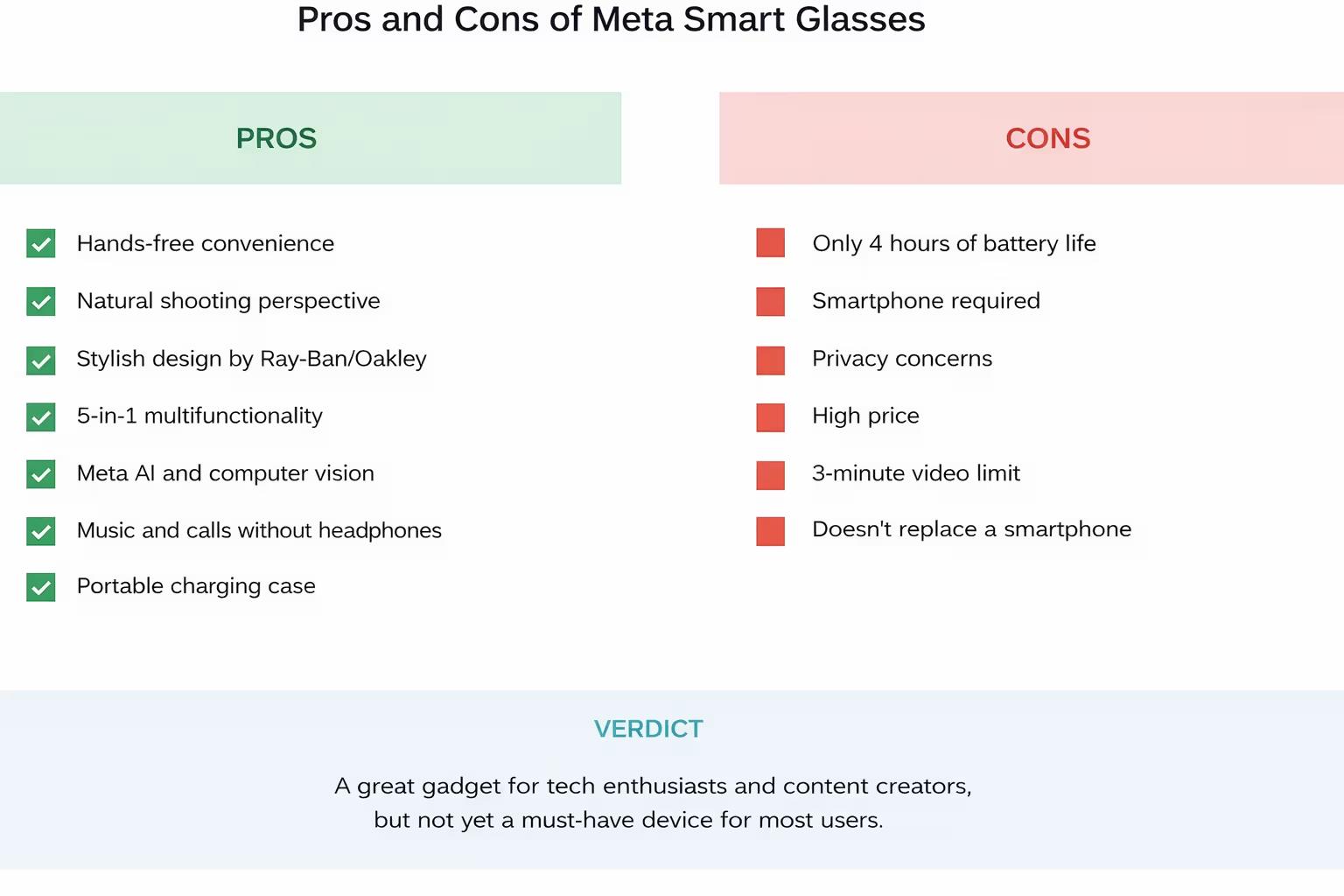
Pros and Cons of Meta Smart Glasses
Like any technology, Meta smart glasses have their strengths and weaknesses. Understanding these aspects helps you make an informed purchase decision.
Advantages
Convenience and hands-free use. The main advantage is the ability to record video, take photos, listen to music, and access information without reaching for your smartphone. This leaves your hands free for other tasks.
Natural Perspective. The eye-level camera captures the world as you see it. This creates more personal and immersive content compared to video shot at arm's length.
Style and Design. Ray-Ban and Oakley are recognized brands with decades of experience in eyewear design. The smart models look stylish without boasting about their technological advancements.
Multifunctionality. This isn't just a camera—it's also a headphone jack, a microphone for calls, a voice assistant, and a music player. Five functions in one device.
Meta AI. AI integration turns the glasses into a smart assistant that can answer questions, translate text, recognize objects, and much more.
Disadvantages
Battery life. Four hours of active use isn't very long. The battery drains faster with intensive video recording. A portable case helps, but this can be a problem for long trips.
Smartphone dependence. The glasses only work when paired with a smartphone. Without the Meta View app, functionality is significantly limited. This also means additional battery drain.
Privacy concerns. Despite the recording indicators, some people feel uncomfortable with a camera on someone else's face. This can create social awkwardness.
Price. Smart glasses are significantly more expensive than regular sunglasses. It's an investment that not everyone is willing to make for the added functionality.
Recording limitations. The three-minute video limit may be insufficient for some scenarios. Video quality is good, but not up to the level of high-end smartphones.
Not a smartphone replacement. Glasses complement a smartphone, but they don't replace it. For most tasks, a phone is still needed.
Who Are Meta Smartglasses Designed for?
Meta smartglasses aren't a one-size-fits-all device. There are specific user groups for whom they offer the greatest value.
Content creators and bloggers. If you're creating content for YouTube, Instagram, or TikTok, smartglasses offer a unique first-person perspective. Travel vlogs, product reviews, cooking shows—all become more immersive.
Athletes and outdoor enthusiasts. Oakley Meta HSTN is designed specifically for this audience. Record workouts, mountain hikes, skiing, or surfing from a first-person perspective—without the bulk of a head-mounted action camera.
Professionals in specific industries. Mechanics, engineers, and medical professionals can use Meta AI's voice instructions and visual assistance without distracting them from their work. Hands-free, information is always at their fingertips.
Travelers. The real-time translation feature is especially useful when traveling abroad. Reading menus, understanding signs, asking for directions—all of this is easier with an AI assistant on your face.
People with special needs. IEEE research shows that computer vision in smart glasses can significantly assist people with visual impairments by describing their surroundings and reading text aloud.
Who Shouldn't Buy
On the other hand, there are categories of people for whom smart glasses are unlikely to be a useful purchase.
If you rarely take photos or videos, aren't interested in tech innovations, and prefer a minimalist lifestyle, smart glasses will be overkill.
For those concerned about privacy or want to avoid drawing attention to their gadgets, a face camera may create more problems than it solves.
Also, if your budget is limited, it's better to invest in more versatile devices, such as a high-quality smartphone or laptop.
Frequently Asked Questions (FAQ)
How much do Ray-Ban Meta and Oakley Meta smart glasses cost?
Prices vary depending on the model, frame style, and lenses. Check official Ray-Ban, Oakley, or authorized retailers for current pricing.
Can you wear Meta smart glasses with prescription lenses?
Yes, both Ray-Ban Meta and Oakley Meta support prescription lenses.
How long does the battery last?
Several hours of active use. The charging case provides up to 8 additional full charges.
Do they work without a smartphone?
Partially. Photo and video capture works offline, but AI features and syncing require a phone.
Are they safe for privacy?
They include a recording LED indicator and sound alerts. Users must follow privacy laws.
What is the difference between Ray-Ban Meta and Oakley Meta HSTN?
Ray-Ban is designed for everyday use and style. Oakley focuses on sports, durability, and advanced lenses.
Do they support multiple languages?
Language support depends on region. Core features work everywhere, but AI capabilities may vary.
Conclusion: The Future Is Already in Your Face
Meta smartglasses from Ray-Ban and Oakley represent a significant step forward in the evolution of wearable technology. These are no longer conceptual prototypes or toys for early adapters—they are functional devices that solve real problems.
The integration of artificial intelligence, especially computer vision technologies, transforms ordinary glasses into intelligent assistants. The ability to receive information about the surrounding world, translate text, recognize objects, and record content from a first-person perspective—all this makes Meta smartglasses a valuable tool for specific use cases.
Ray-Ban Meta is ideal for those who value style and want to complement their everyday life with smart features. Oakley Meta HSTN is the choice for athletes and active content creators who require durability and specialized capabilities.
Technology continues to evolve. With the announcement of Display Glasses and the ongoing improvement of Meta AI capabilities, future generations of smartglasses promise to be even more functional and integrated into our lives.
Privacy and social awareness issues remain relevant. But as wearable cameras become more widespread, society is adapting and developing new norms of behavior.
Ready to try artificial intelligence on your face? Visit the official Ray-Ban and Oakley websites to learn more about available models, prices, and ordering options in your region. The future of wearable technology is here—and it's looking stylish.