

Best Budget Camera for Video: Honest List of Models
March 30, 2026
A good camera for video has long ceased to be something unattainable. Now even in the budget segment you can find models that shoot decently - with normal detail, a stable picture and without unnecessary complications in settings.
This list includes cameras that are really suitable for video, and not just "can shoot videos". There will be no random options for the sake of quantity - only those models that give an adequate result for their money and do not disappoint after just a couple of shoots.
If you are just starting out or simply do not want to overpay for features you will not use, this list will help you navigate and choose something understandable and workable.
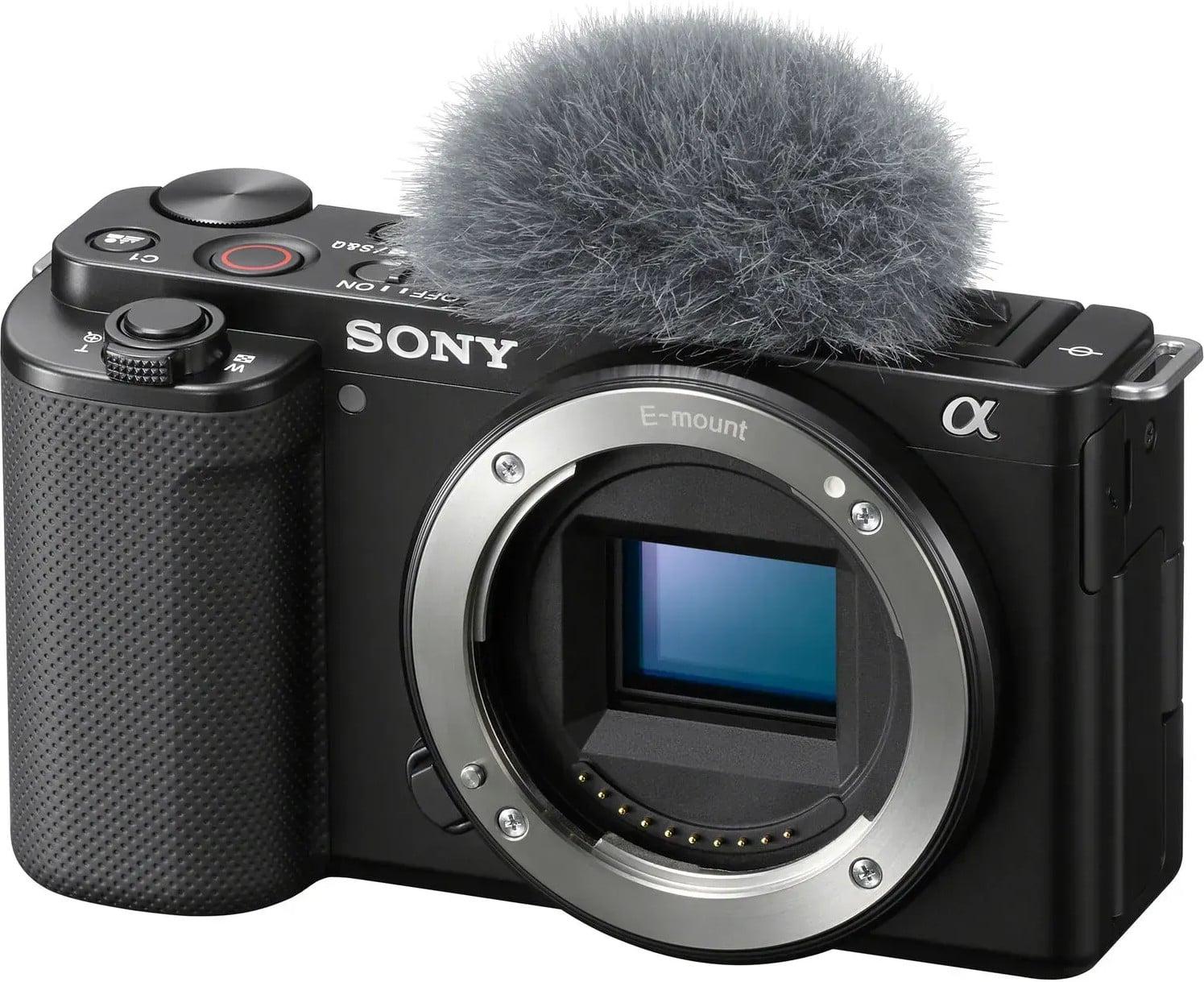
1. Sony ZV-E10
Sony ZV-E10 is considered a compact mirrorless camera with an emphasis on video shooting. It is equipped with a 24-megapixel APS-C sensor and operates on the basis of the BionZ X processor. It supports 4K video recording with HDR, which gives a fairly clean and detailed picture without complex post-processing. The design remains lightweight, so the camera is convenient to use for handheld shooting or in motion.
The interchangeable lens system provides flexibility, as the final image directly depends on the chosen lens. The camera supports connection of an external microphone, which is important for recording sound without unnecessary noise. It also features integration with smartphones and wireless functions, which simplifies file transfer and shooting control.
Key points:
24 MP APS-C sensor
4K video recording with HDR support
Sony E interchangeable lenses
input for external microphone
Bluetooth support
compact and lightweight body
Who it is suitable for:
beginner video shooting
blogging and shooting for social networks
handheld shooting without complex equipment
users who value simplicity and flexibility
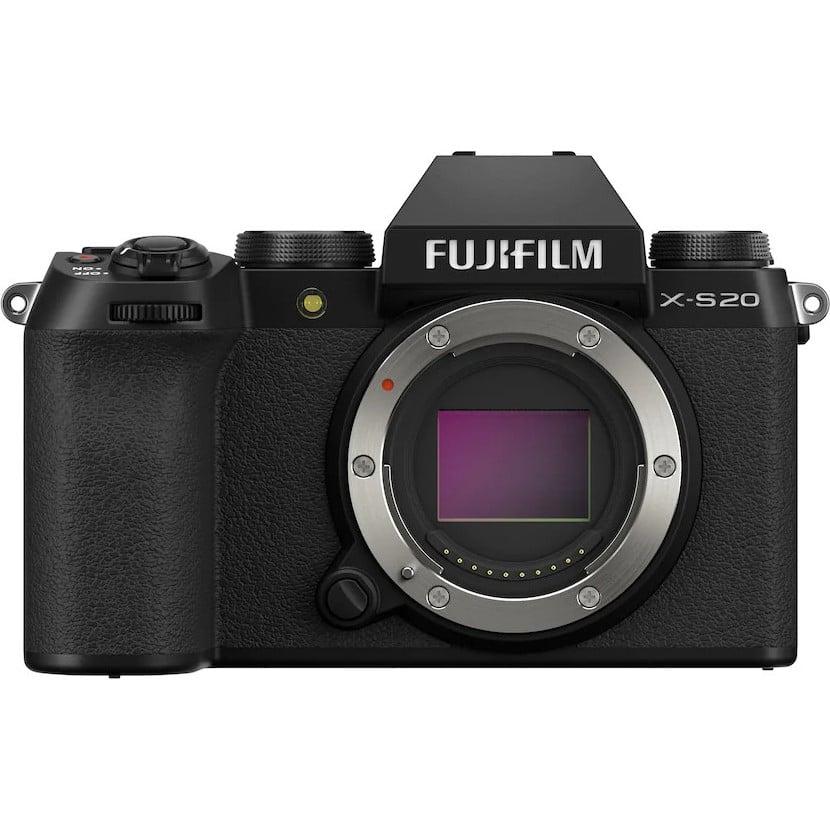
2. Fujifilm X-S20
Fujifilm X-S20 looks like a more universal option with a focus on video. The camera supports recording up to 6K, which gives a quality reserve, even if the final material will be used in lower resolution. The APS-C sensor and built-in stabilization help to get a smoother picture without additional accessories.
The autofocus system combines phase and contrast methods, which in general gives predictable performance in different conditions. The swivel screen simplifies shooting from different angles, including self-shooting. There is a microphone input and wireless modules, so the camera can be used without a complex set of equipment.
Key points:
video recording up to 6K
built-in stabilization
combined autofocus
swivel touchscreen
microphone input
Wi-Fi and Bluetooth
Who it is suitable for:
video shooting with a quality reserve
shooting in motion without a stabilizer
more flexible shooting scenarios
those who value the screen
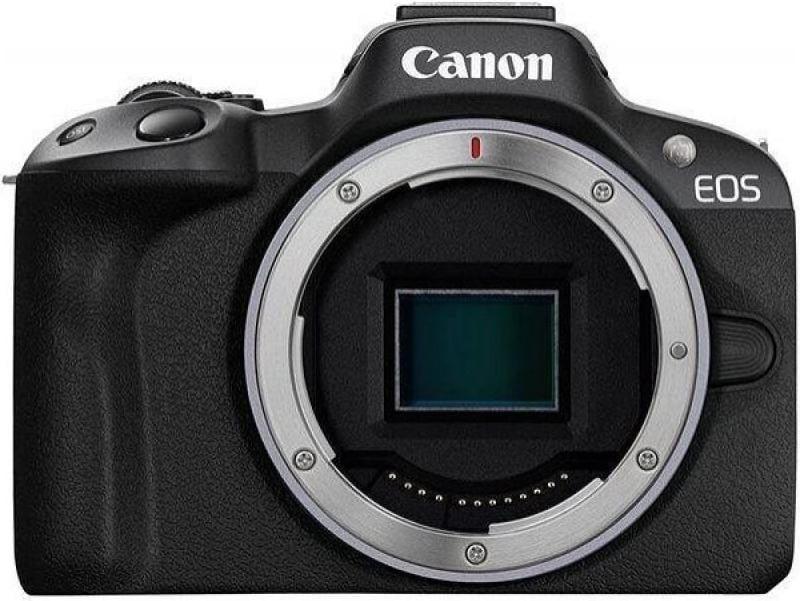
3. Canon EOS R50
Canon EOS R50 belongs to compact mirrorless cameras with an emphasis on simple control. It is equipped with a 24.2 MP sensor and supports 4K video recording at 30 frames per second. The recording formats allow you to get a fairly clear result without complex settings.
The screen is swivel and touchscreen, which is convenient when shooting from different angles. The autofocus system combines phase and contrast approaches, which helps to keep focus in the frame. The camera works with Canon RF lenses, so you can gradually change the optics according to your tasks. At the same time, there is no stabilization in the body, which should be taken into account when shooting handheld.
Key points:
4K video 30 fps
APS-C sensor
swivel touchscreen
phase and contrast autofocus
support for Canon RF lenses
microphone input
Who it is suitable for:
basic video shooting
static shooting
users without experience
those who value a simple interface
Conclusion
If we are honest, a "budget camera for video" today no longer sounds like a compromise. Even in this segment, you can find cameras that deliver quite a normal result without the feeling that something has been heavily cut.
The difference between the models here is rather in convenience and details. In some places the work with sound is simpler, in others the stabilization is better, in others there is a bit more quality reserve for video. But in real shooting this is not always critical, especially if there is no task to make complex projects.
Usually the choice comes down to quite simple things. Do you need interchangeable optics or do you want everything as simple as possible. Is a compact body important or is it more comfortable to hold something a bit larger. Is shooting "on the go" planned or more static shots. These moments decide more than dry specifications.
This list is exactly about filtering out the unnecessary and showing models with which you can calmly start shooting video without long delving into details. Further on, everything depends not on the camera, but on exactly how it is used.