

Best Fitness Trackers for Running in 2026
January 17, 2026
In 2026, choosing a running device has stopped being just a matter of buying a “wrist gadget”. Today it’s a choice of a data ecosystem that either helps scale athletic performance or becomes a useless source of digital noise. Modern trackers have evolved: the industry has moved from simple step counting to deep biometric analysis, predictive recovery analytics, and seamless integration with cloud-based training services.
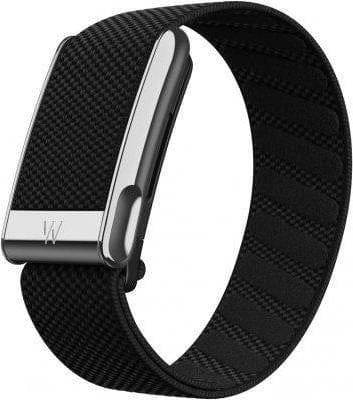
1. WHOOP MG Life Obsidian/Titanium
The WHOOP MG Life Obsidian/Titanium is a very specific choice. There is no display, so a runner cannot check pace or heart rate “in the moment” without pulling out their phone. However, people choose these sensors for something else — phenomenally accurate recovery analysis.
The MG Life model in Obsidian/Titanium finish looks more like a stylish accessory than a gadget. But inside it’s a serious lab. Unlike cheap trackers, it doesn’t just count steps — it monitors heart rate variability (HRV) and even performs ECG. For marathoners or ultrarunners, this is critical: the device tells you when your body is on the edge of overtraining.
Features:
Heart rate monitor
Pulse oximeter (SpO2)
Sleep tracking
Altimeter
Barometer
ECG
Step counter
Thermometer
Activity types: running, swimming, strength training, cycling, yoga
Advantages:
Continuous monitoring lets you understand how running affects overall body recovery.
Load and recovery calculations help plan rest days after intense runs.
ECG and heart health monitoring are useful for control during cardio loads.
Compact sensor doesn’t interfere with movement on the run.
Who it’s for:
Runners who want deep post-training recovery analysis.
Those who combine running with strength training and need overall load data.
People monitoring heart health and stress during regular runs.
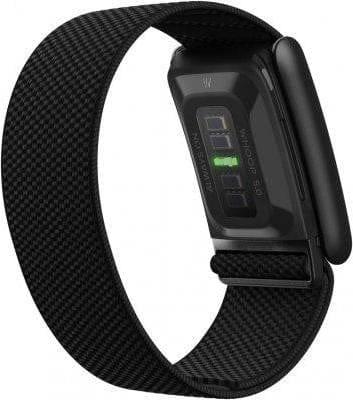
2. WHOOP 5.0 Peak Obsidian SuperKnit
The WHOOP 5.0 Peak Obsidian SuperKnit is a screenless sensor module that works 24/7, collecting data on heart rate, heart rate variability, blood oxygen saturation, and skin temperature. From this it calculates recovery scores, strain from running, and sleep quality.
The breathable SuperKnit strap is comfortable to wear all day, and the Peak-level subscription unlocks stress monitoring and biological age estimation. IP68 rating makes it suitable for runs in any weather or swimming.
Features:
Heart rate monitor
Pulse oximeter (SpO2)
Sleep tracking
Step counter
Activity types: running, swimming, strength training, cycling, yoga, stress monitoring
Advantages:
Automatic data collection helps track how running impacts daily recovery.
Health trend analysis is useful for adjusting training volume.
Breathable strap doesn’t chafe even on long runs.
Stress monitoring shows when to reduce running intensity.
Lightweight sensor is barely noticeable during movement.
Who it’s for:
Runners interested in deep load and recovery analysis.
Those who run regularly and want training optimization advice.
People who prefer a minimalist screenless device.
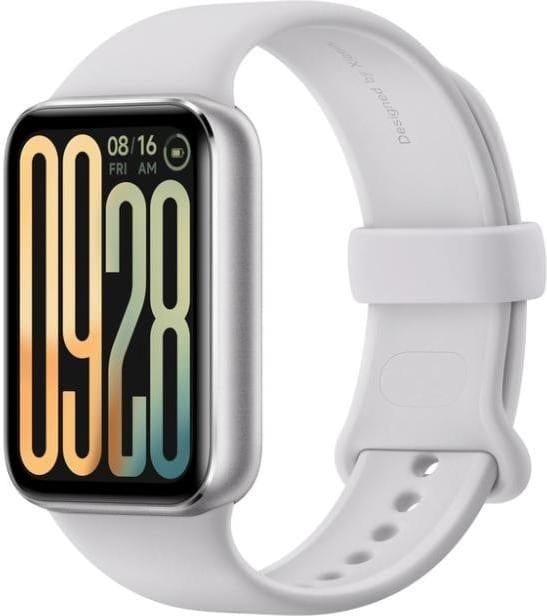
3. Xiaomi Smart Band 9 Pro
The main advantage of the Xiaomi Smart Band 9 Pro is built-in GPS. Runners no longer need to carry a heavy smartphone on training runs just to see the route map in the app afterward.
The aluminum body and 1200-nit AMOLED display make it very practical: numbers remain readable even at bright noon. However, active GPS navigation drains the battery quickly — something to keep in mind when planning 2–3 hour long runs. It’s an excellent all-in-one device for those who want everything at once without paying the price of a used car for professional running watches.
Features:
AMOLED display
Brightness up to 1200 nits
GPS
Heart rate monitor
Pulse oximeter (SpO2)
Sleep tracking
Step counter
Over 150 activity modes, including running and swimming
5 ATM water resistance
Advantages:
Built-in GPS is convenient for phone-free solo runs.
Bright display lets you quickly check stats while running.
Accurate heart rate monitoring helps stay in the target zone.
Many modes for different running styles — from sprints to long distances.
Who it’s for:
Runners who need independent route tracking.
Those who value a clear display for on-the-go stats.
Beginners and experienced athletes looking for a versatile everyday + running band.
People running outdoors in bright sunlight.
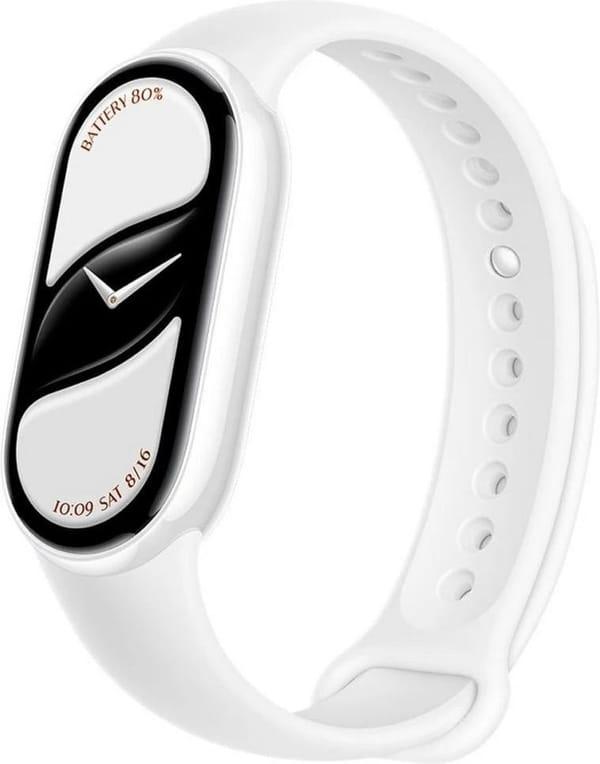
4. Xiaomi Smart Band 10
The Xiaomi Smart Band 10 is evolution, not revolution. The screen is even brighter (1500 nits), which seems excessive until you run into direct sunlight. It lacks full GPS like the Pro version, but it introduces built-in running courses.
For beginners this is a helpful feature: the band vibrates to tell you when to switch to walking or speed up during interval sessions. The optical heart rate sensor has become more accurate, but physics can’t be fooled — during sharp sprints it will still lag a bit compared to chest straps. It’s the perfect everyday option that covers the needs of 90% of recreational runners.
Features:
AMOLED display
Brightness up to 1500 nits
Heart rate monitor
Pulse oximeter (SpO2)
Sleep tracking
Step counter
Over 150 activity modes, including running and swimming
5 ATM water resistance
Advantages:
High screen brightness is convenient for reading data on sunny runs.
Built-in running courses provide ready-made plans for intervals or long runs.
Accurate optical heart rate sensor tracks load in real time.
Light weight doesn’t distract during running.
Who it’s for:
Runners who prefer structured workouts with guided courses.
Those who run a lot during daylight and need a bright display.
Beginners looking for simple running guidance.
5. Xiaomi Mi Smart Band 8
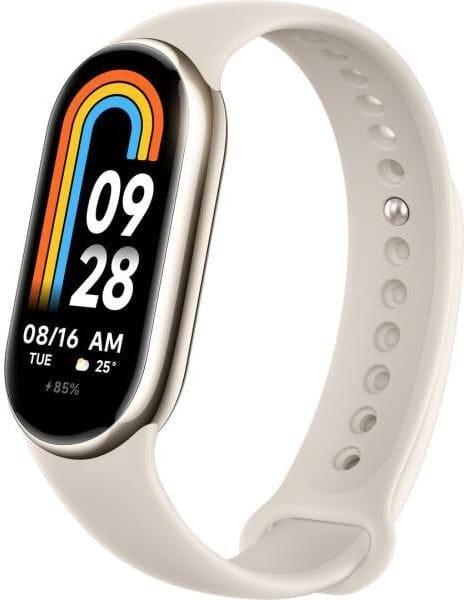
The Xiaomi Mi Smart Band 8 is a classic that people buy when they don’t want to overpay for brand name. Its main highlight is the 60 Hz screen. If older bands had slightly laggy interfaces, here the animation is smooth and pace numbers don’t turn into mush when scrolling during a run.
The band is lightweight and barely noticeable on the wrist, but there’s one important note for runners: no built-in GPS. To record a route you still need to carry your phone. On the positive side, the heart rate sensor has become noticeably more reliable — for easy park runs its accuracy is good enough to stay in the “green zone”. Plus you can attach it to your shoe with the optional Running Clip, turning it into a device that measures stride length and ground contact time — impressive analytics for such a tiny gadget.
Features:
AMOLED display
Brightness up to 600 nits
Heart rate monitor
Pulse oximeter (SpO2)
Sleep tracking
Step counter
Over 150 activity modes, including running
Advantages:
Smooth 60 Hz display is comfortable for viewing data while moving.
Improved heart rate accuracy is sufficient for most casual runs.
Blood oxygen monitoring is useful on high-altitude or intense sessions.
Many running-specific modes let you tailor tracking to your style.
Who it’s for:
Runners who want a simple, budget-friendly everyday tracker.
Those okay with carrying a phone for route recording.
Beginners and casual runners looking for great value.
6. Samsung Galaxy Fit 3
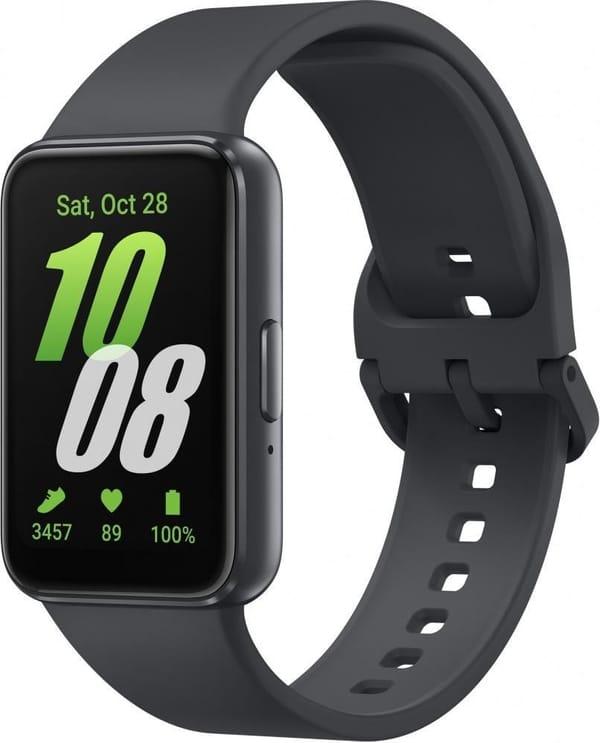
The Samsung Galaxy Fit 3 looks more expensive than it actually is. Its aluminum body and wide screen make it resemble full smartwatches. Reading notifications on the run is much more convenient here than on narrow Xiaomi displays.
This band includes a barometer and altimeter — features rarely found in budget devices. They help accurately track elevation gain on hilly routes. Like most Xiaomi models, however, it has no built-in GPS, so the phone remains your route-recording partner. Samsung focused on ecosystem integration: if you own a Samsung phone, connection to Samsung Health is seamless, and sleep/stress reports help explain why today’s run feels harder than yesterday.
Features:
AMOLED display
Heart rate monitor
Pulse oximeter (SpO2)
Sleep tracking
Step counter
Over 100 activity modes, including running and swimming
Altimeter
Barometer
5 ATM water resistance
Advantages:
Large bright screen makes reading notifications and stats comfortable on the move.
Barometer + altimeter are great for hilly or trail running.
Sleep and stress monitoring help plan recovery after runs.
Notifications keep you connected without pulling out your phone.
Who it’s for:
Runners on varied terrain where elevation matters.
People who value a larger, more readable display.
Users already in the Samsung ecosystem.
Those who want to stay connected during runs.
7. Honor Band 9
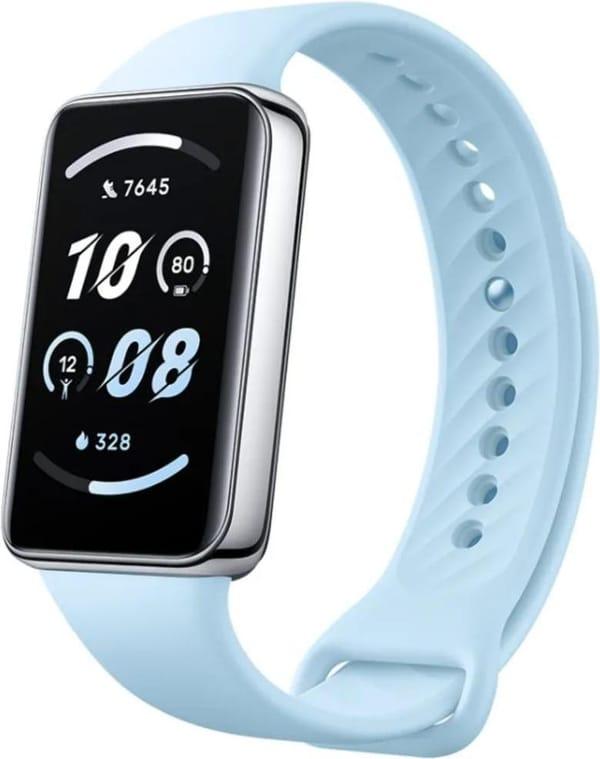
The Honor Band 9 features a rectangular AMOLED display that remains readable in sunlight during runs. The plastic body is lightweight, and the blue silicone strap fits comfortably without causing irritation even after long sessions.
The band offers various running modes and continuously tracks heart rate with an optical sensor. Blood oxygen measurement helps understand how the body responds to load during intense sessions or at altitude. Water resistance lets you run comfortably in the rain.
Features:
AMOLED display
Heart rate monitor
Pulse oximeter (SpO2)
Sleep tracking
Step counter
Sports modes including running
5 ATM water resistance
Vibration motor
Advantages:
Very light — almost unnoticeable during long runs.
Clear display shows heart rate and stats at a glance.
Blood oxygen monitoring is useful in challenging conditions.
Modes suit different running styles — easy to intense.
Who it’s for:
Runners looking for a simple, lightweight daily training device.
Those who prefer wrist-based data viewing.
Beginners who want basic activity tracking.
City runners who value compactness and a good screen.
Conclusion
Choosing among these devices comes down to one simple question: what matters more — looking at a screen during the run or deeply analyzing the data after the shower.
WHOOP is about conscious, data-driven athletics. If your budget allows for the subscription, you get a powerful health-control tool that never distracts you with notifications. It’s the choice for those who value minimalist aesthetics and in-depth internal-state analytics rather than just kilometers logged.
Xiaomi remains the king of mass-market wearables. The 9 Pro effectively eliminates the need for expensive sports watches for most hobbyists thanks to built-in GPS. The Smart Band 10, in turn, is the simplest and clearest entry ticket into the world of running: affordable, bright, and packed with beginner-friendly guidance.
Ultimately, no sensor can do the work for you. But if a device motivates you to get out the door even in bad weather or wisely tells you to rest today, then it has fully justified its price.