

Best Fitness Trackers with Heart Rate Monitor: Features and Benefits
January 17, 2026
The wearable electronics market has long passed the "just a pedometer" stage. Today a wristband is more like a portable laboratory. The main focus has shifted from simple heart rate counting to complex analytics: how well the body copes with stress, whether it manages to recover overnight, and whether it's time to take a break from training.
Modern optical sensors have approached the accuracy of medical devices, although they still retain specific nuances (for example, a slight delay during sharp acceleration while running). Nevertheless, for the overall picture of health status these data are more than sufficient.
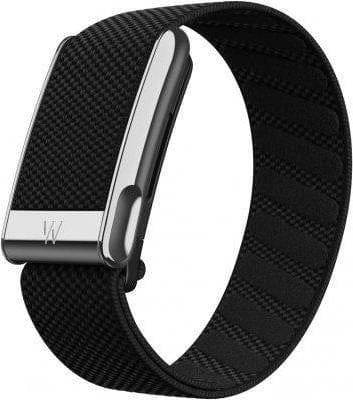
1. WHOOP MG Life Obsidian/Titanium
WHOOP MG Life Obsidian/Titanium is a specialized tool for those who prioritize analytics over visual effects. The device has no display at all, which frees the user from intrusive notifications and the constant need to check the time. The entire body is a compact sensor hidden under a SuperKnit nylon strap.
The main work happens "under the hood": the sensor scans heart rate variability (HRV), respiratory rate and skin temperature around the clock. Instead of dry heart rate numbers, the app provides a comprehensive assessment of the body's readiness for load. This allows you to accurately determine when an athlete should push harder and when the body is on the verge of overtraining and needs rest.
Features:
Heart rate monitor with heart rate variability (HRV) measurement
Pulse oximeter (SpO2)
Sleep tracking
ECG and heart screening
Stress and skin temperature monitoring
Support for yoga, cycling, running, swimming, strength training
IP68 protection (up to 10 meters)
Advantages:
Continuous 24/7 data collection without screen distraction
Calculation of recovery and strain indicators based on real physiological metrics
Ability to perform ECG directly from the wrist with the appropriate strap
Comfortable nylon strap for long wear during workouts or sleep
Deep health analytics through the app
Who it's for:
Those who train seriously and want to understand their recovery level
People monitoring stress and sleep quality in everyday life
Those who prefer a screenless device to minimize distractions
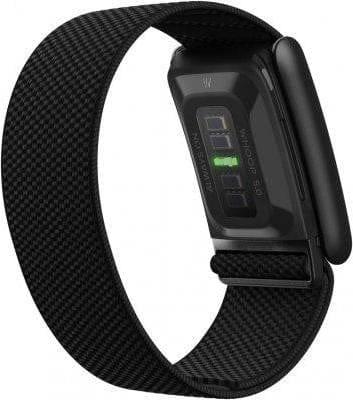
2. WHOOP 5.0 Peak Obsidian SuperKnit
The WHOOP 5.0 Peak Obsidian SuperKnit has no screen at all, and this is a deliberate choice by the brand. The device is created for those who are annoyed by endless notifications and screen glow at night. All focus here is shifted to sensors that scan heart rate variability (HRV), skin temperature and respiratory rate 24/7.
The main value of WHOOP lies not in the hardware itself, but in the app's algorithms. The system calculates the "Strain" (load) and "Recovery" (recovery) indices, literally telling the user whether to go training today or better stay in bed. The SuperKnit nylon strap allows the sensor to be worn almost unnoticed, which is critically important for obtaining accurate data during sleep.
Features:
Heart rate monitor with HRV
Pulse oximeter (SpO2)
Sleep tracking
Stress monitoring
Support for running, cycling, yoga, swimming, strength training
IP68 protection
Advantages:
Round-the-clock monitoring without the need to look at the screen
Biological age assessment and health trend tracking
Breathable strap for comfort throughout the day
Automatic calculation of recovery and load
Who it's for:
Athletes for whom detailed training analytics are important
Those who want to track the impact of stress on the body
People looking for a device for constant wear without extra notifications
Those who value in-depth recovery recommendations
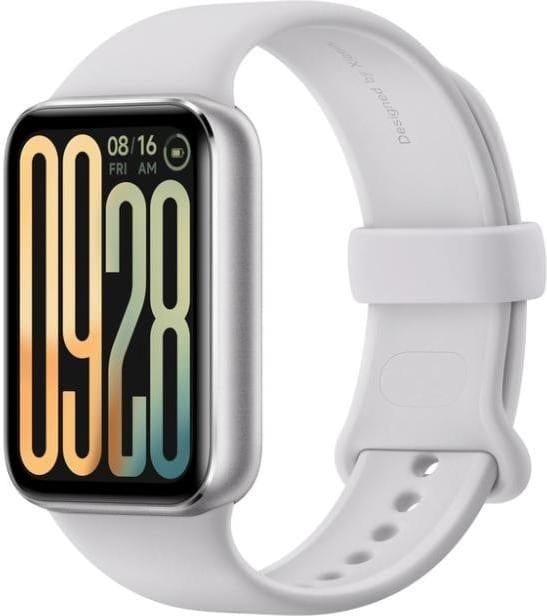
3. Xiaomi Smart Band 9 Pro
Xiaomi Smart Band 9 Pro is a serious claim to leadership among affordable trackers with a large screen. The aluminum body and bright 1.74-inch AMOLED display make it look like premium smartwatches. Peak brightness of 1200 nits solves the main problem of budget gadgets — the interface is now perfectly readable even under direct sunlight.
It has a built-in GPS module. This allows recording running or cycling routes without a smartphone. Sensor accuracy has been revised: the algorithms now better cope with noise filtering during sharp heart rate jumps, making the device suitable for amateur sports.
Features:
1.74-inch AMOLED display, 480×336 resolution
Heart rate monitor
Pulse oximeter (SpO2)
Sleep tracking
Built-in GPS
More than 150 sports modes
5 ATM protection
Advantages:
Bright screen that does not fade in the sun during outdoor workouts
Accurate GPS for independent route tracking
24/7 heart rate and blood oxygen control
Lightweight aluminum body for comfortable all-day wear
Many modes for different sports — from boxing to swimming
Who it's for:
Those who run or cycle and need GPS
People who prefer a device with a large clear display
Those who do various types of training
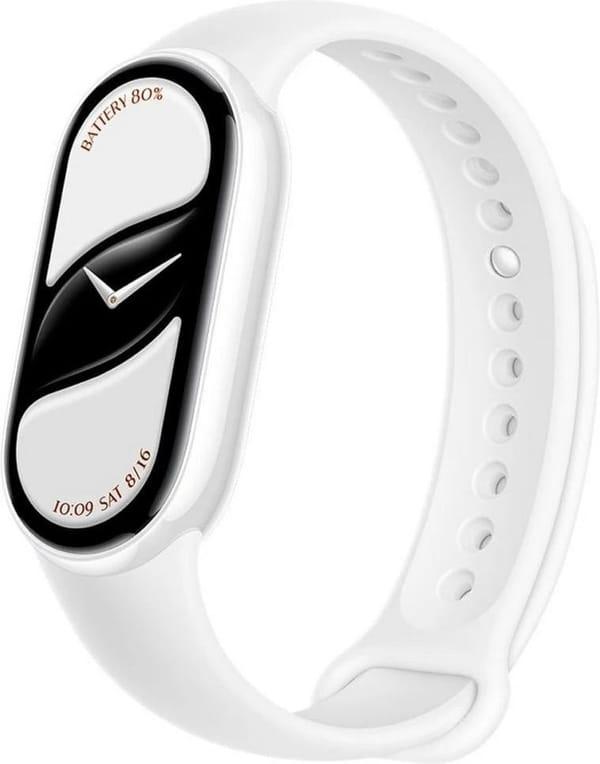
4. Xiaomi Smart Band 10
Xiaomi Smart Band 10 represents the evolution of the classic format. The screen has become even brighter and more responsive, while the bezels are practically invisible. The main update concerns the "internals": the updated sensor block now more accurately tracks indicators during complex types of activity such as swimming or high-intensity interval training.
The device has retained its lightness, so it is practically not felt on the wrist. Automatic activity recognition works correctly: the band itself understands when the user has switched from a walking step to running and offers to start recording the workout.
Features:
1.72-inch AMOLED display, 212×520 resolution
Heart rate monitor
Pulse oximeter (SpO2)
Sleep tracking
More than 150 sports modes
5 ATM protection
Advantages:
Very bright display for reading data outdoors
Automatic recognition of popular workouts
24/7 heart rate and sleep monitoring
Light weight — only about 23 grams with strap
Who it's for:
Those who want a clear screen for quick statistics viewing
People engaged in various sports
Those who value constant health monitoring without unnecessary complexity
Those who prefer an oval band design
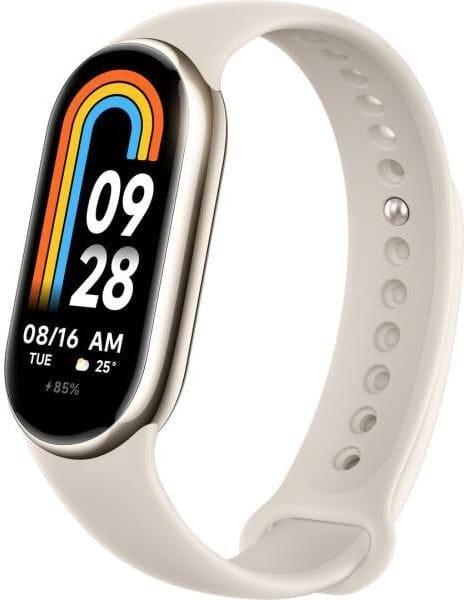
5. Xiaomi Mi Smart Band 8
Xiaomi Mi Smart Band 8 features a 1.62-inch AMOLED display with brightness up to 600 nits — step or heart rate statistics are easy to read even during a run in bright sunlight. 490×192 resolution ensures a sharp image, and automatic brightness adjustment adapts to surrounding lighting.
The band tracks heart rate 24/7, measures blood oxygen levels and analyzes sleep. Support for over 150 activity modes is suitable for running, swimming or cycling, and 5 ATM protection allows wearing it in the pool or in the rain.
Features:
1.62-inch AMOLED display, 490×192 resolution
Brightness up to 600 nits with automatic adjustment
Heart rate monitor
Pulse oximeter (SpO2)
Sleep tracking
More than 150 sports modes
5 ATM protection
Advantages:
Clear and bright screen for quick data glance on the move
24/7 heart rate and blood oxygen monitoring on regular days
Many modes for different workouts — from fitness to boxing
Water resistance that easily handles swimming
Who it's for:
Those who run or train outdoors and need a readable display
People monitoring sleep and stress in daily routine
Those who try different sports
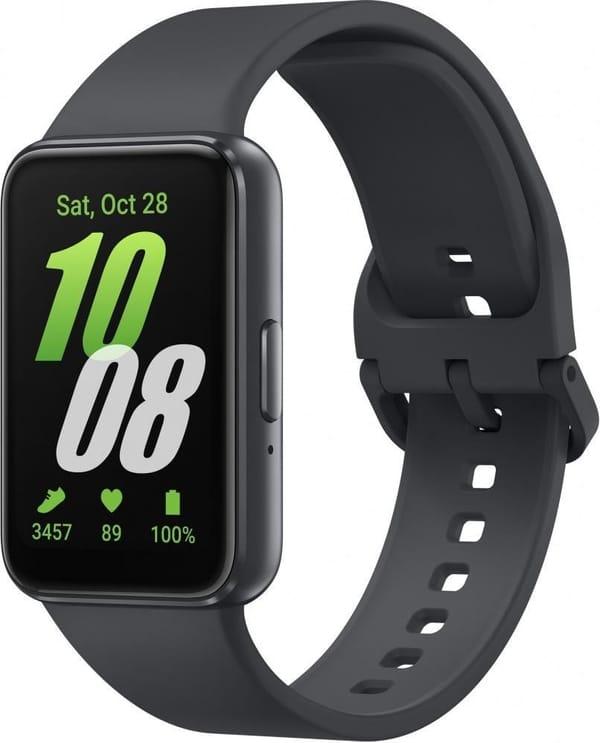
6. Samsung Galaxy Fit3
Samsung Galaxy Fit3 is the answer for those who value ecosystem integration and material reliability. The aluminum body and rectangular screen make it resemble classic smartwatches.
In addition to the standard set of sensors (heart rate, SpO2, sleep), the device integrates a barometer and altimeter. This makes the model an excellent choice for hiking and cycling on rough terrain, as the band understands elevation changes. Integration with Samsung services ensures seamless health data transfer into the user's overall monitoring system.
Features:
AMOLED display, 256×402 resolution
Heart rate monitor
Pulse oximeter (SpO2)
Sleep tracking
More than 100 sports modes
5 ATM protection
Altimeter and barometer
Advantages:
Large display for comfortable reading of statistics without squinting
Accurate sleep and heart rate monitoring throughout the day
Modes for outdoor activities with additional elevation sensors
Water resistance suitable for pool or rainy runs
Lightweight aluminum body for comfort during long wear
Who it's for:
Those who enjoy hiking or cycling with elevation tracking
People who need a large screen for notifications and data
Those who do swimming or other water-based training
Those who value round-the-clock health monitoring
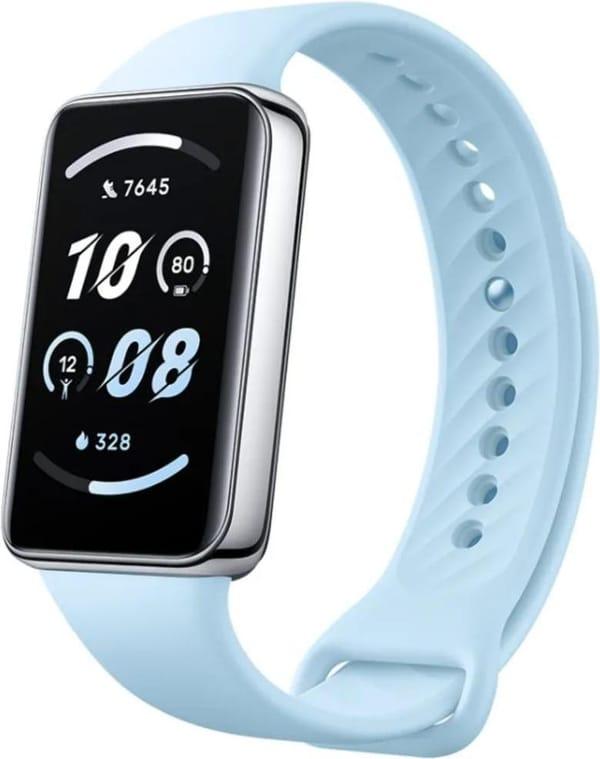
7. Honor Band 9
Honor Band 9 features a rectangular AMOLED display — heart rate or step count numbers look sharp even with a quick glance during running or walking. The lightweight plastic body weighs only 16 grams, so you almost don't feel it on your wrist even when wearing it all day.
The band continuously monitors heart rate and blood oxygen levels, analyzes sleep and supports 96 activity modes. 5 ATM protection allows swimming or training in the rain without removing it, while the silicone strap sits comfortably during activities.
Features:
AMOLED display, 402×256 resolution
Heart rate monitor
Pulse oximeter (SpO2)
Sleep tracking
96 sports modes
5 ATM protection
Vibration motor
Advantages:
Very light weight — only 16 grams, barely noticeable on the wrist
Clear display for quick data reading on the go
24/7 heart rate and blood oxygen monitoring in everyday life
Water resistance that easily handles swimming
Who it's for:
Those looking for a lightweight band for daily wear
People doing various types of training, including pool sessions
Those who want to monitor sleep and heart rate without extra weight on the wrist
Conclusion
A modern fitness tracker has ceased to be just a toy. It is a tool of awareness. One glance at the statistics helps decide: go all out in the gym today or give the body a pause.
The choice of a specific model depends on priorities. If deep sports analytics without distractions is needed — WHOOP leads. If data visualization and versatility are important — it's worth looking at the Xiaomi or Samsung lines. In any case, incorporating such a gadget into daily routine helps manage your condition not by intuition, but based on real numbers.