

Camera for Photo Session: List of Models and How to Choose
March 30, 2026
Choosing a camera for a photo shoot is more difficult than it seems at first glance. In the store window, everything looks equally good, the specifications also seem similar, and the prices can differ several times over. At some point, you simply start to doubt - do you really need to pay more.
There is no universal answer here, because everyone's tasks are different. One person shoots portraits in the studio, another runs around the city in search of live shots, and a third creates content for social networks. And each scenario requires its own equipment.
In this article, there will be not just theory, but a clear list of cameras for photo shoots that are really worth considering. At the same time, we will figure out what to pay attention to when choosing, so that the purchase does not turn into a random choice based on emotions.
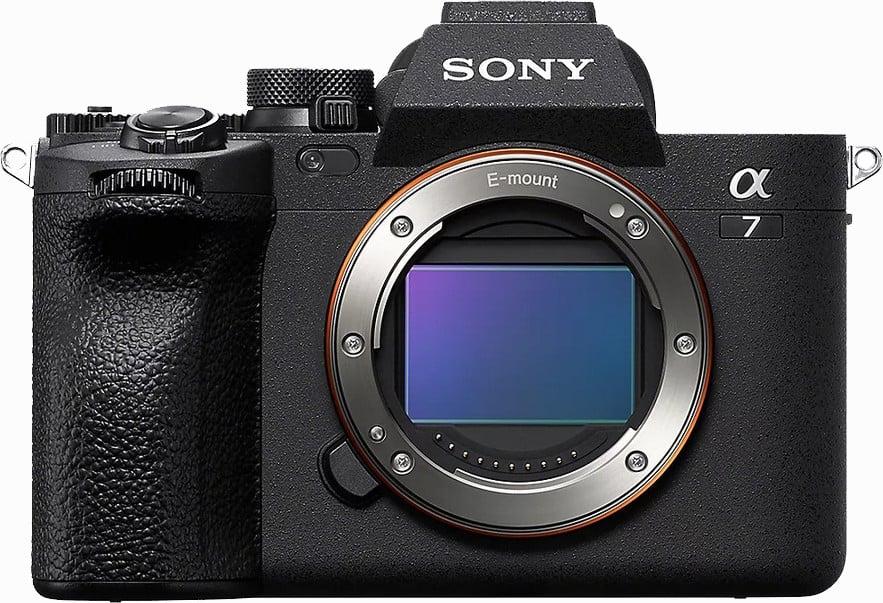
1. Sony Alpha A7 IV
Sony Alpha A7 IV looks like a universal camera for photo shoots where it is important to get a stable result without unnecessary experiments. A full-frame 33 MP sensor combined with the BIONZ X processor delivers a detailed image with even color reproduction. Autofocus with 567 points works accurately, especially in portrait shooting, where it is important to keep focus on the eyes and not lose the subject when moving.
In operation, the camera feels well thought out for long shoots. Built-in stabilization helps when shooting handheld, the dual memory card slot reduces the risk of losing material, and the body looks reliable enough for regular use. This is not the most compact model, but it easily handles both studio and on-location shoots.
Key points:
full-frame 33 MP sensor with back-illumination
BIONZ X processor
autofocus with 567 points
built-in image stabilization
continuous shooting up to 10 frames per second
dual memory card slot
electronic OLED viewfinder
Who it is suitable for:
portrait photo shoots
shoots in the studio and outdoors
universal use without changing equipment
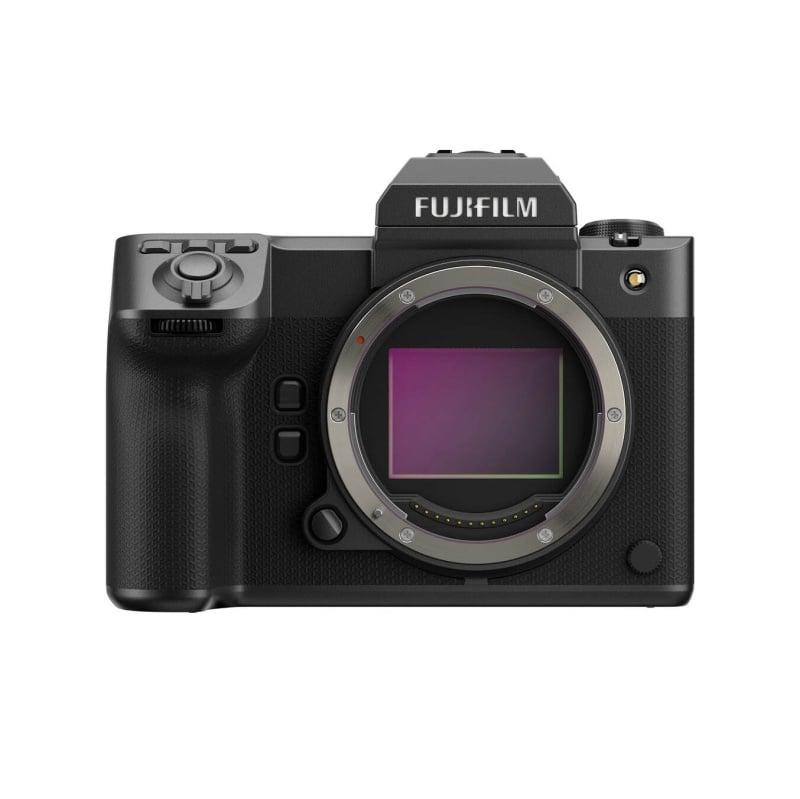
2. Fujifilm GFX 100 II
Fujifilm GFX 100 II is designed for shooting where detail is the top priority. The medium format 102 MP sensor delivers a very dense image with excellent texture rendering, which is noticeable in studio and commercial photo shoots. The X-Processor 5 speeds up processing, so the camera does not feel slow despite the high volume of data.
At the same time, the camera is not limited to the studio only. Built-in stabilization allows handheld shooting, and autofocus with AI-based algorithms handles tracking faces and moving objects. The body is protected from external conditions, so it can be used on location, although the main scenario is still related to controlled shooting.
Key points:
medium format 102 MP sensor
X-Processor 5
5-axis stabilization up to 8 stops
autofocus with object tracking
continuous shooting up to 8 frames per second
8K and 4K video recording
Pixel Shift mode for ultra-high resolution
Who it is suitable for:
studio and commercial photo shoots
shooting with an emphasis on detail
work with advertising and production content
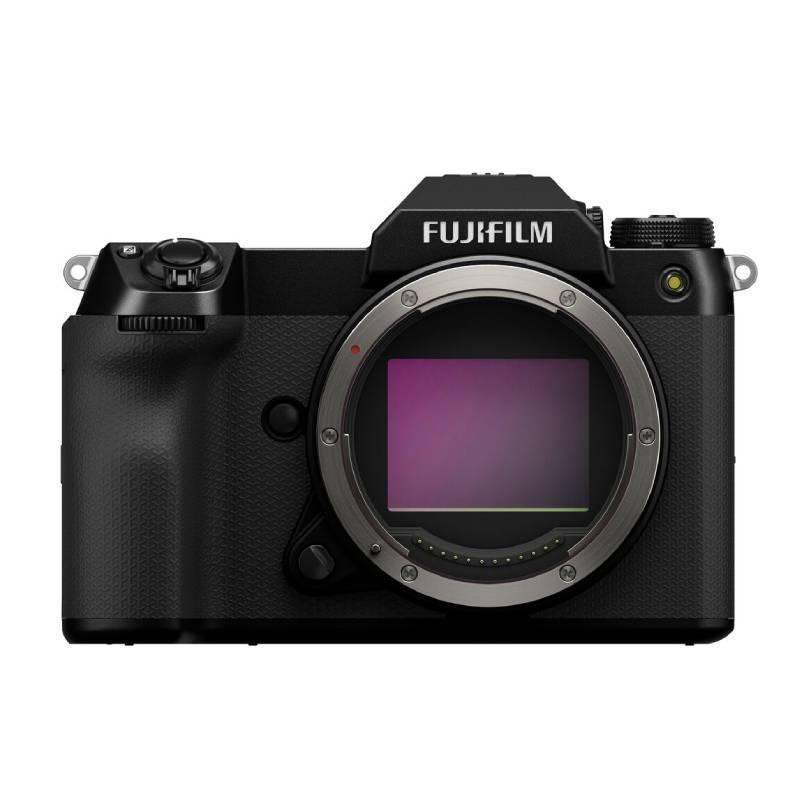
3. Fujifilm GFX 100S II
Fujifilm GFX 100S II combines medium format image quality with a more compact body. The 102 MP sensor and X-Processor 5 provide a detailed picture with good depth and soft tone rendering. At the same time, the camera feels faster and more convenient in everyday work than larger models of the same format.
Special emphasis is placed on ease of use. The body is lighter than most medium format cameras, while remaining protected from external conditions. Stabilization allows handheld shooting, and autofocus with updated algorithms helps keep focus on moving objects. As a result, the camera is suitable not only for the studio, but also for more flexible shooting scenarios.
Key points:
medium format 102 MP sensor
X-Processor 5
5-axis stabilization up to 8 stops
autofocus with object tracking
continuous shooting up to 7 frames per second
4K video recording
Pixel Shift mode up to 400 MP
Who it is suitable for:
studio and on-location photo shoots
shooting with high demands on detail
more mobile work with medium format
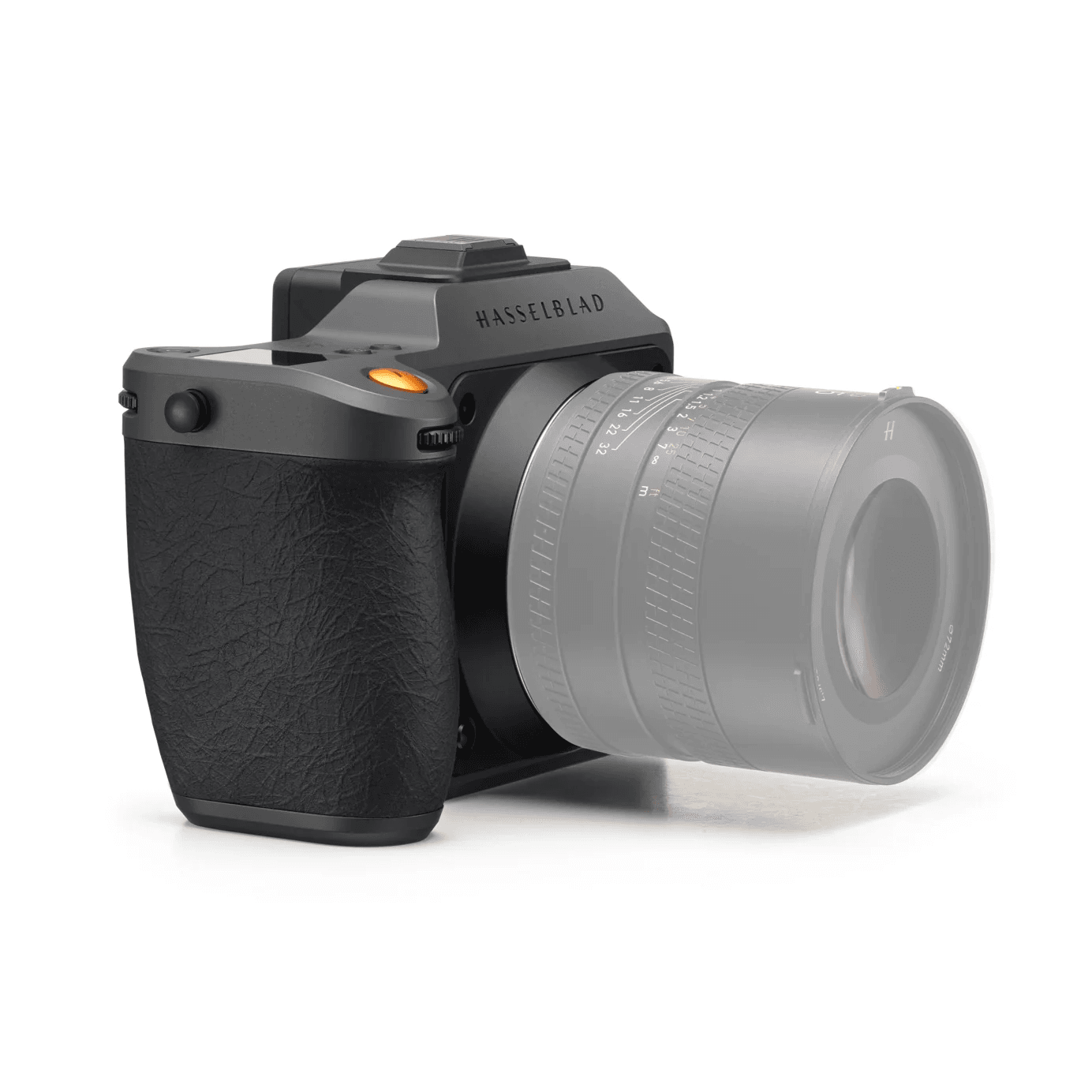
4. Hasselblad X2D II 100C
Hasselblad X2D II 100C builds shooting around maximum detail and careful color work. The medium format 100 MP sensor delivers a dense image with a wide dynamic range, which is especially noticeable in studio photo shoots and complex lighting. Color reproduction looks natural, without excessive processing, and this is felt already in the original frames.
The camera also emphasizes stability in operation. The autofocus system with PDAF and LiDAR helps to keep focus more accurately, and stabilization reduces the impact of hand shake. The built-in SSD and bright screen simplify viewing and storing material right during the shoot. At the same time, the body remains relatively comfortable for long sessions, despite the format.
Key points:
medium format 100 MP sensor
autofocus system with PDAF and LiDAR
5-axis stabilization up to 10 stops
wide dynamic range
built-in 1 TB SSD
bright HDR-supported screen
support for a mobile app for working with files
Who it is suitable for:
studio photo shoots with controlled lighting
shooting with emphasis on color and detail
work with advertising and commercial content
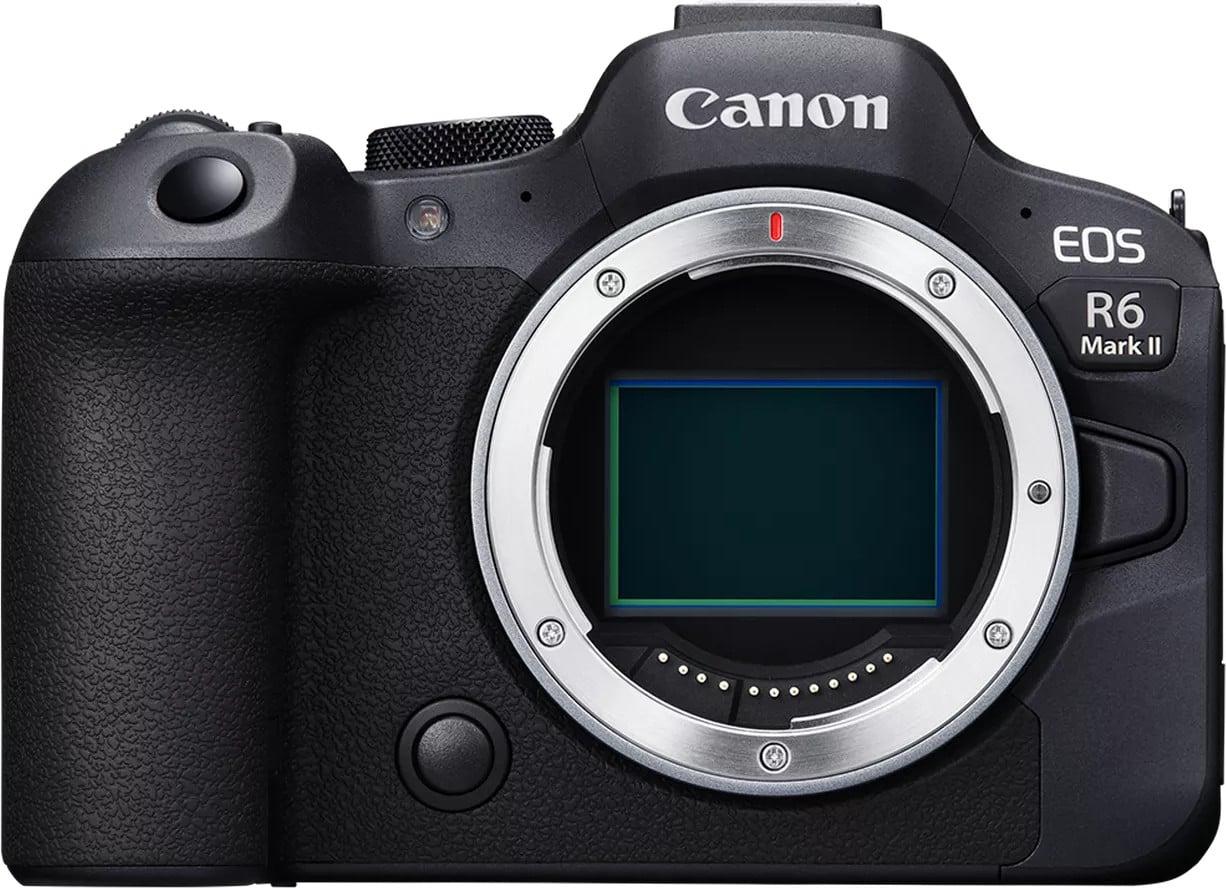
5. Canon EOS R6 Mark II
Canon EOS R6 Mark II focuses on speed and convenience in various shooting scenarios. The full-frame 24.2 MP sensor provides a balanced image with enough detail without overloading the file. The Dual Pixel CMOS AF II autofocus system with a large number of zones works quickly and accurately, which is especially noticeable when shooting motion.
In use, the camera feels light and flexible. High continuous shooting speed allows you to capture dynamic moments, and stabilization helps shoot without a tripod. The swivel screen simplifies framing from different angles, and wireless functions allow quick file transfer. Due to its weight and size, the camera does not tire you during long shoots.
Key points:
full-frame 24.2 MP sensor
Dual Pixel CMOS AF II autofocus
up to 40 frames per second in continuous shooting
built-in image stabilization
4K video shooting up to 60 frames per second
swivel touchscreen
Wi-Fi and Bluetooth support
Who it is suitable for:
dynamic photo shoots and reportage shooting
work in variable lighting conditions
shooting without a tripod and in motion
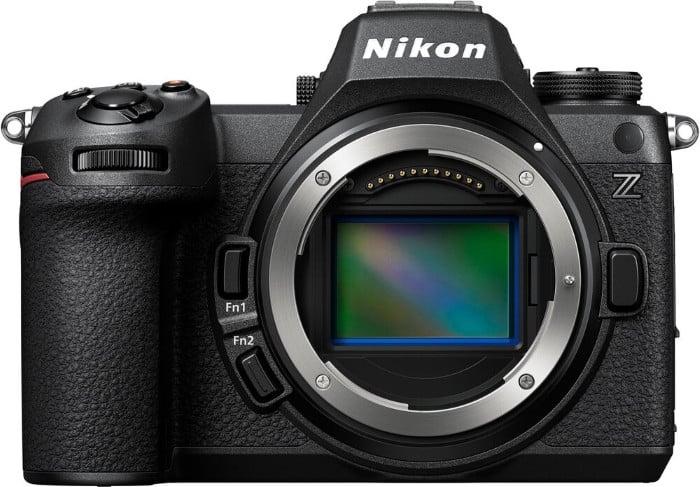
6. Nikon Z6 III
Nikon Z6 III is built around a balance between image quality and ease of use. The full-frame 24.5 MP sensor provides sufficient detail for photo shoots without overloading files. The camera supports a wide ISO range, which allows working in various lighting conditions without significant loss of quality.
In use, the camera feels flexible and intuitive. Autofocus combines phase and contrast systems, stabilization helps with handheld shooting, and continuous shooting is suitable for working with motion. The swivel screen and viewfinder simplify framing, and the presence of wireless interfaces makes file transfer faster and easier.
Key points:
full-frame 24.5 MP sensor
flexible ISO range with extension
combined autofocus system
built-in image stabilization
continuous shooting up to 14 frames per second
4K video up to 60 frames per second
Wi-Fi and Bluetooth support
Who it is suitable for:
universal photo shoots in different conditions
handheld shooting and in motion
users who value a balance of capabilities and convenience
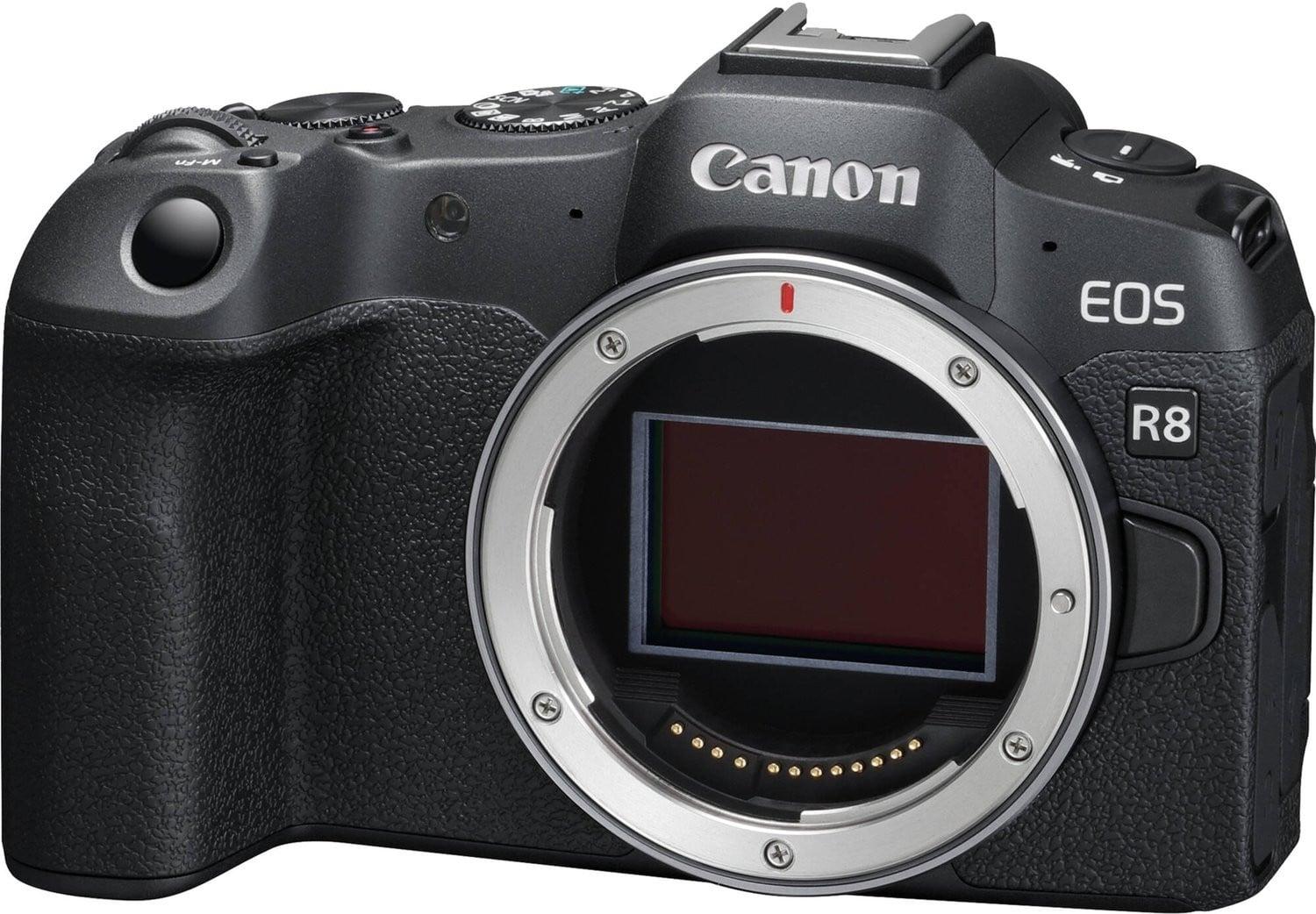
7. Canon EOS R8
Canon EOS R8 emphasizes compactness and ease of use in photo shoots where mobility is important. The full-frame 24 MP sensor provides a balanced image without overloading with details, which is convenient when working with a large number of frames. The camera supports a wide ISO range, so it can be used both in good light and in more difficult conditions.
In operation, it feels light and comfortable for long shoots. The swivel screen simplifies framing at different angles, and autofocus handles basic tasks without unnecessary settings. Connection via Wi-Fi and USB-C allows quick file transfer, which is useful for content shoots or fast projects.
Key points:
full-frame 24 MP sensor
compact and lightweight body
4K video support up to 60 frames per second
swivel touchscreen
combined autofocus
Wi-Fi and USB-C support
dual memory card slot
Who it is suitable for:
on-location photo shoots and shooting in motion
work with content and fast projects
users for whom lightness and compactness are important
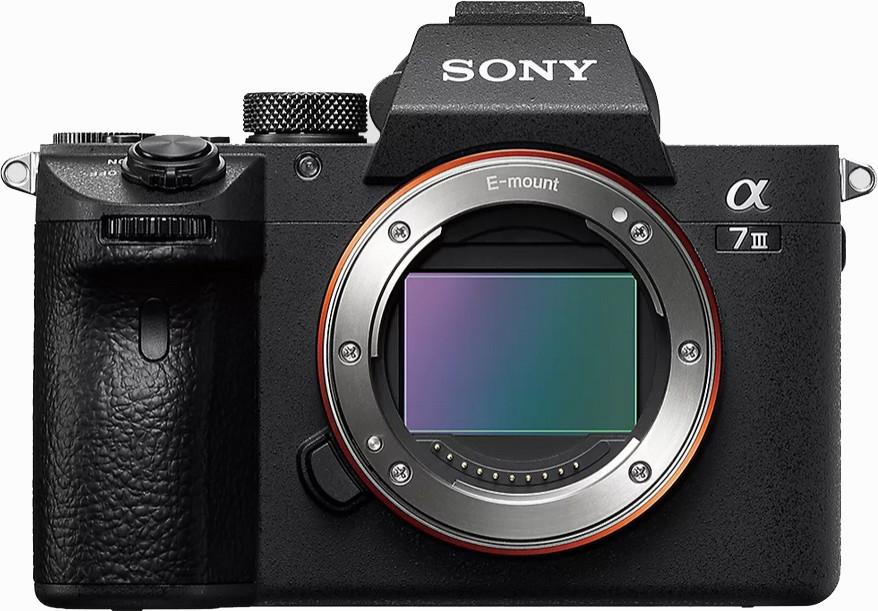
8. Sony Alpha A7 III
Sony Alpha A7 III is built around versatility and stable operation in different shooting conditions. The full-frame 24 MP sensor delivers a predictable result in terms of detail and color, which is convenient for regular photo shoots. The camera supports 4K video and a basic set of functions that cover most tasks without the need to delve into complex settings.
In use, it feels like a reliable working option. Two memory card slots add confidence during shooting, and the body remains compact enough for carrying. The camera is not overloaded with unnecessary functions, so it is easier to work with in everyday scenarios where stability is important, not experiments.
Key points:
full-frame 24 MP sensor
4K video shooting support
two memory card slots
Wi-Fi support
compact body
universal set of functions
Who it is suitable for:
universal photo shoots
shooting in the studio and outdoors
users who need a simple and stable camera
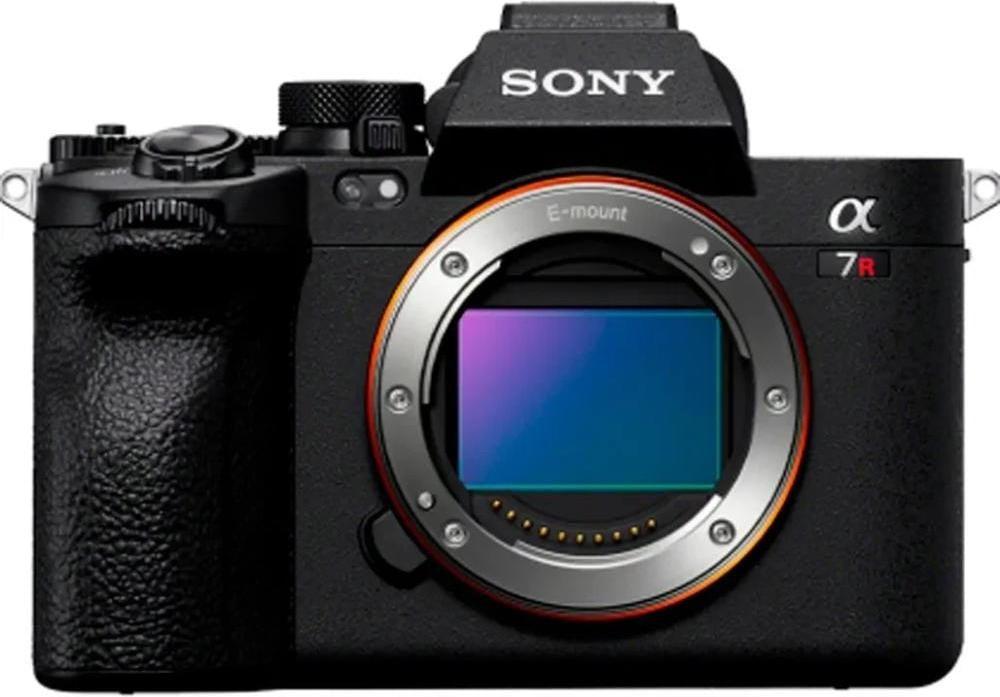
9. Sony Alpha A7R V
Sony Alpha A7R V is focused on shooting with a high level of detail. The full-frame 61 MP sensor delivers a very detailed image, which is suitable for portraits, advertising, and studio work. The camera supports a wide ISO range and various exposure metering modes, allowing flexible work with lighting.
At the same time, the camera remains functional in different scenarios. Stabilization helps with handheld shooting, autofocus combines phase and contrast systems, and the swivel screen makes the framing process more convenient. Support for different memory card formats and interfaces simplifies work with files and equipment connection.
Key points:
full-frame 61 MP sensor
continuous shooting up to 10 frames per second
8K video support
built-in image stabilization
combined autofocus
swivel touchscreen
Wi-Fi and Bluetooth support
Who it is suitable for:
studio and advertising photo shoots
shooting with an emphasis on detail
work with large images and post-processing
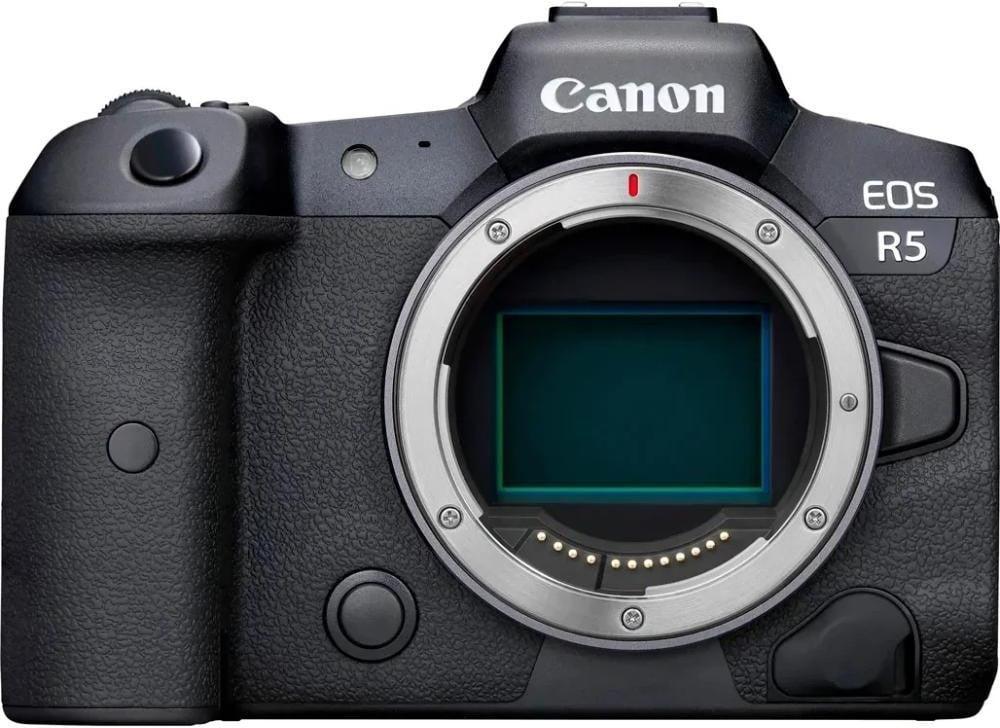
10. Canon EOS R5
Canon EOS R5 builds its operation around high detail and speed, which is noticeable in photo shoots with different scenarios. The full-frame 45 MP sensor delivers a clear image with good detail rendering, and the DIGIC X processor ensures fast frame processing. Autofocus with a large number of points works accurately, especially in portrait shooting, where it is important to keep focus on the eyes.
During shooting, the camera behaves stably even under high load. Continuous shooting is suitable for dynamic scenes, and built-in stabilization helps with handheld work. The body ergonomics allow you to comfortably hold the camera for a long time, which is important for shoots with a large number of frames.
Key points:
full-frame 45 MP sensor
DIGIC X processor
autofocus with a large number of points
built-in image stabilization
continuous shooting up to 20 frames per second
8K video support
well-thought-out body ergonomics
Who it is suitable for:
studio and commercial photo shoots
shooting with high detail
work with dynamic scenes
Conclusion
In the end, choosing a camera for a photo shoot rarely comes down to one "correct" model. It is more about matching tasks and capabilities. In some cases, speed and autofocus are more important, in others - detail and color work, and sometimes convenience and weight decide everything, especially if shoots go one after another without pauses.
If you look at all the options as a whole, it becomes clear that the difference between cameras is felt not in numbers, but in the work process. One behaves better in dynamics, another reveals itself more calmly in the studio, and the third simply does not interfere and does its job without unnecessary attention to itself. And this, to be honest, often turns out to be the most valuable.
Therefore, there is no point in chasing maximum specifications here. It is much more useful to understand exactly how the shooting goes and what irritates or limits it. A good camera in this context is one that removes unnecessary complexities rather than adding new ones.