

Best Cameras For Video Shooting: What to Choose in 2026
March 30, 2026
To be honest, choosing a camera for video is quite a quest. You watch reviews, comparisons, and after 10 minutes you no longer understand how one “4K 60 fps” differs from another.
Good news: in practice, everything is simpler than it seems. You don’t need to be a professional operator or understand every parameter to take a decent camera and start shooting high-quality video.
In this article, we’ll break it all down in a human-friendly way: without overload and unnecessary theory, only what really affects the result.
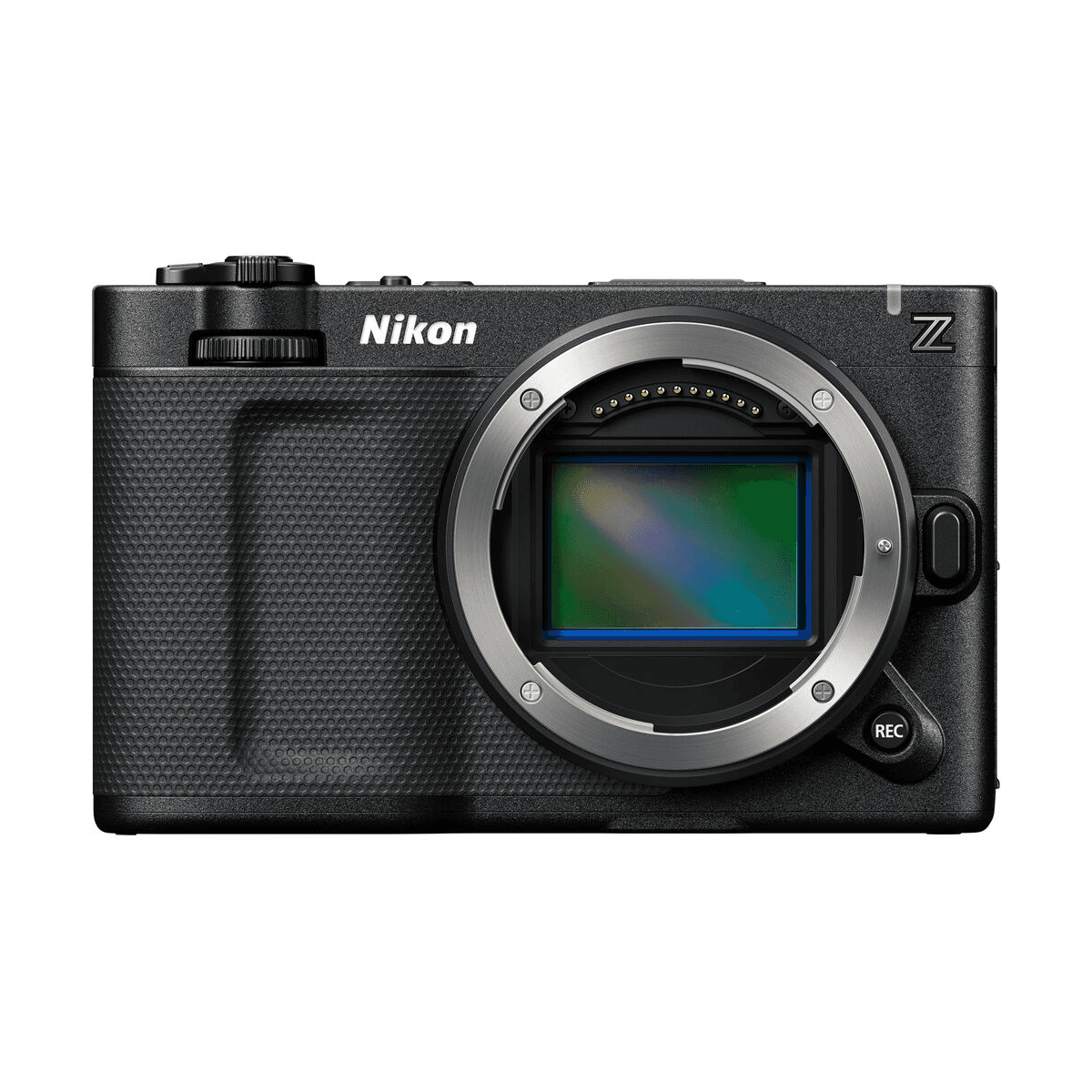
1. Nikon ZR Body
Nikon ZR Body looks like a camera originally designed for video, rather than a universal camera with an additional recording function. It uses a full-frame sensor and supports internal RAW recording, which gives more freedom in post-processing. Several codecs are available, so you can choose the format for a specific task - from light editing to more complex color correction. In terms of frame rate and resolution, the camera is flexible and does not limit shooting scenarios.
In use, everything is quite simple and without unnecessary complications. A compact body, a flip screen, and the ability to record sound without additional equipment make it convenient for everyday shooting. Stabilization is implemented through sensor shift, which helps when shooting handheld. If necessary, you can connect accessories and build a more complex system.
Main features:
Full-frame sensor with RAW video support
Several video codecs, including H.265 and N-RAW
Flexible frame rate and resolution settings
Stabilization via sensor shift
Flip touch screen
External microphone connection
Wi-Fi and Bluetooth
Who it’s for:
Those who primarily shoot video rather than photos
Those who need flexibility in editing
For handheld shooting without complex equipment
For small productions and independent creators
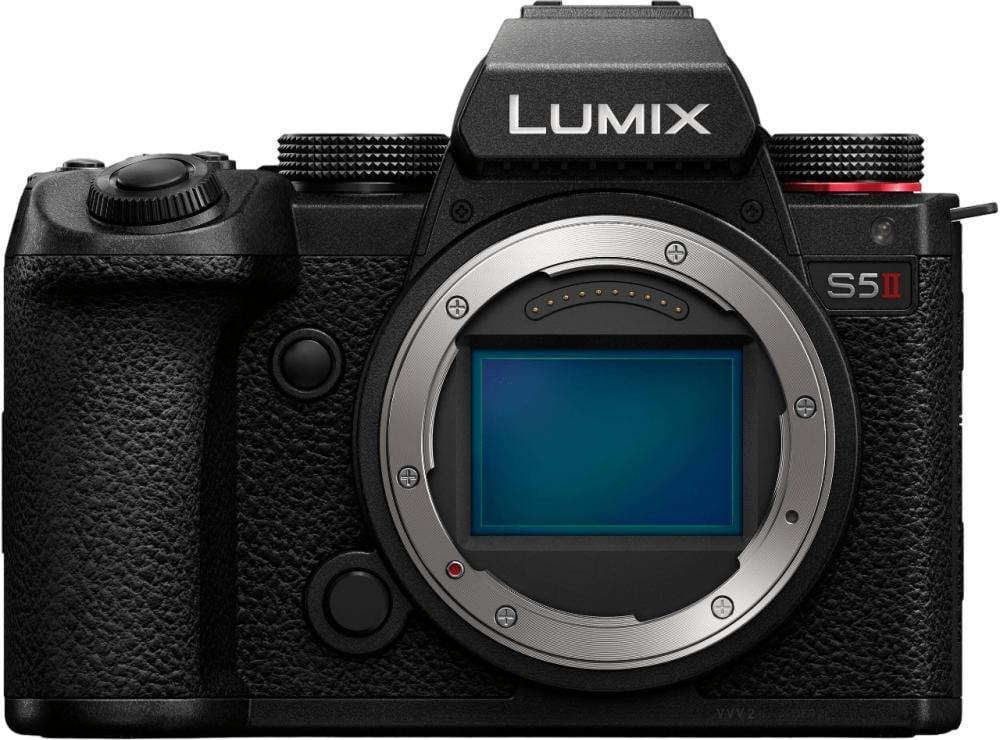
2. Panasonic Lumix S DC-S5 II Body
Panasonic Lumix S DC-S5 II Body is perceived as a universal camera where photo and video go without a clear bias in one direction. It uses a full-frame matrix, supports high-resolution shooting, and several popular video codecs. The autofocus is combined, with phase detection, which makes it more stable when shooting video compared to older solutions.
The controls are familiar and without surprises. There is a flip touch screen, built-in stabilization, and two memory card slots. The camera supports external microphone connection and basic wireless functions. Overall, it’s a working option without being overloaded with features, where everything is done quite logically.
Main features:
Full-frame 24.2 MP matrix
Support for video formats H.264, H.265, MPEG-4
Phase and contrast autofocus
Stabilization via sensor shift
Flip touch screen
Two memory card slots
Wi-Fi and Bluetooth
Who it’s for:
Those who shoot both photos and video
For regular shooting without complex setups
Those who need stable autofocus
For working with long recordings
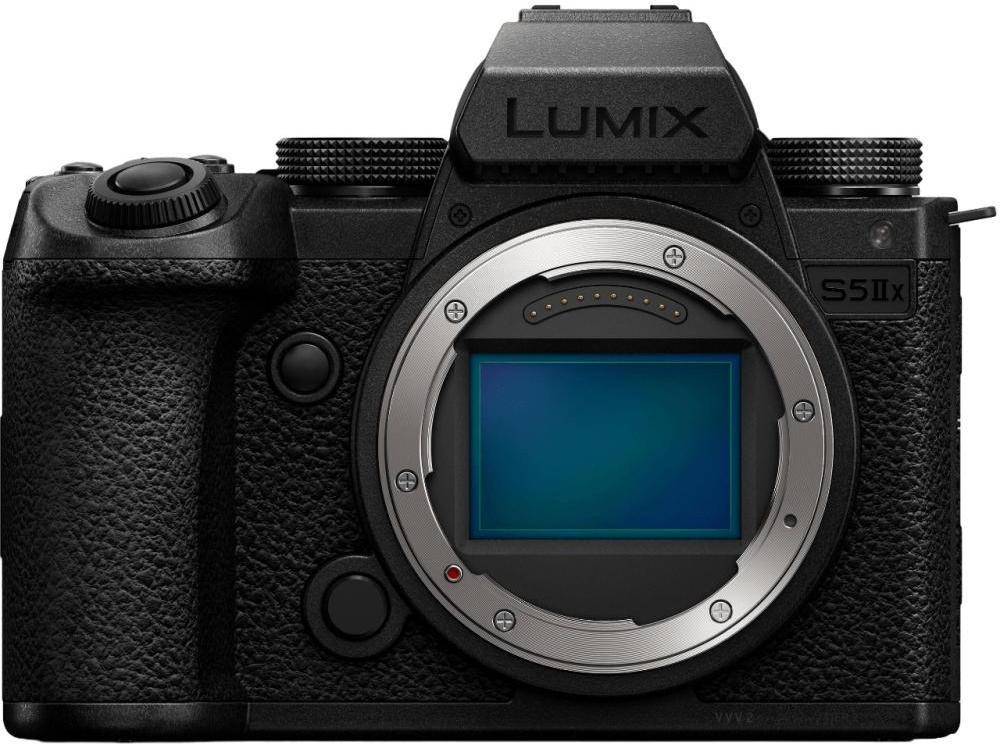
3. Panasonic Lumix S DC-S5 IIX Body
Panasonic Lumix S DC-S5 IIX Body is closer to a video-oriented option. The base is the same - a full-frame sensor, but it adds more advanced recording capabilities, including 10-bit video directly to the card. This simplifies further processing and gives more control over color. Support for different formats allows using the camera in various scenarios without being tied to one format.
In use, the camera remains understandable. There is stabilization, a flip screen, and a normal electronic viewfinder. Autofocus works through phase points, which helps when shooting moving objects. There is also signal output via HDMI, so the camera can be used with external devices.
Main features:
Full-frame 24.2 MP matrix
10-bit video recording
Support for H.264 and H.265
Image stabilization (sensor shift)
Flip touch screen
Two memory card slots
Video output via HDMI
Who it’s for:
Those who shoot video with subsequent processing
For more complex shooting tasks
Those who need control over color
For flexible setups with external devices
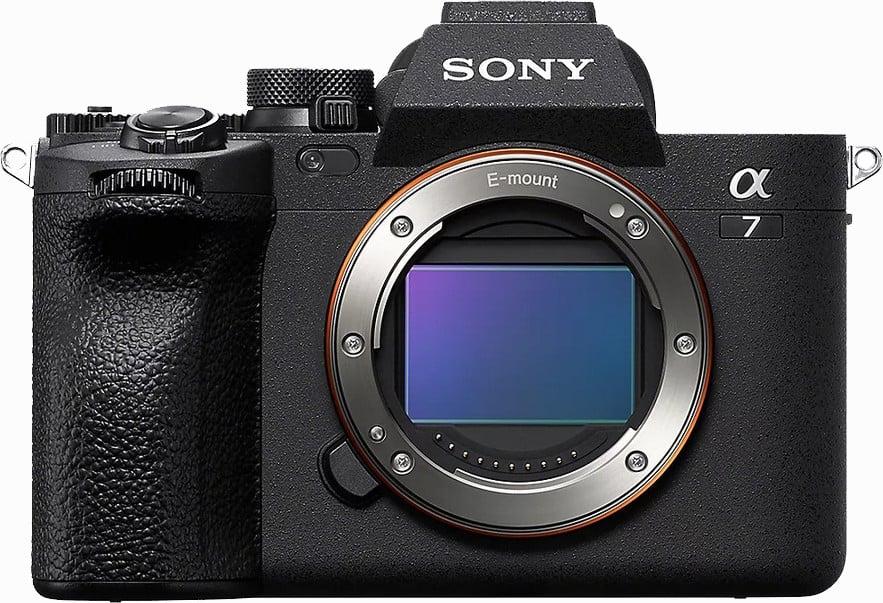
4. Sony Alpha A7 IV Body
Sony Alpha A7 IV Body looks like a universal camera with an emphasis on detail. It uses a full-frame sensor with higher resolution, which gives a more detailed image. It supports proprietary video recording formats, and shooting is available in 4K up to 60 frames. Autofocus covers a large number of points and behaves predictably in dynamics.
In use, the camera feels like a typical Sony model without unnecessary deviations. There is a tilting screen, in-body stabilization, and two memory card slots. It supports external microphone connection and wireless data transfer. This is an option without a clear bias that can be used for various tasks.
Main features:
Full-frame 33 MP matrix
Video in XAVC HS and XAVC S formats
4K shooting up to 60 fps
Image stabilization
Advanced autofocus
Two memory card slots
Wireless connections
What it’s suitable for:
For universal use of photo and video
For shooting with high detail
For different shooting scenarios
For regular work
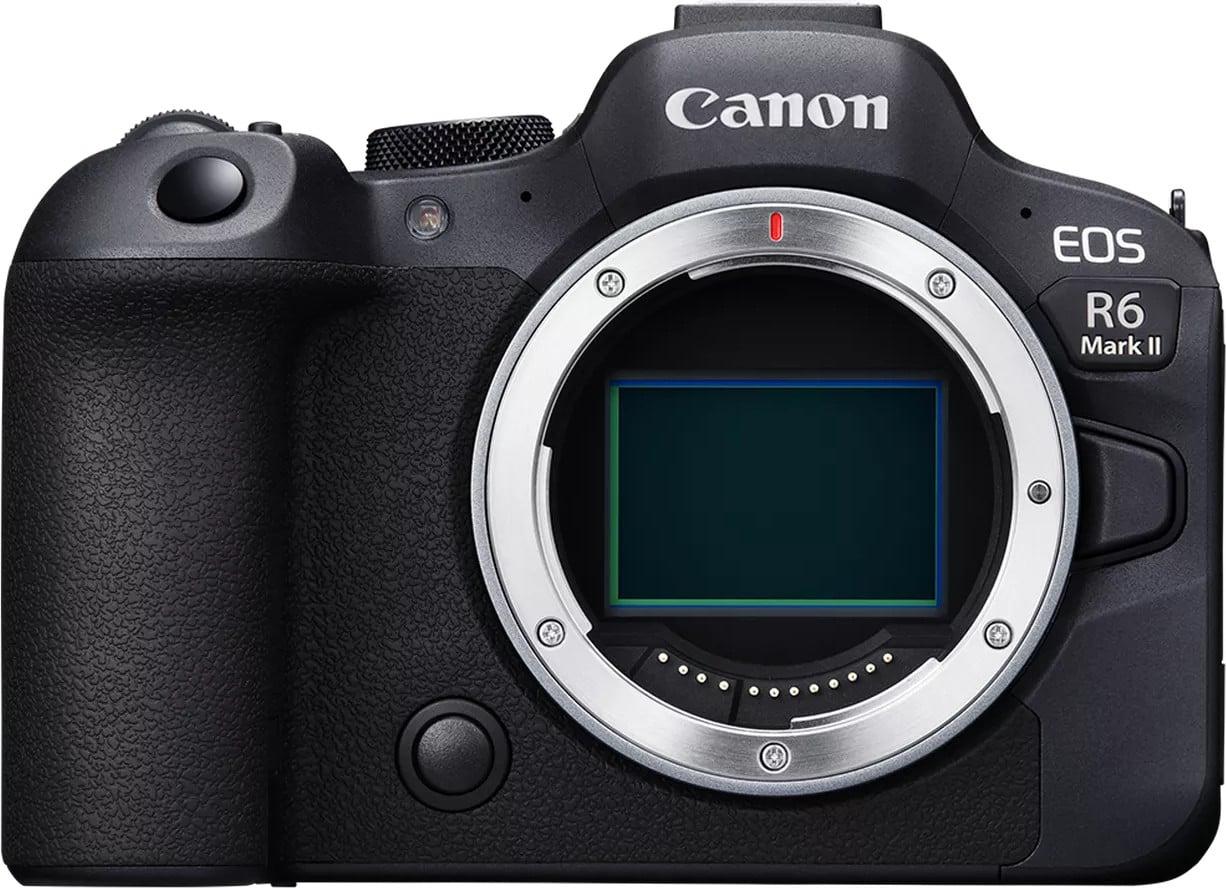
5. Canon EOS R6 Mark II Body
Canon EOS R6 Mark II Body is perceived as a camera designed for dynamic shooting. It uses a full-frame sensor and an autofocus system with a large number of zones, which helps quickly capture motion. Video is recorded in 4K up to 60 frames, using common formats that do not require complex preparation before editing.
In everyday work, the camera remains simple and understandable. There is a flip screen, built-in stabilization, and the ability to connect an external microphone. Two memory card slots add reliability during recording. The camera performs well in low light, allowing it to be used in various conditions without complex settings.
Main features:
Full-frame 24.2 MP matrix
4K video up to 60 fps
Formats H.264, H.265, MPEG-4
Fast autofocus
Stabilization via sensor shift
Flip touch screen
Two memory card slots
What it’s suitable for:
For shooting motion
For work in different lighting
For photo and video
For regular shooting

6. Sony Alpha A6700 Body
Sony Alpha A6700 Body feels like a compact camera without extra weight, but with decent video capabilities. It uses an APS-C sensor and supports 4K shooting at high frame rates, which is convenient for slow-motion scenes. The recording formats are standard for Sony, without exotic options, so there are usually no problems with files during editing. The autofocus is hybrid, works stably, and is suitable for shooting in motion.
In use, the camera is simple and understandable. There is a flip screen, in-body stabilization, and support for an external microphone. The body is small, so it is convenient to take with you for everyday shooting. The limitation is one memory card slot, but for most tasks this is enough.
Main features:
APS-C 26 MP sensor
4K video up to 120 fps
Formats XAVC S and AVCHD
Hybrid autofocus
Stabilization via sensor shift
Flip screen
External microphone connection
Who it’s for:
Those who shoot in motion
Those who need a compact camera
Vloggers and content creators
Those who rely on autofocus
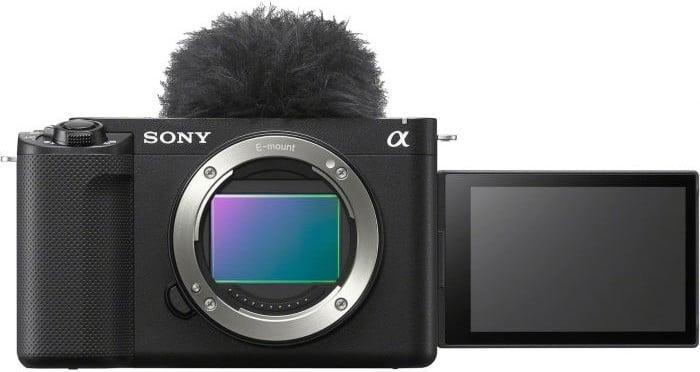
7. Sony ZV-E1 Body
Sony ZV-E1 Body is more oriented toward video and simple operation without extra settings. It uses a full-frame sensor with relatively low resolution, which usually gives a cleaner image in low light. Video is recorded in 4K, and common formats are supported that do not require complex processing. The autofocus is combined and behaves predictably in most situations.
In terms of design, the camera is maximally simplified. There is no viewfinder, but there is a flip screen and a compact body. Stabilization here is electronic, so when shooting handheld the result depends on the conditions. The camera is suitable for shooting without complex equipment, when speed and simplicity are important.
Main features:
Full-frame 12 MP sensor
4K video up to 60 fps
XAVC S format
Hybrid autofocus
Electronic stabilization
Flip screen
Compact body
What it’s suitable for:
For shooting video in low light
For quick shoots without complex setup
For recording talking-head content
For shooting on the go
For compact setups
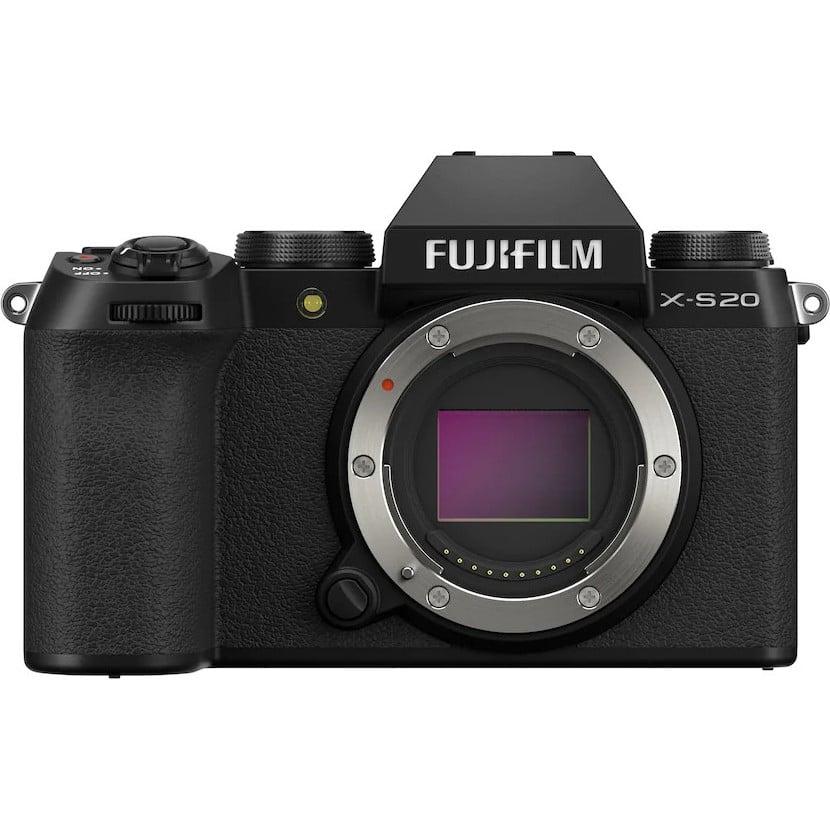
8. Fujifilm X-S20 Body
Fujifilm X-S20 Body looks like a compact camera with an emphasis on video and versatility. It uses an APS-C sensor and supports high-resolution video recording, including 6K. The formats are standard, without complex solutions, so the files are easy to process. The autofocus is combined, suitable for everyday shooting, and does not require constant manual correction.
In use, the camera is convenient and not overloaded. There is stabilization, a flip screen, and a built-in microphone. External audio connection is supported, which is important for video. It feels like an option that can be used without complex preparation - just pick it up and start shooting.
Main features:
APS-C 26.1 MP sensor
Video up to 6K
Formats H.264 and MPEG-4
Image stabilization
Flip screen
External microphone connection
Electronic viewfinder
Who it’s for:
For shooting high-resolution video
Those who want a compact camera
For everyday shooting
Those who shoot without a complex setup
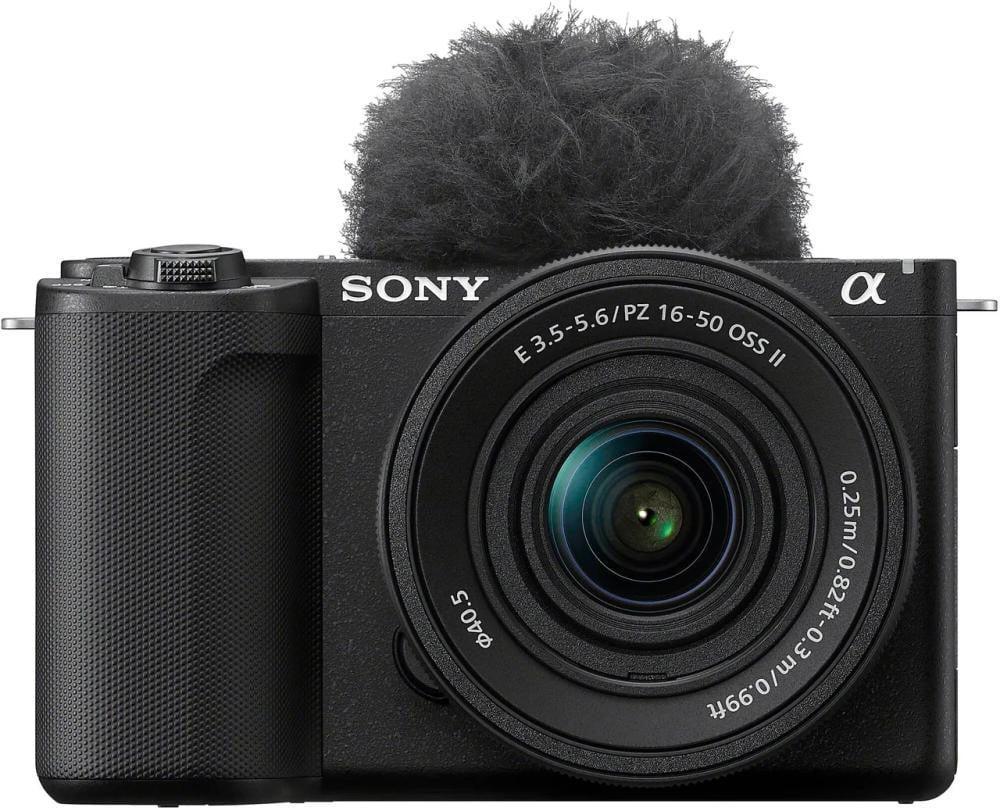
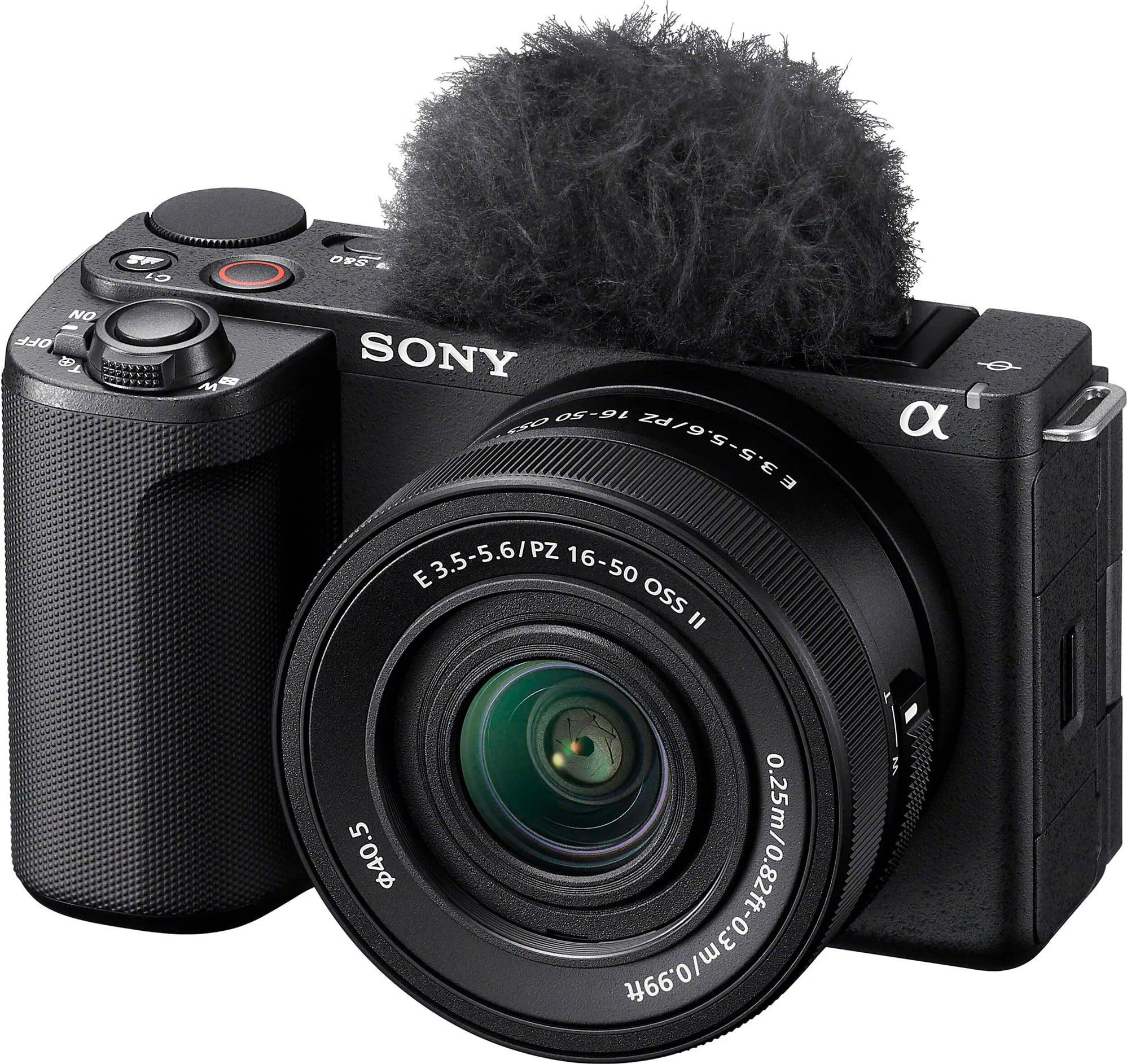
9. Sony ZV-E10 II Kit 16-50mm
Sony ZV-E10 II Kit 16-50mm is perceived as a simple solution for video with a ready-to-use lens included. It uses an APS-C sensor and supports 4K shooting at a normal frame rate. The recording formats are standard, without unnecessary complications. The autofocus is hybrid and suitable for shooting people and dynamic scenes.
The camera is maximally simplified in use. There is no viewfinder, and control is mainly through the screen. Stabilization is electronic, so a lot depends on how you hold the camera. However, there is a flip screen, a built-in microphone, and support for external audio. This is an option without extra complexity, especially if you need a starter kit.
Main features:
APS-C 26 MP sensor
4K video up to 60 fps
XAVC S format
Hybrid autofocus
Electronic stabilization
Flip screen
Lens included
What it’s suitable for:
For vlogs
For everyday shooting
For starting without buying additional optics
For shooting without complex equipment
10. Sony ZV-E10 Kit 16-50mm
Sony ZV-E10 Kit 16-50mm looks like a simpler version of a video camera, where everything is reduced to basic things. It uses an APS-C sensor and supports 4K shooting, but with a lower frame rate. The formats are standard, so the video is easy to process. The autofocus is combined and suitable for shooting people and simple scenes.
It feels like the most straightforward tool. A flip screen, built-in microphone, and compact body make the camera convenient for vlogging. Stabilization is electronic, so when moving it’s better to account for shake. The camera comes with a lens, which simplifies getting started.
Main features:
APS-C 24.2 MP sensor
4K video up to 30 fps
XAVC S format
Hybrid autofocus
Electronic stabilization
Flip screen
Lens included
Who it’s for:
Those who are just starting
Those who need a simple camera
Vloggers
Those who shoot for social networks
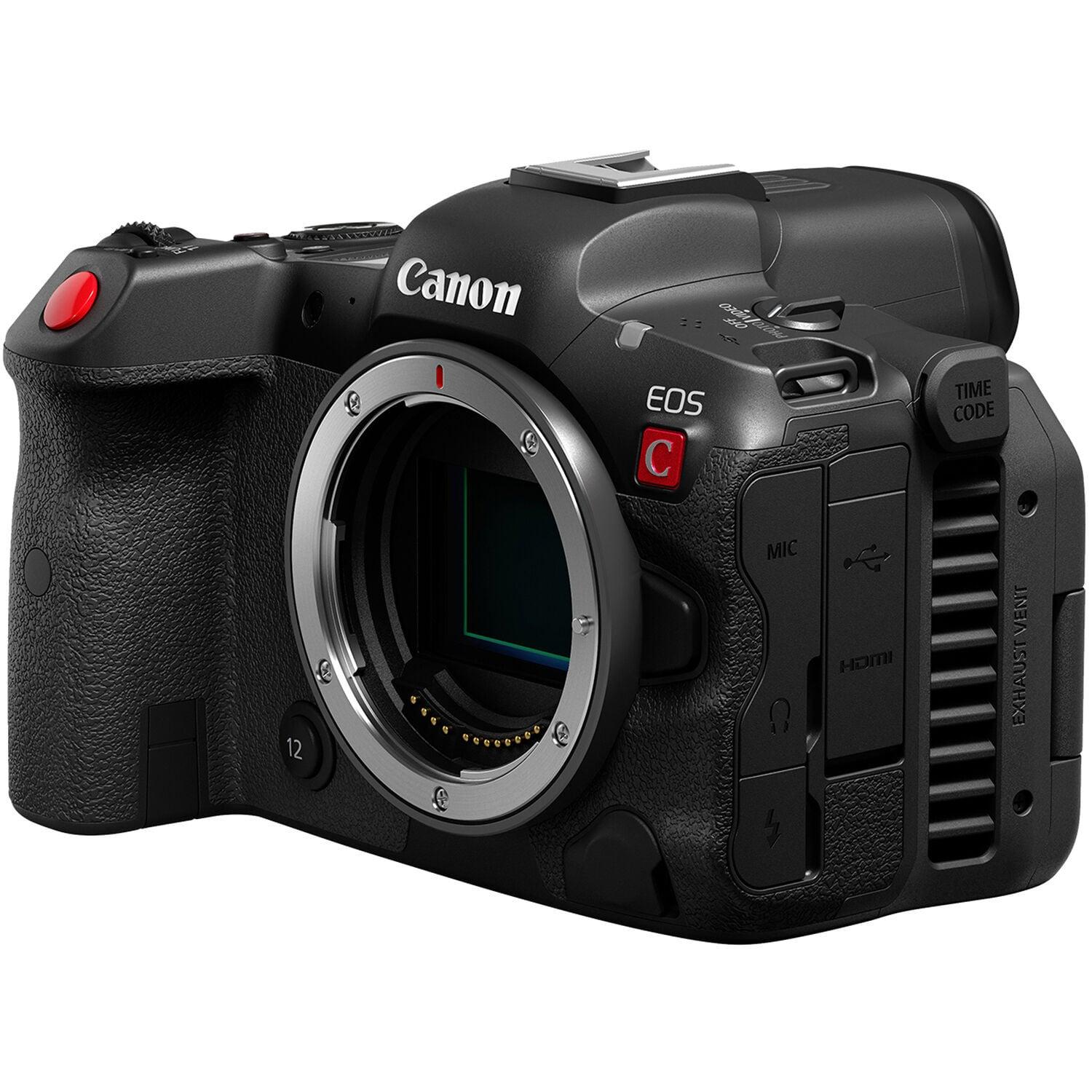
11. Canon EOS R5 C Body
Canon EOS R5 C Body looks like a camera with a clear focus on professional video. It uses a full-frame sensor with high resolution, and recording is available in very high resolution, including 8K. Common formats are supported, so the material can be used in various workflows. The autofocus is combined and suitable for complex scenes.
In use, the camera requires a more conscious approach. There is a flip screen, built-in stabilization, and the ability to connect an external microphone. Two memory card slots add reliability during recording. This is no longer the simplest option, but it gives more control if you need to shoot complex projects.
Main features:
Full-frame 45 MP sensor
Video up to 8K
Formats H.264, H.265, MPEG-4
Hybrid autofocus
Image stabilization
Flip screen
Two memory card slots
Who it’s for:
Those who work with video projects
Operators and videographers
Those who need control over the image and editing
Those who shoot complex scenes and long projects
Conclusion
If we simplify it, choosing a camera for video rarely comes down to finding one single best model. Usually, everything comes down to how exactly you shoot. For some, compactness and a quick start without settings are important; for others, control over color and format is needed; and for some, a reliable tool without unnecessary complications is enough.
Nowadays, most modern cameras already provide decent video quality. The difference is more in convenience. One is better suited for shooting on the go, another for more thoughtful work with editing, and a third covers several tasks at once without obvious limitations.
Therefore, it’s easier to start not from specifications, but from your own tasks. If these are vlogs or everyday shooting, autofocus and size are more important. If post-processing is planned, then it makes sense to look at recording formats and color capabilities.
In the end, a camera for video is not about numbers, but about how convenient it is to work with and shoot regularly.