

How to Choose a Fitness Tracker in 2026: Whoop, Xiaomi, Samsung
April 3, 2026
Quick Summary: Choosing a fitness tracker in 2026 depends on your goals: the Xiaomi Smart Band 8 is suitable for basic activity and sleep monitoring, the Samsung Galaxy Watch7 offers advanced integration with the Galaxy ecosystem and AI analysis, and the WHOOP 5.0 focuses on deep recovery analytics for professional athletes. It's important to consider sensor accuracy, battery life, phone compatibility, and essential features—from simple step counting to medical metrics like an ECG.
The fitness tracker market in 2026 is undergoing an interesting transformation. On the one hand, classic trackers like the Xiaomi Band continue to dominate the budget segment. On the other, screenless devices with medical accuracy, like the WHOOP, are emerging.
The distinction between fitness trackers and smartwatches is becoming increasingly blurred. The Samsung Galaxy Watch7 and Watch8 are technically more watches than trackers, but many still seek them out specifically as health trackers. The main question now isn't "do I need a fitness tracker?" but "what specific metrics are important to me and how much am I willing to pay for them?"
Why do I need a fitness tracker in 2026?
Ten years ago, fitness trackers were a novelty. Now they're a basic health monitoring tool.
The basic functions remain the same: counting steps, monitoring heart rate, analyzing sleep, and tracking workouts. But the accuracy and depth of analysis have improved dramatically.
Modern devices can:
Measure blood oxygen saturation (SpO₂)
Track heart rate variability (HRV)
Analyze sleep phases and provide sleep recommendations
Calculate VO2 Max to assess aerobic endurance
Take an ECG and track arrhythmia
Monitor stress levels in real time
Research shows that the accuracy of optical wrist-based heart rate sensors has improved significantly, especially at rest and during moderate exercise. Problems persist with high-intensity interval training and strength training.
But there's a catch: Not all metrics are equally useful for everyone.

Choose a fitness tracker and order it from JustBuy
After a review, you usually want to get down to business: look at current models, compare specifications, and figure out what you can buy without unnecessary research. JustBuy is an online tech store where you can find fitness trackers, smartwatches, smartphones, tablets, and other gadgets. Here you can easily check availability, price, delivery, payment, and warranty terms.
Looking for where to view and buy a fitness tracker?
At JustBuy you can:
View current models and their specifications
Compare devices and choose the right option
Check availability, price, delivery, and warranty
Place an order online or get advice before purchasing
👉 Contact JustBuy to select a fitness tracker and clarify the terms of purchase.
Key criteria for choosing a fitness tracker
Before purchasing, it's important to clearly define your priorities. Here's what to look for first.
Sensor accuracy
The most important parameter is the accuracy of the measurements. A fitness tracker may be beautiful and functional, but if it shows a heart rate of 85 instead of the actual 110, it's of little use.
The quality of optical sensors varies greatly. Devices with dual-channel photoplethysmographic sensors are usually more accurate, but they are more expensive.
Measurement accuracy depends on:
Wrist fit
Number and placement of LEDs
Signal processing algorithms
Skin tone and hair density
Activity type
Xiaomi claims the Band 8 has an improved dual-channel optical sensor, which measures heart rate and blood oxygen levels 10% more accurately than the Band 7.
WHOOP goes even further—it has 5 LEDs and 4 photodiodes, allowing it to track heart rate even during intense exercise like CrossFit.
Battery Life
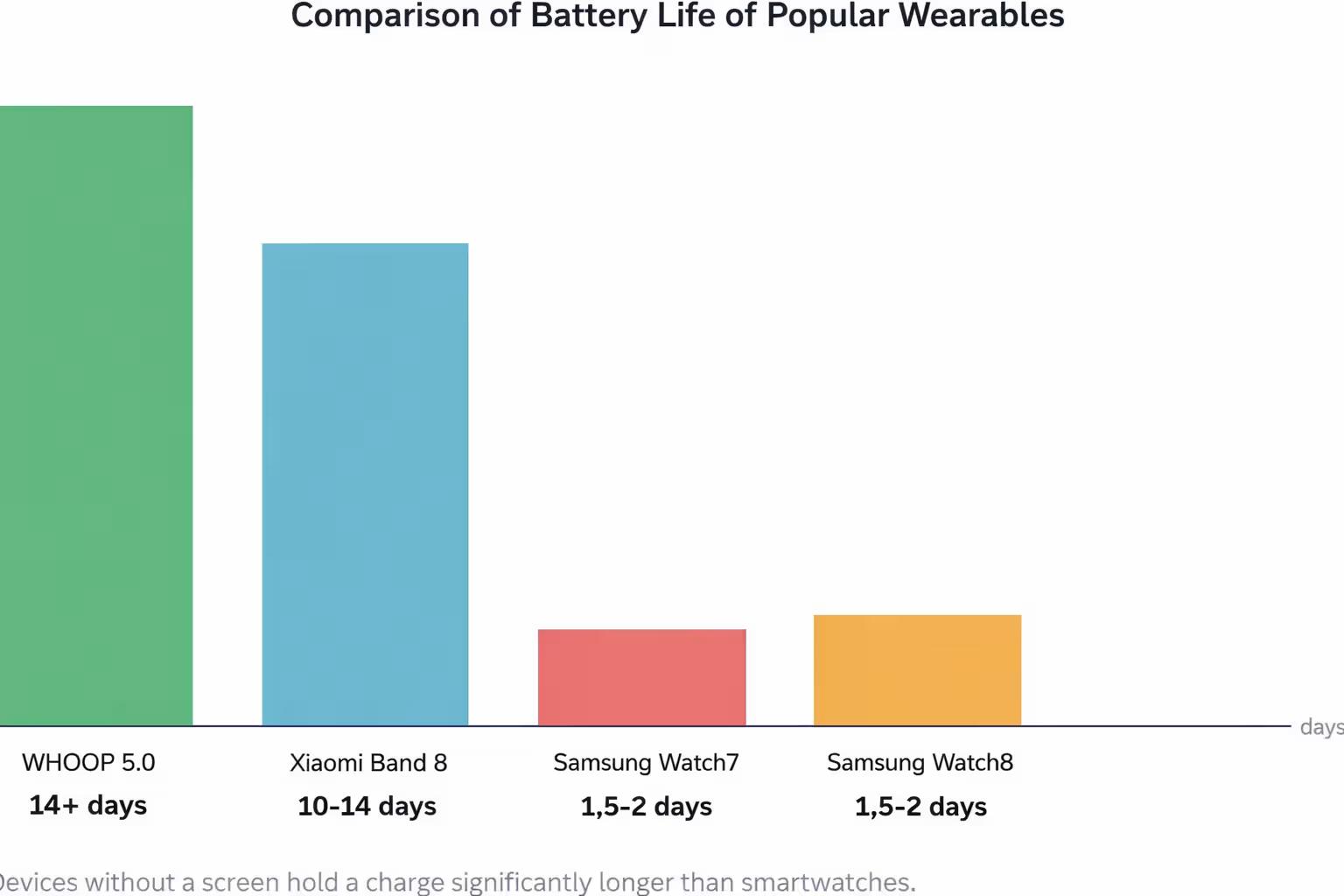
For classic wristbands, 7-14 days of battery life is typical. Smartwatches typically require charging every 1-2 days.
WHOOP 5.0 promises 14+ days of battery life, which is impressive for a device with 24/7 monitoring of all metrics. The secret lies in the lack of a screen—the display consumes the lion's share of the battery.
The Samsung Galaxy Watch7 lasts about 1.5-2 days with active use. The Watch8 delivers similar results (1.5-2 days), despite its thinner case.
The Xiaomi Smart Band 8 lasts 10-14 days, depending on usage. Fast charging allows you to get 65% of the charge in 30 minutes.
Screen Size and Quality
Fitness band screens have grown. The Xiaomi Smart Band 8 features a 1.62-inch display—noticeably larger than the Band 7 (1.62 inches).
Samsung uses high-brightness AMOLED panels, which are critical for readability in sunlight. Budget bands often use IPS screens, which turn into a "black square" under direct sunlight.
WHOOP has eschewed the screen entirely. The philosophy is simple: the device collects data, and the app handles the analysis. This reduces distractions and extends battery life.
Water Resistance
The minimum standard is IP68 (submersion up to 1.5 meters for 30 minutes). This is sufficient for showering and swimming in the pool. For serious swimming, a 5 ATM rating or higher is required. The Samsung Galaxy Watch7 has a 5 ATM rating.
It's important to understand that water resistance degrades over time. Impacts, drops, and temperature changes will damage the seal. Warranties typically do not cover water damage.
Operating System Compatibility
Most smartwatches work with both Android and iOS, but functionality may vary.
Samsung truly shines when paired with Galaxy smartphones. The Galaxy Watch7 and Watch8 integrate with the Samsung Health ecosystem and work with Samsung smart scales.
WHOOP is cross-platform—the app works equally well on both operating systems. Subscriptions start at €149 per year for the WHOOP One plan.
Xiaomi has traditionally been loyal to both ecosystems, although Android offers deeper integration.
2026 Top Model Review
We'll look at three main categories: budget-friendly all-purpose bracelets, premium smartwatches, and specialized trackers for athletes.
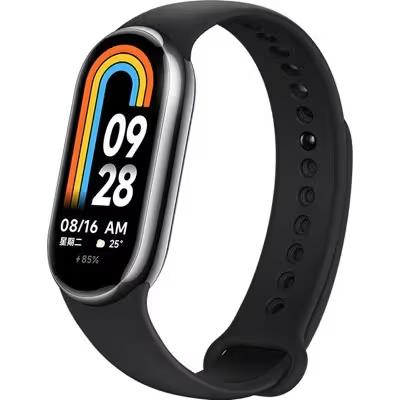
Xiaomi Smart Band 8: The People's Choice
The Xiaomi Smart Band 8 remains the most popular fitness tracker on the market. The reasons are simple: reasonable price, large screen, and decent battery life.
The 1.62-inch screen is almost the size of a small smartwatch. The AMOLED panel is bright and easy to read in sunlight.
Features include 24/7 heart rate monitoring, sleep tracking with phase analysis, SpO₂, over 150 sports modes, stress management, and breathing exercises.
The claimed battery life is up to 16 days with moderate use. In reality, with active use of all sensors, it lasts 10-12 days. Still excellent.
IP68 water resistance is suitable for swimming, but for serious swims, it's better to aim higher.
The main drawback is accuracy. The dual-channel sensor has definitely improved compared to the Band 7, but during intense workouts, it sometimes loses heart rate or shows higher values.
For basic activity monitoring, sleep monitoring, and movement reminders, it's a great option. For serious sports, it's not enough.
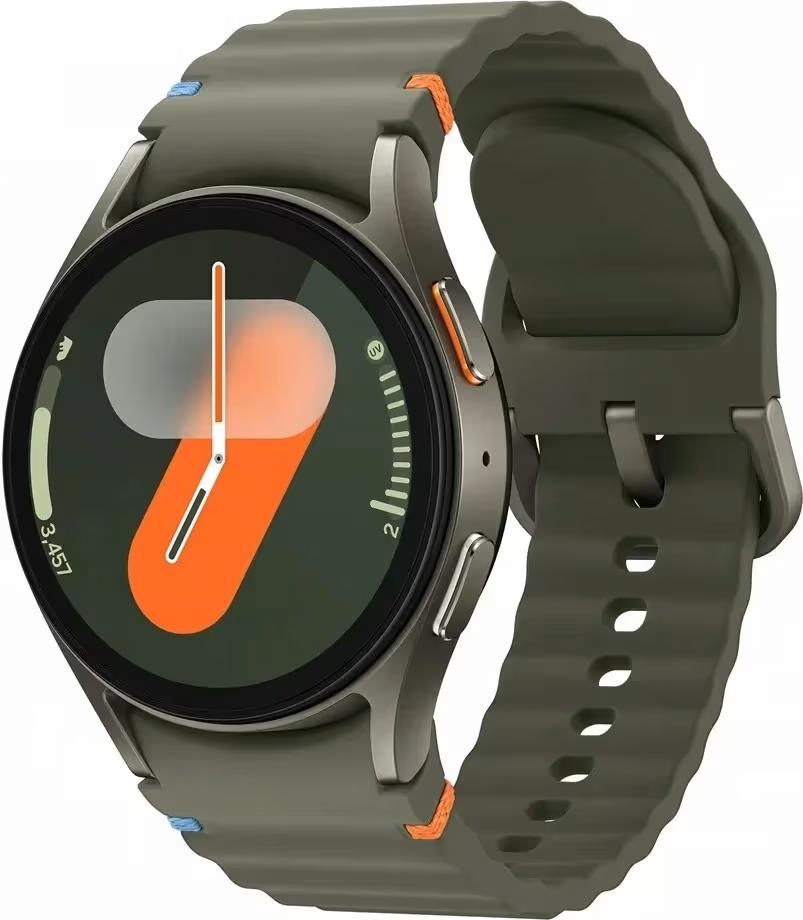
Samsung Galaxy Watch7 and Watch8: AI to the rescue
Samsung is developing the Galaxy Watch line as a full-fledged smartwatch with a focus on health.
The Galaxy Watch7 starts at $249.99 (before partial exchanges). The Watch8 starts at $349.99 (before partial exchanges). The difference is not only in price, but also in functionality.
The Watch8 features a new "cushion design"—a case that fits more closely to the wrist. This improves sensor accuracy. The device is thinner and lighter than its predecessor.
Both models run Wear OS with One UI Watch. The 3nm processor ensures smooth operation and optimizes power consumption.
Key features:
Sleep monitoring with apnea analysis (requires medical certification in the region)
ECG and blood pressure measurement (beta, availability subject to region and regulations)
VO2 Max and heart rate zones for training
Menstrual cycle tracking with predictions
AGEs (Advanced Glycation End-products) test for metabolic age assessment
Galaxy AI for personalized sleep and activity recommendations
Samsung Health collects data from all devices in the ecosystem—watches, scales, and rings. Syncing works flawlessly within the Galaxy universe.
Battery life is a weak point. With active use, the Watch7 and Watch8 last 1.5-2 days. The always-on display drains battery especially quickly. Wireless charging takes about 2 hours to fully charge.
10ATM water resistance and IP68 certification allow for swimming and diving. The sensors are highly accurate. The updated BioActive sensors perform better during workouts, but still fall short of chest heart rate monitors for HIIT and strength training.
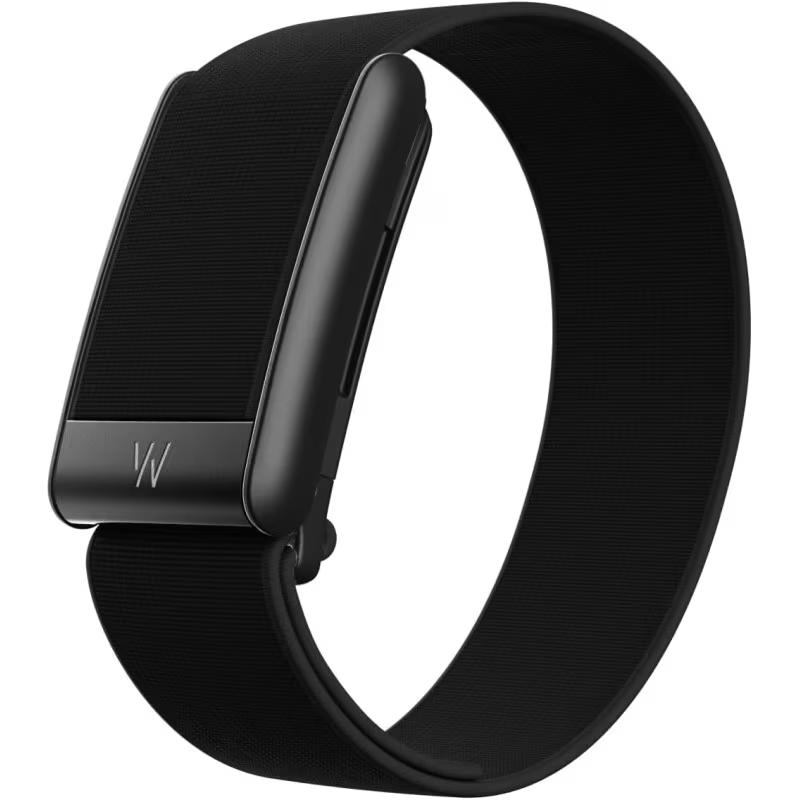
WHOOP 5.0: For those who prioritize recovery
WHOOP isn't just a bracelet; it's a philosophy. The device doesn't display the time, doesn't send notifications, and has no screen.
Its sole purpose is to collect 24/7 data on your body's condition with maximum accuracy.
WHOOP is a subscription service. As of May 2025, three options are available:

WHOOP 5.0 is the basic model with 14+ days of battery life. It charges via a removable battery clip or a wireless charging pad. It can be charged without removing it.
WHOOP MG is the medical version with heart rate monitoring features. It was released in May 2025 along with the updated 5.0.
What does WHOOP measure:
HRV (heart rate variability) – the main indicator of recovery
Resting heart rate
Respiratory rate and respiratory rate
Blood oxygen saturation
Skin temperature
Sleep phases
Strain (0 to 21%)
Recovery (0 to 100%)
Every morning, WHOOP gives a personalized prediction of how much stress your body can handle today, taking into account sleep quality and recovery. The algorithm learns from user data – the longer you wear it, the more accurate the recommendations.
Why is there no screen? WHOOP believes that constantly checking metrics creates stress and distraction. Data is available in the app when you really need it.
Who WHOOP is suitable for:
Professional athletes for whom overtraining is a real threat
Crossfitters, long-distance runners, triathletes
Those seriously working to optimize sleep
People with chronic conditions that require stress management
Who it is NOT suitable for: Those who want simple step counting, notifications, or screen time. WHOOP is a highly specialized tool.
What else to consider when buying
Beyond the basic specifications, there are details that affect the comfort of daily use.
Strap materials and comfort
You'll be wearing the device 24/7, including while sleeping. Discomfort accumulates.
Silicone straps are standard. They are hypoallergenic, easy to clean, and don't absorb sweat. However, the skin underneath may sweat. Fabric straps breathe better but get dirty faster. WHOOP offers SuperKnit, a breathable and washable material.
Samsung is experimenting with Dynamic Lug, a strap fastening system that adapts to the shape of the wrist.
The ability to quickly change straps is important. Xiaomi uses a standard fastening system, and the straps are inexpensive and readily available.
Ecosystem and App
Data is collected by the bracelet but analyzed in the app. Software quality is critical.
Samsung Health is one of the most advanced apps. Integration with Galaxy devices, detailed analytics, and AI recommendations. It works on Android and iOS, but Samsung smartphones offer more functionality.
Mi Fitness (formerly Mi Fit) from Xiaomi is a simple and intuitive app. Basic analytics, clear graphs, and social features are available. It works reliably on both platforms.
WHOOP is the most comprehensive app for recovery analysis. Daily coaching, activity log, sleep-performance correlation, and an athlete community. However, it takes some getting used to—the interface is overloaded with data.
Software updateability
A device is purchased for several years. It's important that the manufacturer releases updates.
Samsung supports its watches with updates for 3-4 years. The Galaxy Watch7 and Watch8 will receive new features until at least 2029-2030.
Xiaomi also regularly updates its firmware, but the support period is shorter—about two years of active updates.
WHOOP is updated through the app—the device itself receives algorithm improvements and new metrics without a hardware update. Additional Features
Some features aren't critical, but nice to have:
NFC for contactless payments (available on Samsung, not on Xiaomi Band 8, not relevant for WHOOP)
GPS for accurate route tracking (Samsung yes, Xiaomi uses the phone's GPS, WHOOP uses the phone's GPS)
Music player and playback controls (Samsung yes, Xiaomi offers basic controls)
Voice assistant (Samsung with Bixby, Xiaomi with Alexa in some markets)
Message replies from the wrist (Samsung yes, others only offer notifications)
Typical Mistakes When Choosing
Here's what usually goes wrong when buying a fitness tracker.
The Race for Features
Manufacturers add dozens of metrics. Most users only use 3-5.
Before buying, ask yourself honestly: will you be tracking your SpO₂ every day? Do you need stress monitoring? Is an ECG really important?
If your primary goal is step counting and reminders to move, paying extra for WHOOP is pointless.
Ignoring compatibility
Check what features are available on your OS. Samsung Blood Pressure Monitoring only works on Galaxy smartphones in approved regions.
ECG may require activation through a medical app, which is not available in all countries.
Buying an outdated model
The Xiaomi Smart Band 7 Pro is still available. But the Band 8 is better in every way at a similar price. Saving 10-15% isn't worth the outdated sensor.
The Samsung Galaxy Watch6 is also on sale, but the Watch7 starts at $249.99—the difference is minimal, but the improvements are significant.
Underestimating the importance of battery life
Charging a watch every day is tedious. After a month, you'll forget, and monitoring will become haphazard.
If you're ready for daily charging, Samsung is a great choice. If not, consider Xiaomi or WHOOP.
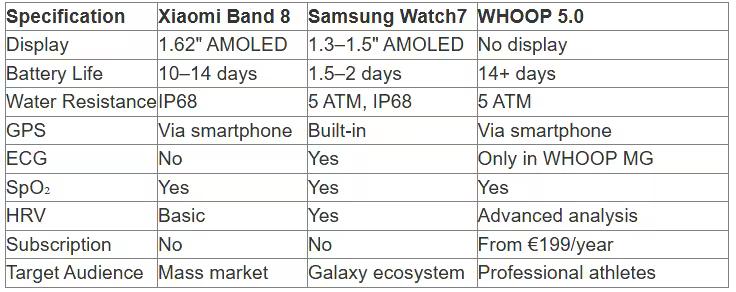
Comparison table of top models
Tips for Use and Care
The accuracy of the sensors and the lifespan of the device depend on proper use.
How to Wear for Maximum Accuracy
The optical sensor should fit snugly against your skin, but not too tightly. You should be able to fit two fingers comfortably under the strap.
Wear the bracelet 1-2 cm above your wrist bone—there are fewer tendons that can interfere with the signal.
During workouts, tighten the strap. Afterward, loosen it to allow your skin to breathe.
Periodically switch wrists—this reduces the risk of irritation and allows your skin to rest.
Cleaning and Maintenance
After workouts, rinse the device with clean water. Sweat contains salts and acids that can degrade the materials.
Once a week, wipe the sensors with a damp, alcohol-free cloth. Dirt will reduce accuracy.
Hand wash the strap with mild soap. Silicone straps can be cleaned with baking soda to remove ingrained odors. Avoid contact with creams, lotions, and repellents—they can form a film on the sensors.
Calibration and Setup
After purchase, enter accurate data: age, gender, weight, and height. The calorie and VO2 Max calculation algorithms are based on these parameters.
Update your weight whenever it changes—this affects the accuracy of energy calculations.
During the first few days of use, it is recommended to wear the device continuously to calibrate the algorithms. Recovery and load patterns will become more accurate after a week of regular use.
FAQ: Frequently Asked Questions
Can you trust fitness tracker data?
It depends on the metric. Step counting is generally accurate, and resting heart rate is reliable.
During high-intensity workouts, optical sensors may be less accurate. A chest strap is recommended for precision.
SpO₂ and blood pressure readings are estimates and not medical-grade.
Do you need a subscription?
Xiaomi and Samsung do not require subscriptions.
WHOOP operates entirely on a subscription model.
Which tracker is best for swimming?
5ATM water resistance is sufficient.
Samsung offers advanced swim tracking, Xiaomi is more basic.
WHOOP tracks strain but not strokes.
How often should you remove the tracker?
Wear it continuously for best data, but remove it daily for 30–60 minutes to let your skin rest.
Can you wear a tracker with a pacemaker?
Consult a doctor. Devices with ECG may not be recommended.
Does skin tone affect accuracy?
Yes, optical sensors can be affected by skin tone.
Modern multi-wavelength sensors improve accuracy.
Is it worth buying a tracker if you have a smartphone?
Yes. Trackers provide continuous monitoring and deeper health insights.
Conclusion: Which smartband to choose in 2026
There's no one-size-fits-all answer. The choice depends on your goals, budget, and device ecosystem.
For basic activity and sleep monitoring on a budget, the Xiaomi Smart Band 8 is a good choice. The screen is large, the features are sufficient, and the battery life is impressive. The accuracy is sufficient for daily monitoring, but not for serious training.
For Samsung smartphone owners who want a full-fledged smartwatch with deep integration and AI analysis, the Samsung Galaxy Watch7 or Watch8 are a good choice. You'll need to charge it frequently, but the functionality is worth it. The Watch8, with its new design, is slightly more convenient, but with the discounts, the Watch7 offers excellent value for money.
For professional athletes, triathletes, CrossFitters, and those who seriously optimize their recovery, the WHOOP 5.0 is a great choice. The subscription pays off with accurate data and personalized coaching. The WHOOP MG, with its medical features, is suitable for those who need heart rate monitoring.
Determine your priorities before purchasing. If in doubt, start with a budget model. After 3-6 months, you'll understand which features are missing and can make a more accurate choice.
Remember: a fitness tracker is a tool, not a magic pill. Data is only valuable if it's used to change your habits. Wear the device constantly, analyze your patterns, and adjust your sleep and exercise routine.
Health is a marathon, not a sprint. A tracker helps you keep track of your pace.