

Nikon Z9 II Review 2026: Specs and Performance
May 9, 2026
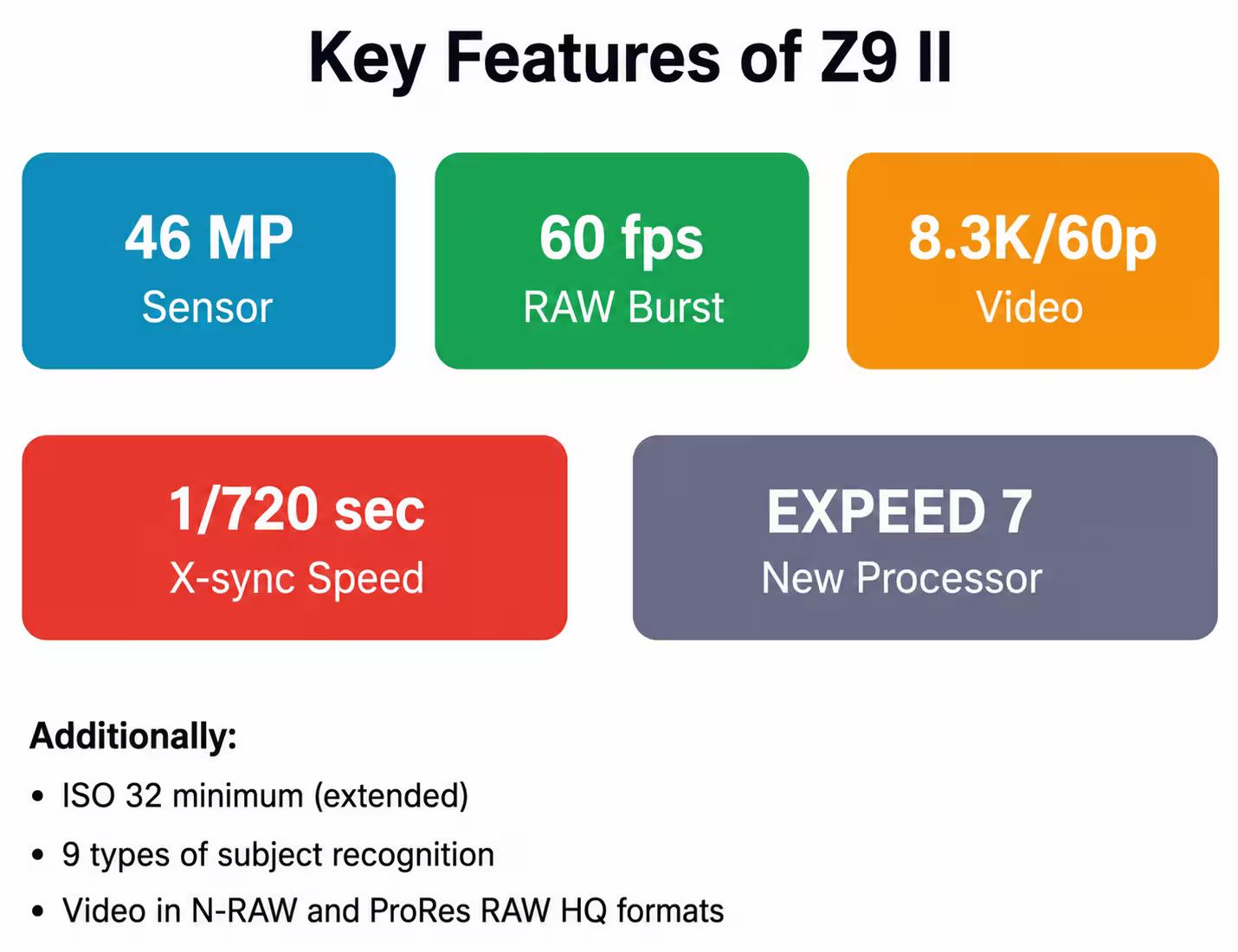
In a nutshell: the Nikon Z9 II is the flagship mirrorless camera for 2026, featuring a 46-megapixel stacked sensor, an EXPEED 7 processor, continuous shooting at up to 60 fps in RAW, and 8.3K/60p video. The model offers improved autofocus with nine subject recognition types, sync speeds up to 1/720 sec, and recording in N-RAW and ProRes RAW HQ formats.
Nikon is introducing its new flagship, the Z9 II, scheduled for release in 2026 as the successor to the 2021 Z9. The new camera features significant improvements in speed, resolution, and video capabilities.
Key Sensor and Processor Features
At the heart of the Z9 II is a new 46-megapixel stacked FX-format CMOS sensor (35.9 x 23.9 mm), which is 3.5 times faster than its predecessor. The camera features a 46-megapixel stacked CMOS sensor.
A new processor (presumably EXPEED or an updated version) ensures high data processing speed. The camera now has flash sync speeds up to 1/720th of a second, bringing it closer to the capabilities of a global shutter without using this technology.
Nikon Z9 II and professional cameras at JustBuy

JustBuy is a convenient place to find a camera and accessories without the hassle of searching. Our catalog features current models, including the Nikon Z9 II and other photo and video solutions.
Here you can quickly compare specifications, check availability, and understand what options are currently available.
Looking for a camera?
At JustBuy, you can:
Select professional cameras and lenses
Compare specifications and choose a configuration
Check availability and current price
Place an order or get a consultation
👉 Contact JustBuy to find the Nikon Z9 II or a suitable alternative.
Performance and Continuous Shooting
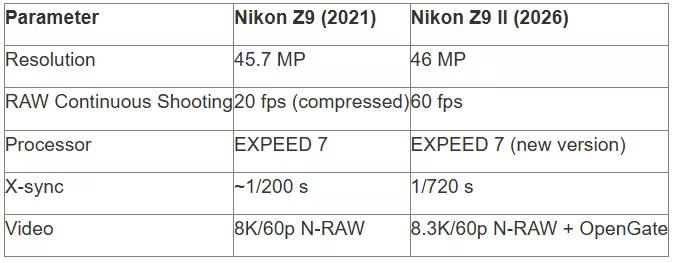
The Z9 II offers continuous shooting at up to 60 fps with RAW recording. The original Z9 supports up to 120 fps in High-Speed Frame Capture+ mode, as well as 20 fps when recording in RAW with compression. Deep learning-based autofocus recognizes nine object types: people, dogs, cats, birds, bicycles, motorcycles, cars, trains, and airplanes. The system works in both photo and video modes.
Video Capabilities and Recording Formats
The camera records 8.3K video at 60 fps using N-RAW internal recording. Other formats, including ProRes RAW HQ, are also available. Maximum video recording time in N-RAW format has been increased to 2 hours and 5 minutes, compared to 125 minutes (approximately 2 hours) for the original Z9 when recording 8K UHD/30p.
The new camera now supports OpenGate recording, allowing full use of the sensor for post-processing and aspect ratio selection.
Conclusion
The Nikon Z9 II represents a powerful upgrade to the flagship lineup, aimed at professional photographers and videographers. Improved shooting speed, expanded video formats, and advanced autofocus make the camera a versatile tool. Stay tuned for official Nikon announcements to confirm final specifications and pricing.
Frequently Asked Questions
When will the Nikon Z9 II be released?
According to the latest rumors, the Nikon Z9 II is expected in 2026. The exact release date has not yet been officially announced.
What is the sensor resolution of the Z9 II?
The camera has a 46-megapixel stacked CMOS sensor.
Does the Z9 II support RAW video recording?
Yes, the camera supports N-RAW video recording up to 8.3K/60p and ProRes RAW HQ, with internal recording directly to the memory card.
What is the maximum continuous shooting speed?
The Z9 II supports continuous shooting at up to 60 fps with RAW images.
What is OpenGate mode in the Z9 II?
OpenGate mode allows you to use the full sensor area when shooting video. This allows for more flexibility when choosing aspect ratios and cropping in post-processing.
What memory cards does the camera support?
The original Nikon Z9 features dual CFexpress Type B / XQD memory card slots. The Z9 II is expected to retain a similar configuration.
Does the Z9 II have a mechanical shutter?
The presence of a mechanical shutter has not yet been confirmed. The original Nikon Z9 utilized an entirely electronic shutter, with no mechanical equivalent.