

Portable Gaming Consoles 2026: How the Market Works and What Has Changed
February 28, 2026
Portable consoles no longer look like a simplified alternative to "big" systems. In 2026, this is already an independent segment with powerful hardware, high-quality screens and access to large game libraries. The difference is noticeable not in the numbers, but in the gaming experience itself.
Playing has become simpler anywhere - on the go, during travel, at home without a TV. At the same time, the boundary between PC, stationary console and portable format is gradually blurring. Mobility remains, but the capabilities have noticeably increased.
Why portable consoles are back in the spotlight
Interest in portable consoles has returned not because of nostalgia for the past, but for a completely understandable reason - it's simply convenient. You can play wherever there is time and desire: on the go, on the couch, between tasks. No separate TV, no need to prepare space. Take the device, turn it on - and everything is already working.
And the consoles themselves have grown significantly in recent years. Performance has caught up to the level of stationary systems, screens have become brighter and sharper, battery life is no longer a weak point. Models have appeared that can run full-fledged PC projects or provide access to large libraries without genre restrictions.
Plus, flexibility has been added. Some need an "all-in-one" format for home and travel, others need a compact gaming PC with access to Steam and other platforms. The choice has become wider, there are more scenarios. That's why the segment is once again in the center of attention - not because of a trend, but because it has truly become convenient.
Relevant portable consoles of 2026
The portable gaming segment today is no longer limited to one type of device. There are models that are essentially compact gaming PCs - with serious hardware and access to large libraries. There are hybrid solutions with their own ecosystem where everything is set up "out of the box". The difference is felt not only in specifications, but in exactly how you plan to play.
Inside the market - different classes. From powerful devices designed for modern AAA projects to more universal consoles that are equally convenient to use at home and on the go. One format, different approaches - and this is now the main difference.
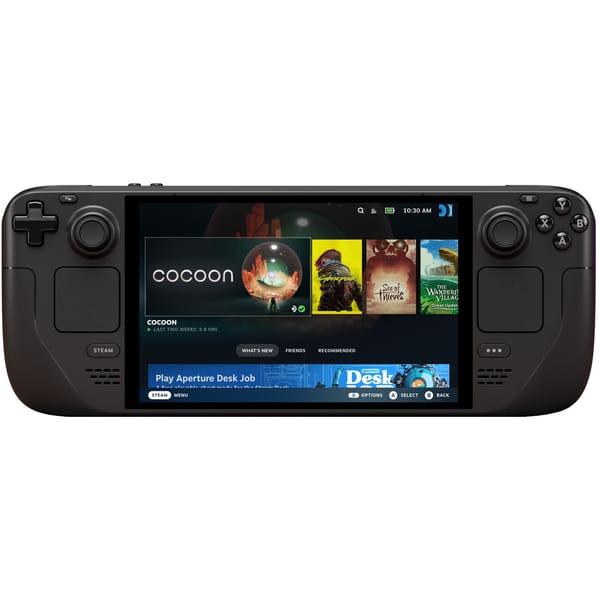
1. Portable gaming console Valve Steam Deck OLED 1TB
Valve Steam Deck OLED 1TB is a portable device format that feels closer to a compact gaming PC than to a classic console. The model runs on SteamOS and is initially designed to run games from the Steam library without being tied to a stationary computer. The version with a 7.4-inch OLED screen and 90 Hz refresh rate provides more contrast and smoothness in dynamic scenes.
This model is most often chosen by those who already use the Steam ecosystem and want to keep familiar access to their library outside the home or office. Controls are built into the body: sticks, buttons, trackpads, touch screen - everything is at hand. The console can be used standalone, and if necessary, connected to an external display via USB-C.
Key features:
7.4-inch OLED display with 90 Hz refresh rate
Runs on SteamOS 3.0
NVMe SSD for game storage
Wi-Fi 6E and Bluetooth 5.3 support
Ability to connect to an external display
Specifications:
Storage: 1000 GB
RAM: 16 GB
Processor: AMD APU 6nm
Controller: Built-in
USB: 1x USB Type-C 3.2 Gen 2
Video output: USB-C with DisplayPort 1.4 Alt-mode support
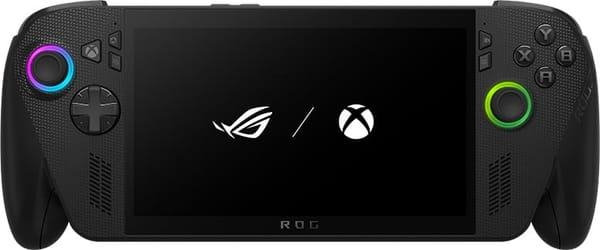
2. Portable gaming console ASUS ROG Xbox Ally X 1 TB
ASUS ROG Xbox Ally X 1 TB is no longer just a console, but a compact device running Windows 11. In fact, this is a mobile PC in gaming form factor: access to Steam, Xbox, and other launchers remains familiar without switching to a separate ecosystem. Everything works in the familiar Windows environment, which is essential for many users.
The model received built-in controls in the style of an Xbox gamepad, so adaptation is quick - especially if you already have experience playing on consoles. If necessary, the device can be connected to an external display via USB-C, and wireless accessories work via Wi-Fi 6E and Bluetooth. This format is most often chosen by those who need mobility without giving up the capabilities of a full-fledged PC.
Key features:
Runs on Windows 11
7-inch Full HD 120 Hz screen
USB-C with video output support
Built-in controls
Wi-Fi 6E and Bluetooth support
Specifications:
Storage: 1000 GB
RAM: 24 GB
Processor: AMD Ryzen AI Z2 Extreme
Controller: Built-in
USB: 1x USB4 Type-C, 1x USB 3.2 Gen 2 Type-C
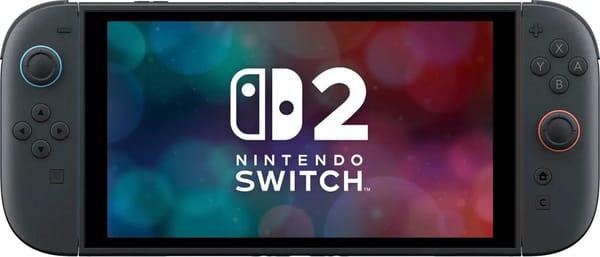
3. Portable gaming console Nintendo Switch 2 Black
Nintendo Switch 2 Black remains in hybrid format: you can play in portable mode or connect the console to a TV and use it as a stationary system. It is still a device within the Nintendo ecosystem, with access to the brand's signature library and familiar projects. The 7.9-inch LCD screen with 120 Hz refresh rate makes portable mode comfortable - the image is sharp and movement in games looks smoother.
The console supports Joy-Con controllers that can be used together or separately. Network and accessory connection happens via Wi-Fi and Bluetooth without complicated setup. This format is most often chosen by those who need a universal solution: play at home on a big screen, then simply take the device with you.
Key features:
Hybrid usage format
7.9-inch LCD display 120 Hz
TV connection mode support
Joy-Con controllers
Wi-Fi and Bluetooth support
Specifications:
Storage: 256 GB
Processor: NVIDIA Tegra T239
Controller: Nintendo Joy-Con
USB: 2x USB Type-C
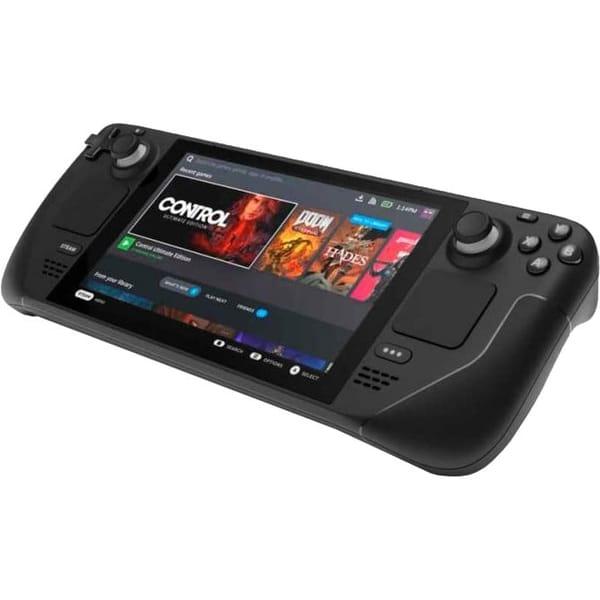
4. Portable gaming console Valve Steam Deck 256 GB
Valve Steam Deck 256 GB is a device that combines the portable console format with PC capabilities. It runs on SteamOS 3.0 and is focused on running games from the Steam library without a stationary computer. In fact, your entire familiar ecosystem stays with you, just in a compact body.
Controls are built into the body: sticks, triggers, trackpads - everything is arranged so that no additional peripherals are required. Games are installed on the internal SSD, and storage can be expanded via microSD if needed. The console connects to an external display via USB-C and supports wireless connections. This is an option for those who want to keep access to their Steam library while playing away from their workstation.
Key features:
Runs on SteamOS 3.0
7-inch IPS display 1280x800
Built-in controls with trackpads
microSD card support
Specifications:
Storage: 256 GB
RAM: 16 GB
Processor: APU Power: 4-15W
Controller: Built-in
USB: 1x USB Type-C 3.2 Gen 2
Video output: USB-C with DisplayPort 1.4 Alt-mode support
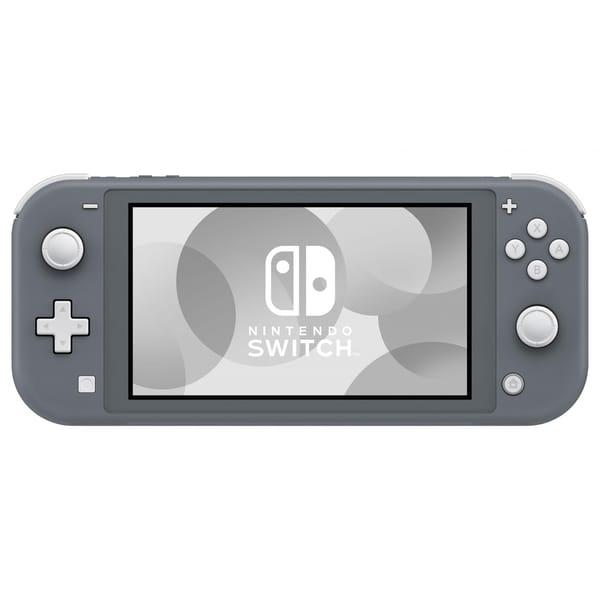
5. Portable gaming console Nintendo Switch Lite Grey (045496452650)
Nintendo Switch Lite Grey is a fully portable format without hybrid scenarios. The console does not connect to a TV and is made in a solid body with non-removable controllers. Everything is focused on mobile use: compact size, light weight and 5.5-inch screen with 1280x720 resolution - perfect for travel, trips or playing at home away from the main gaming spot.
The device supports both Nintendo Switch cartridges and digital game versions. Controls remain familiar to the series: analog sticks, ABXY buttons, familiar layout without unnecessary changes. This option is most often chosen by those who value compactness and access to the Nintendo library without TV connection or additional modes. Simply a portable console in the classic sense.
Key features:
Fully portable format
5.5-inch 1280x720 screen
Non-removable built-in controllers
Nintendo Switch cartridge support
Connection via USB Type-C
Specifications:
Storage: 32 GB
RAM: 4 GB
Processor: NVIDIA Tegra (Custom)
USB: 1x Type-C
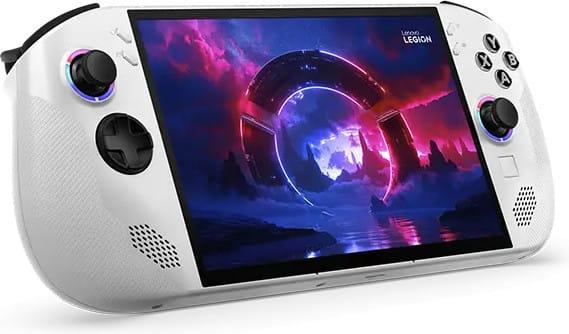
6. Portable gaming console Lenovo Legion Go S 512 GB Glacier White (83L3001ARA)
Lenovo Legion Go S 512 GB Glacier White is a mobile device running Windows 11 Home, focused on running modern PC games without being tied to a stationary computer. Formally it is a portable console, but in reality - a compact gaming PC. The 8-inch IPS display with 1920x1200 resolution and 120 Hz refresh rate makes the picture sharp and smooth, especially in dynamic projects.
The device supports external display connection, works with Wi-Fi 6E and Bluetooth 5.3, so there are no issues with network and accessories. Controls are implemented through the built-in Legion TrueStrike controller - everything is integrated into the body, no need to connect a separate gamepad. This format is chosen by those who need a mobile option with a full Windows interface.
Key features:
Windows 11 Home operating system
8-inch IPS display 1920x1200 120 Hz
AMD Ryzen Z2 Go processor
Wi-Fi 6E and Bluetooth 5.3 support
External display connection capability
Specifications:
Storage: 512 GB
RAM: 16 GB
Processor: AMD Ryzen Z2 Go 4.3GHz
Controller: Legion TrueStrike
USB: USB Type-C
Video output: Yes
How these models differ from each other
Although all devices belong to portable consoles, their approach to gaming is different. Differences are not only in the system or screen size, but in the usage scenario itself: somewhere it's a mobile PC, somewhere - part of a closed ecosystem, and somewhere - a fully autonomous console without TV connection.
1. Platform format
Steam Deck is built around the Steam ecosystem and running PC games in portable format. Legion Go S runs on Windows, so it feels like a compact gaming computer: you can install various services and applications without restrictions. Switch Lite remains within the Nintendo system and does not imply going beyond it.
2. Approach to screen and comfort
Steam Deck and Legion Go S are larger and designed for longer gaming sessions. They are more often chosen by those who play for extended periods regularly. Switch Lite is more compact and lighter - a convenient option for travel or short breaks during the day.
3. Gaming environment
Devices based on SteamOS and Windows provide access to modern PC projects and digital libraries. Switch Lite is focused on Nintendo games and compatible releases. These are different approaches to content selection: either an open environment or a proprietary ecosystem.
4. Connectivity options
Steam Deck and Legion Go S support connecting external displays and accessories through universal ports. Switch Lite is fully portable and not designed to work with a TV. In this regard, it is simpler - but also clearer in terms of usage format.
5. Controls
In all models, controls are built into the body. Differences lie in layout and feel. Steam Deck is complemented by touch zones, Legion Go S is closer in logic to Xbox gamepads, and Switch Lite retains the familiar Nintendo scheme.
In the end, the differences are related not so much to numbers as to exactly how you plan to play. Some devices bet on flexibility and versatility, others - on compactness and working within a specific gaming ecosystem.
What to choose depending on your needs
There is no universal option here. Everything depends on exactly how you plan to play: at home, on the go, with access to a PC library or within one ecosystem.
For access to the Steam library and PC games in portable format: Valve Steam Deck 256 GB. Suitable for those who already use Steam and want to keep the familiar environment without a separate computer.
For Windows versatility and installing various gaming services: Lenovo Legion Go S 512 GB. Considered a mobile alternative to a gaming laptop with the ability to connect an external screen.
For compact format and games from the Nintendo ecosystem: Nintendo Switch Lite. Convenient on the go, requires no additional setup and is focused on Nintendo projects.
For playing away from home without tying to a TV: Switch Lite or Steam Deck, depending on game library preferences.
For connecting to an external display and more flexible use: Steam Deck or Lenovo Legion Go S.
The choice is most often determined not by the numbers in the specifications, but by the familiar gaming environment and where exactly the device will be used.
Conclusion
Portable gaming consoles can no longer be called a secondary format. Now it is a separate segment between stationary systems and gaming laptops. For some, compactness and minimal setup are important, for others - access to their PC library without a separate device, and someone chooses a specific gaming ecosystem and works only within it.
The difference between models is felt precisely in the approach. Some offer more flexibility and freedom to install services, others are initially set up "out of the box" and require no extra steps. Therefore, the choice most often comes down to habits: where you play most often, which projects are already in your library, and whether you need external screen connection. There is no universal option - there are different usage scenarios.
Frequently asked questions
1. Can a portable console be connected to a TV?
It depends on the model. Devices based on SteamOS and Windows usually support video output via USB Type-C. Compact versions such as Switch Lite are designed only for portable mode.
2. Are such consoles suitable for modern games?
Models based on Windows or SteamOS allow you to run many current projects, taking into account their performance. Nintendo's selection is limited to its own ecosystem, but within it all compatible releases are available.
3. Can they be used as a full-fledged PC?
Consoles running Windows provide access to the familiar interface and application installation. SteamOS is primarily focused on games but supports additional functions. Switch Lite is intended only for gaming use.
4. Does battery life differ significantly?
Battery life depends on device power and game type. More powerful models discharge faster under heavy load. Compact versions are usually designed for moderate gaming sessions without prolonged maximum performance mode.