

Best Semi-Professional Cameras for Beginners in 2026
March 30, 2026
If you have already outgrown shooting on your phone, sooner or later the question arises: what's next? You don't want to take something too simple - it will quickly become boring. But buying a complex professional camera, in which half of the functions are still unclear, is also not a great idea.
At this moment, many begin to look towards semi-professional cameras. And this, in fact, is a rather reasonable step. They give more freedom - you can play with the settings, try different shooting styles, but at the same time you don't feel like you're taking a photography exam every time you turn on the camera.
Let's figure out which models are really worth considering and what to look at first, so that the purchase does not turn out to be "for growth" that will never be used.

1. Sony Alpha A6700
Sony Alpha A6700 is exactly the case when the camera already feels "adult", but at the same time does not repel with its complexity. For a beginner, this is important: here you can shoot in automatic mode, and then gradually figure out the manual settings without changing the equipment in six months. It does not limit you - on the contrary, it pushes you to try more.
The camera performs well in different situations - from ordinary photos to video. Autofocus does not require constant control, stabilization helps not to think about every movement of your hands, and the swivel screen makes the shooting process more flexible. This is an option with which you can calmly learn and not feel that you have "outgrown" it too quickly.
Key points:
APS-C sensor gives good quality without complicating the process
Autofocus helps not to miss shots, especially in motion
Stabilization simplifies handheld shooting
The screen is convenient to use when shooting from different angles
The camera is suitable for both photos and video
Who it is suitable for:
Those who want a universal camera "for growth"
Beginners for whom it is important that the equipment helps and does not interfere
Those who plan to shoot video in parallel with photos
Users switching from a smartphone
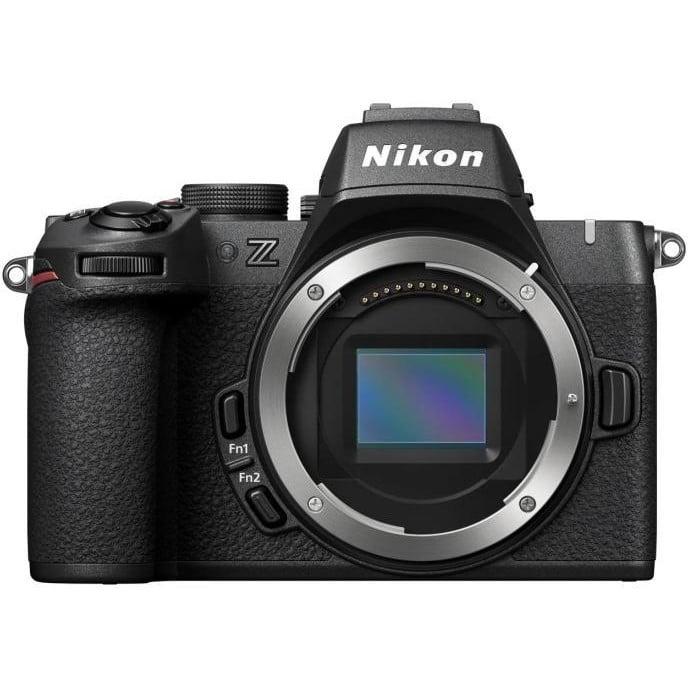
2. Nikon Z50 II
Nikon Z50 II is more about a calm and understandable introduction to photography. This is not the camera that tries to impress with the number of functions - rather the opposite, it gives a base with which it is convenient to start. And in the context of semi-professional equipment, this is a plus: it does not overload, but already gives more control than simple models.
With it, it is easier to focus on the shooting process itself - composition, light, frame. Yes, there are no some advanced things like in-body stabilization, but for a start this is not critical. The camera feels like a logical first step towards more serious equipment.
Key points:
Simple and understandable control logic
Enough settings for gradual learning
The screen makes shooting in everyday conditions easier
Autofocus works stably without extra effort
There is the ability to change lenses and try different ones
Who it is suitable for:
Those who are just starting and do not want to overload themselves
Those who focus on photography rather than video
Users for whom simplicity and predictability are important
Those who are looking for their first "serious" camera
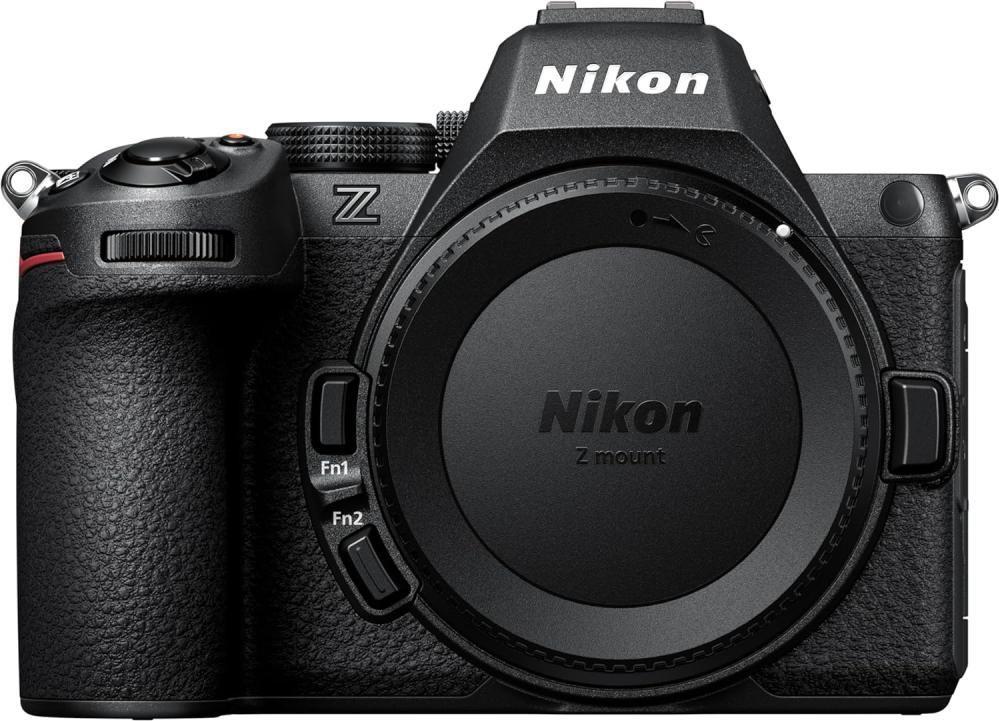
3. Nikon Z5 II
Nikon Z5 II already feels like a step a little further - especially due to the full frame. For a beginner, this may sound like something complicated, but in practice it is not so scary. The camera remains understandable, it just gives more opportunities, especially in difficult lighting and when working with frame depth.
This is an option for those who do not want to start from the most basic level, but immediately take something with a reserve. At the same time, it does not require you to be an expert - you can calmly master everything gradually. In the end, this is a camera that will not limit you as you grow.
Key points:
Full frame gives a more natural picture
The camera is suitable for shooting in low light
The controls remain accessible even for a beginner
There is a reserve of functions for further growth
Universally suitable for different scenarios
Who it is suitable for:
Those who want to start with full frame right away
Those who shoot indoors or in the evening
Users who do not plan to change the camera quickly
Those who want to develop in photography gradually
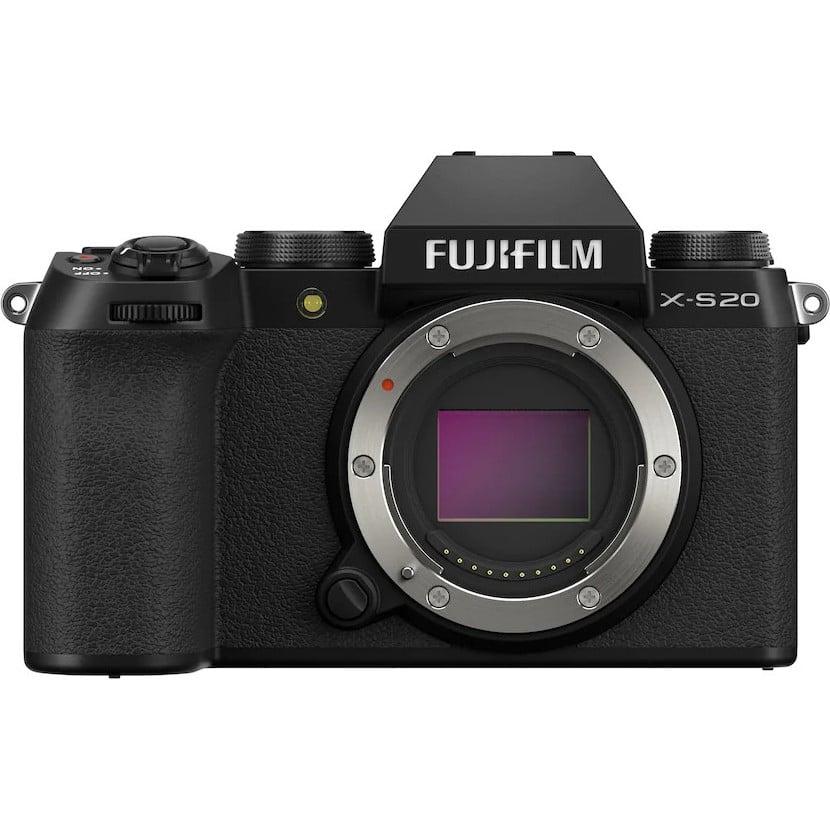
4. Fujifilm X-S20
Fujifilm X-S20 is more about flexibility and experiments. This is no longer quite "just take and shoot" - here you want to twist the settings, try different modes, play with the possibilities. For a beginner, this may be a bit more difficult, but also more interesting.
The camera is well suited for dynamic scenes and video. Stabilization helps to shoot without extra preparation, and high continuous shooting speed gives a chance to catch the right moment. In general, this is an option for those for whom it is important not just to take photos, but to try different approaches.
Key points:
The camera copes well with dynamic shooting
Stabilization helps to shoot without a tripod
High continuous shooting speed gives more opportunities
The screen is convenient for video and non-standard angles
There is potential for growth in video
Who it is suitable for:
Those who want to shoot video and photos at the same time
Those for whom the speed and response of the camera are important
Users who are interested in figuring out the settings
Those who shoot movement and active scenes
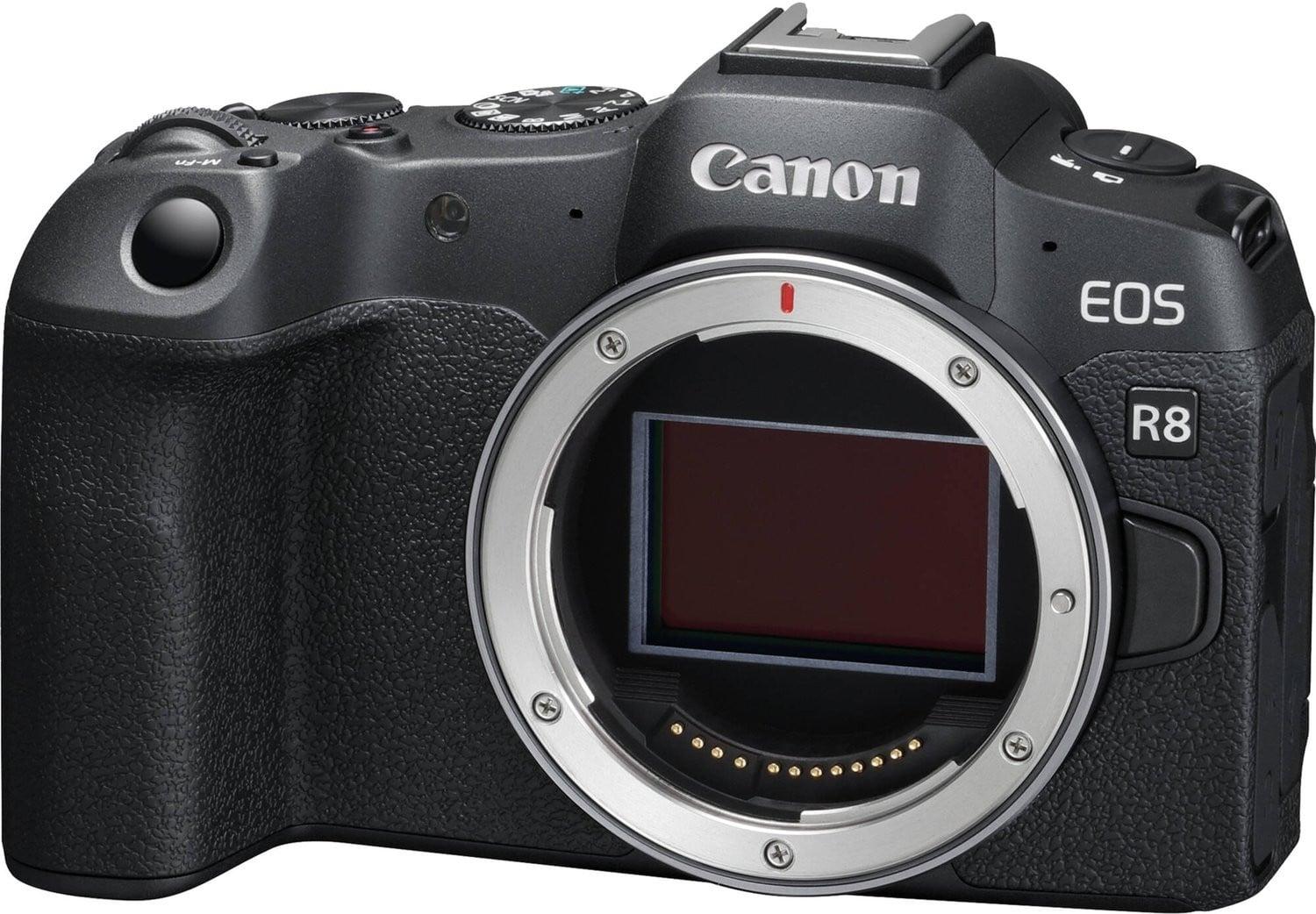
5. Canon EOS R8
Canon EOS R8 is essentially a simplified entry into full frame. The camera is not overloaded with extra elements, so it is easier to figure it out than it may seem. At the same time, the image quality is already at a different level compared to basic models.
It is well suited for everyday shooting, portraits and situations where light is important. There is no in-body stabilization, but this is compensated by the overall simplicity and clarity. The camera does not try to be complex - and this is its plus for a beginner.
Key points:
Full frame gives a softer and more natural picture
The camera remains light and convenient
Autofocus works stably without complex settings
The screen simplifies shooting from different angles
Suitable for photos and basic video
Who it is suitable for:
Those who want to try full frame without complications
Those who shoot portraits and everyday scenes
Users for whom simplicity is important
Those who do not want to overload themselves with settings
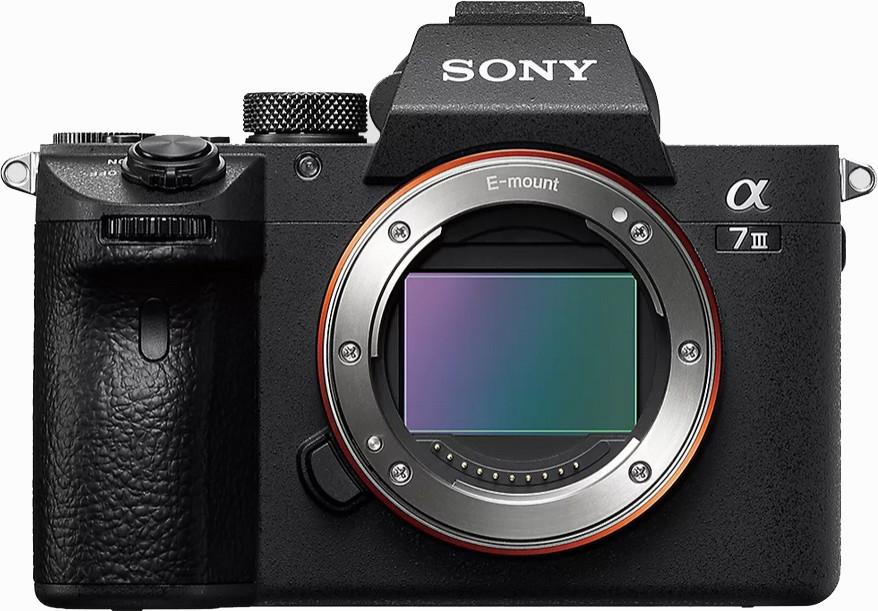
6. Sony Alpha A7 III
Sony Alpha A7 III is often perceived as a "proven base" with which you can calmly grow. This is no longer the newest model, but that is exactly why it is understandable and predictable. For a beginner, this is even a plus - fewer surprises, more stability.
The camera gives a good balance between capabilities and convenience. There is stabilization, normal autofocus, two memory card slots. It is not the simplest at the start, but if you do not rush, you quickly get used to it. And you definitely won't have to change it in the near future.
Key points:
The camera gives a stable result in different conditions
Stabilization helps to shoot handheld
Autofocus confidently copes with basic tasks
Two card slots add reliability
Suitable as a basis for further growth
Who it is suitable for:
Those who want a reliable camera for a long time
Those who shoot in different conditions
Users who are ready to learn gradually
Those who want to switch to full frame without haste
Conclusion
If we simplify, a semi-professional camera for a beginner is not about "cooler or more expensive", but about balance. Balance between capabilities and how comfortable you feel using this equipment. Because even the most advanced camera will not give results if you simply don't want to pick it up.
At the start, what is more important is not the number of functions, but the feeling that you understand what is happening. For some, a simpler model will work, where you can calmly learn without being distracted by unnecessary things. Someone, on the contrary, will want to immediately take a camera with a reserve and gradually figure it out. Both options are normal - there is no "right" choice here.
And one more point that is rarely talked about: the camera is only part of the story. Lenses, light, practice - all this affects no less. Therefore, it is better to choose a model with which you simply want to shoot more often. At some point, this begins to play a bigger role than the characteristics in the table.