

Top Cameras for Landscape Photography: A Smart Choice Without Common Mistakes
January 16, 2026
Landscape photography is rarely spontaneous. Most often it involves early wake-ups, long waits for the right light, and dozens of meters walked for the sake of a single frame. In such moments it is especially important that the camera does not limit the photographer, but on the contrary helps to get the maximum out of the scene: preserve shadow depth, avoid burning out the sky, and convey the atmosphere of the place exactly as it felt in real life.
Choosing a camera for landscapes is always a balance between image quality, ease of use, and common sense. Not everyone needs medium format or a flagship at a huge price, but there are models that consistently deliver excellent results specifically in landscape photography. Below we review the best options and explain why they perform well in practice.
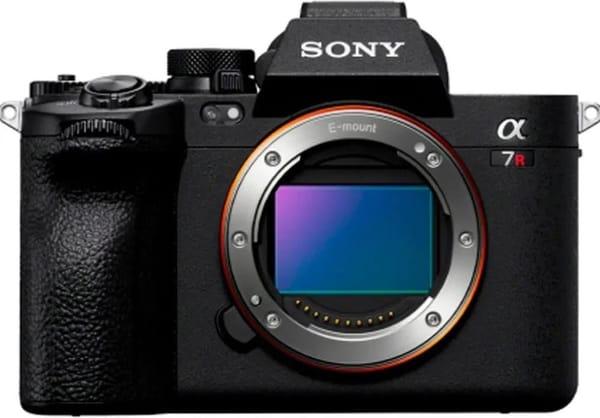
1. Sony Alpha A7R V
Sony Alpha A7R V is usually chosen when the landscape is perceived as a collection of fine details rather than just a beautiful scene as a whole. The camera confidently handles high resolution and lets you see the texture of rocks, grass, or distant mountain slopes in the frame. This level of detail gives freedom — you can crop after shooting without fear of quality loss.
In use, the camera feels solid and unhurried. It works well on a tripod, but in-body stabilization also helps when shooting handheld, especially at dawn or dusk. The fully articulated touchscreen and electronic viewfinder make it easier to compose in difficult positions — low to the ground or on uneven terrain, for example.
Key features:
61 MP full-frame sensor
In-body image stabilization
Fully articulated touchscreen
Electronic viewfinder
Dual memory card slots
Best for:
Photographers who shoot landscapes with maximum detail in mind
Those who frequently crop their images
Users of Sony E-mount lenses
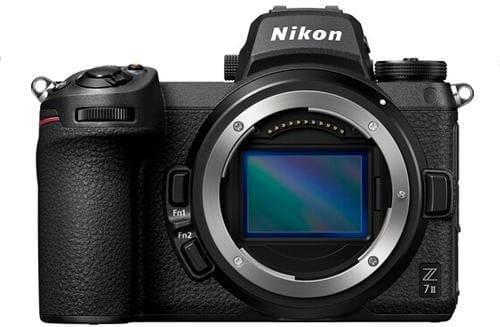
2. Nikon Z7 II
Nikon Z7 II feels like a camera made for deliberate, calm shooting without rush. It renders tonal transitions beautifully and preserves natural colors — especially noticeable in soft-light landscapes: fog, overcast skies, evening scenes. The resolution is sufficient for most purposes without creating excessively heavy files.
In real-world use the Z7 II is predictable and logical. Controls will feel familiar to Nikon users, and in-body stabilization helps avoid blur during long exposures. The camera doesn’t distract from the process and lets you focus purely on composition and light.
Key features:
47 MP full-frame sensor
In-body sensor-shift stabilization
Electronic viewfinder
Tilting screen
RAW + JPEG support
Best for:
Lovers of classic landscape photography
Those who value natural color rendition
Users of the Nikon Z system
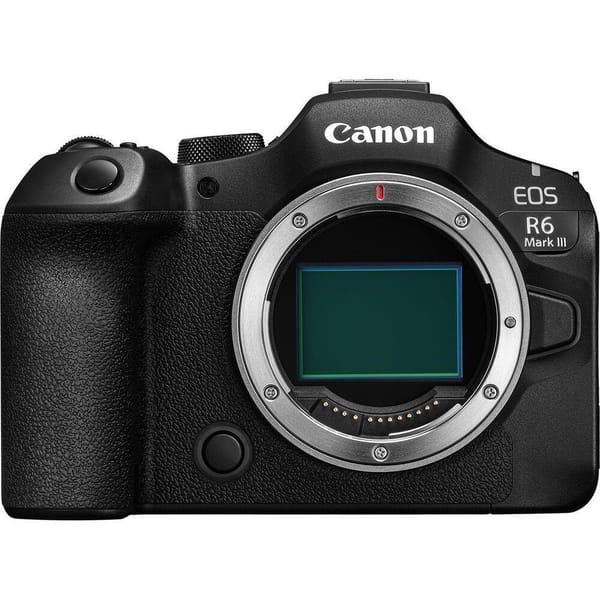
3. Canon EOS R6 Mark III
Canon EOS R6 Mark III is often seen as a versatile all-rounder, but it also performs confidently in landscape work. The sensor resolution is well balanced — enough detail without overloading storage and post-processing. The camera handles high-contrast scenes and tricky lighting very well.
In everyday use it feels comfortable and responsive. The fully articulated screen helps with unusual angles, while in-body stabilization lets you skip the tripod more often. It’s a great choice for photographers who don’t shoot landscapes in isolation, but combine them with other genres.
Key features:
32.5 MP full-frame sensor
In-body image stabilization
Fully articulated touchscreen
High-speed burst shooting
RAW, JPEG and HEIF support
Best for:
Photographers who shoot landscapes + other genres
Travel photographers
Users of Canon RF lenses
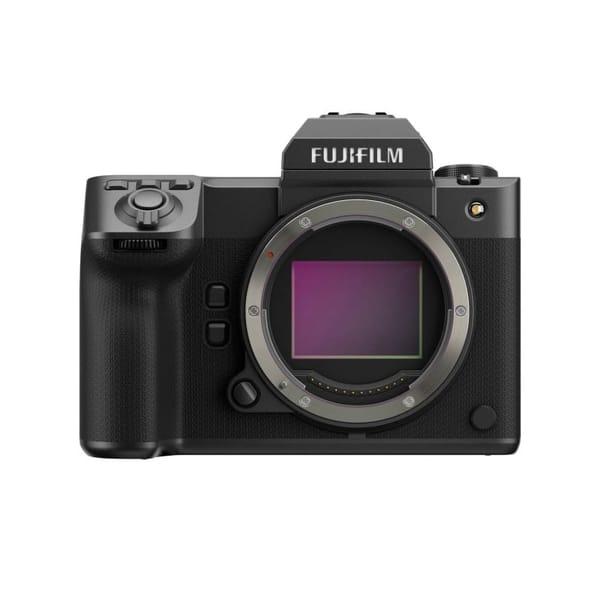
4. Fujifilm GFX100 II
Fujifilm GFX100 II immediately sets a different level of image quality. Medium format is felt not so much in the numbers, but in the character of the image — smooth transitions, deep shadows, and extremely accurate color. In landscapes this is especially noticeable when the frame contains many complex tones and fine details.
At the same time the camera remains practical enough for location shooting. In-body stabilization and a tilting touchscreen make fieldwork easier, while the huge resolution reserve allows creative cropping after capture. It’s a tool for those who take landscape photography very seriously.
Key features:
102 MP medium-format sensor
In-body sensor-shift stabilization
Electronic viewfinder
Tilting touchscreen
Video support up to 8K
Best for:
Landscape photographers focused on ultimate quality
Those who print large formats
Users of the Fujifilm GFX system
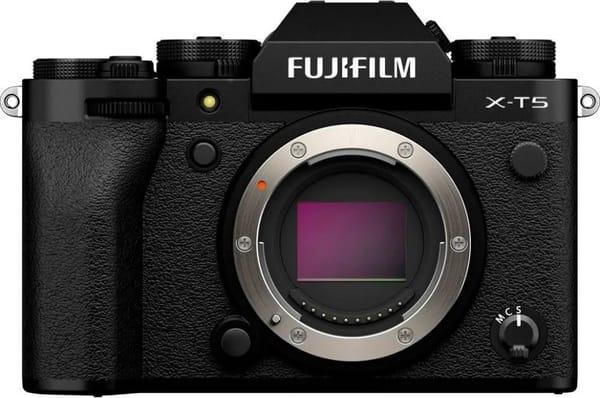
5. Fujifilm X-T5
Fujifilm X-T5 looks compact, yet its capabilities far exceed expectations. It’s an excellent choice for landscape photography while traveling, when small size and light weight matter. The APS-C sensor resolution allows confident detail capture without feeling severely limited.
The control philosophy deserves special mention. Physical dials and a tilting screen encourage more deliberate, unhurried shooting. This is a camera that invites thoughtful frame selection rather than speed.
Key features:
40 MP APS-C sensor
In-body image stabilization
Electronic viewfinder
Tilting screen
RAW + JPEG support
Best for:
Travelers and landscape photographers
Those who value compactness
Users of the Fujifilm X system
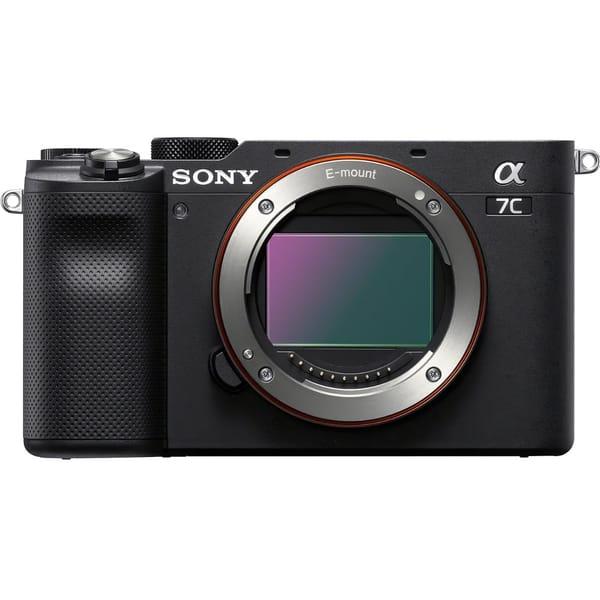
6. Sony Alpha A7C
Sony Alpha A7C is frequently chosen for its combination of compact body and full-frame sensor. In landscape photography this is especially convenient during long walks, hikes, and trips when every gram counts. The camera delivers full-frame image quality without forcing you to carry a large body.
It is straightforward and intuitive to use. In-body stabilization helps with handheld shooting, while the fully articulated touchscreen is handy for low or unusual angles. It’s a practical tool without unnecessary complexity, designed for regular shooting on the go.
Key features:
25.3 MP full-frame sensor
Compact body
In-body image stabilization
Fully articulated touchscreen
RAW + JPEG support
Best for:
Travel photographers
Those who often shoot handheld
Users of Sony E-mount lenses
Conclusion
Choosing a camera for landscape photography is rarely simple or quick. There is no single universal option that suits everyone in every situation. Some prioritize maximum detail and headroom for large prints; others value compactness and the reminder that the camera should actually come along instead of staying at home. That’s why — besides technical specifications — you should also consider your personal shooting style, habits, and goals.
All the models discussed in this article suit landscape work in their own way, yet each does it differently. Sometimes resolution is the priority, sometimes portability or color science. When you approach the choice calmly — without chasing numbers — the risk of making a mistake drops significantly. In the end, a good landscape camera is the one that doesn’t get in the way of seeing the shot and lets you focus on what really matters: light, mood, and the moment.