

Valve Steam Frame: A Full Review of the 2026 VR Headset
May 7, 2026
Quick Summary: The Valve Steam Frame is the latest VR headset for 2026, featuring foveated rendering, a standalone mode running SteamOS, and 6 GHz wireless transmission. Available in 256 GB (from $499-$599) and 1 TB (from $699-$799) storage options, it offers thin lenses, premium audio, and versatile controllers for both VR and casual gaming.
In November 2025, Valve made a breakthrough by unveiling three next-generation devices. Among them is the Steam Frame, a standalone VR headset designed to combine the power of PC VR with the convenience of standalone headsets.
This is the company's first foray into the mass market of virtual reality following the successful but expensive Valve Index. And it appears that this time, Valve is serious about competing with the Meta Quest and PlayStation VR2.
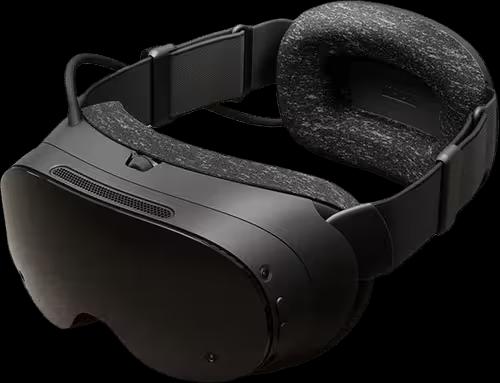
What is Steam Frame: Key Information
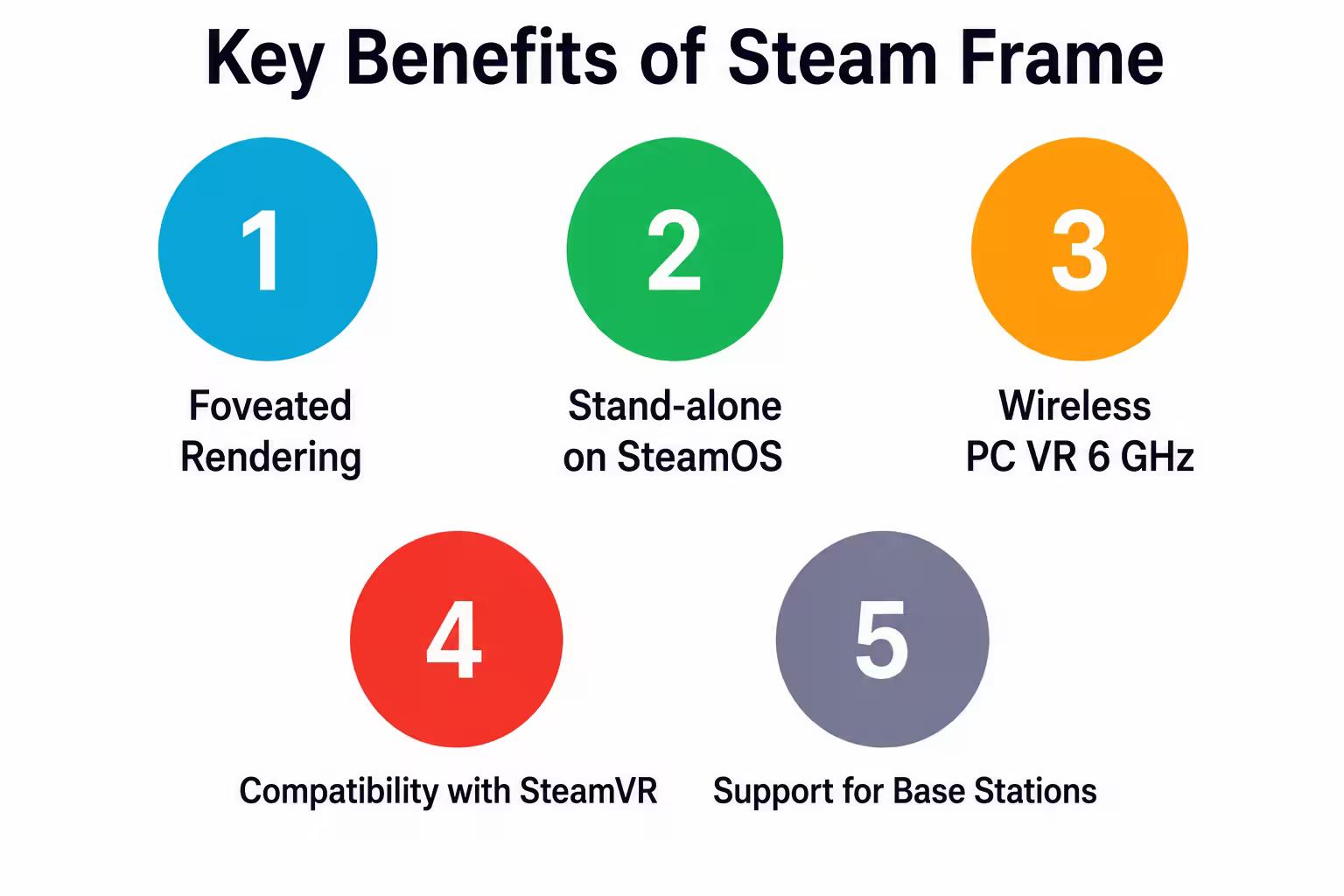
Steam Frame is Valve's next-generation VR headset, running the SteamOS operating system. The headset offers two operating modes: standalone for locally installed games, and PC VR via a 6 GHz wireless connection.
Unlike the previous Valve Index, Steam Frame doesn't require external base stations. Built-in cameras provide inside-out tracking, making setup quick and easy.
But the key feature is foveated rendering. This technology tracks eye movement and renders only the portion of the image where your gaze is directed in high resolution. Peripherals are rendered with less detail, saving GPU resources and allowing you to run demanding games even on mid-range PCs.
Two versions: 256 GB and 1 TB
Valve is releasing the Steam Frame in two storage options:
256 GB Steam Frame – estimated price from $499 to $599
1 TB Steam Frame – estimated price from $699 to $799
Both models support expandable memory via a microSD card slot, allowing you to store more games locally without relying on the cloud or a PC.
Valve hasn't yet confirmed the official price, but retail sources are quoting these ranges. The release is scheduled for early 2026, and pre-orders may open in the coming weeks.
Fove Rendering – The Steam Frame's Key Technical Breakthrough
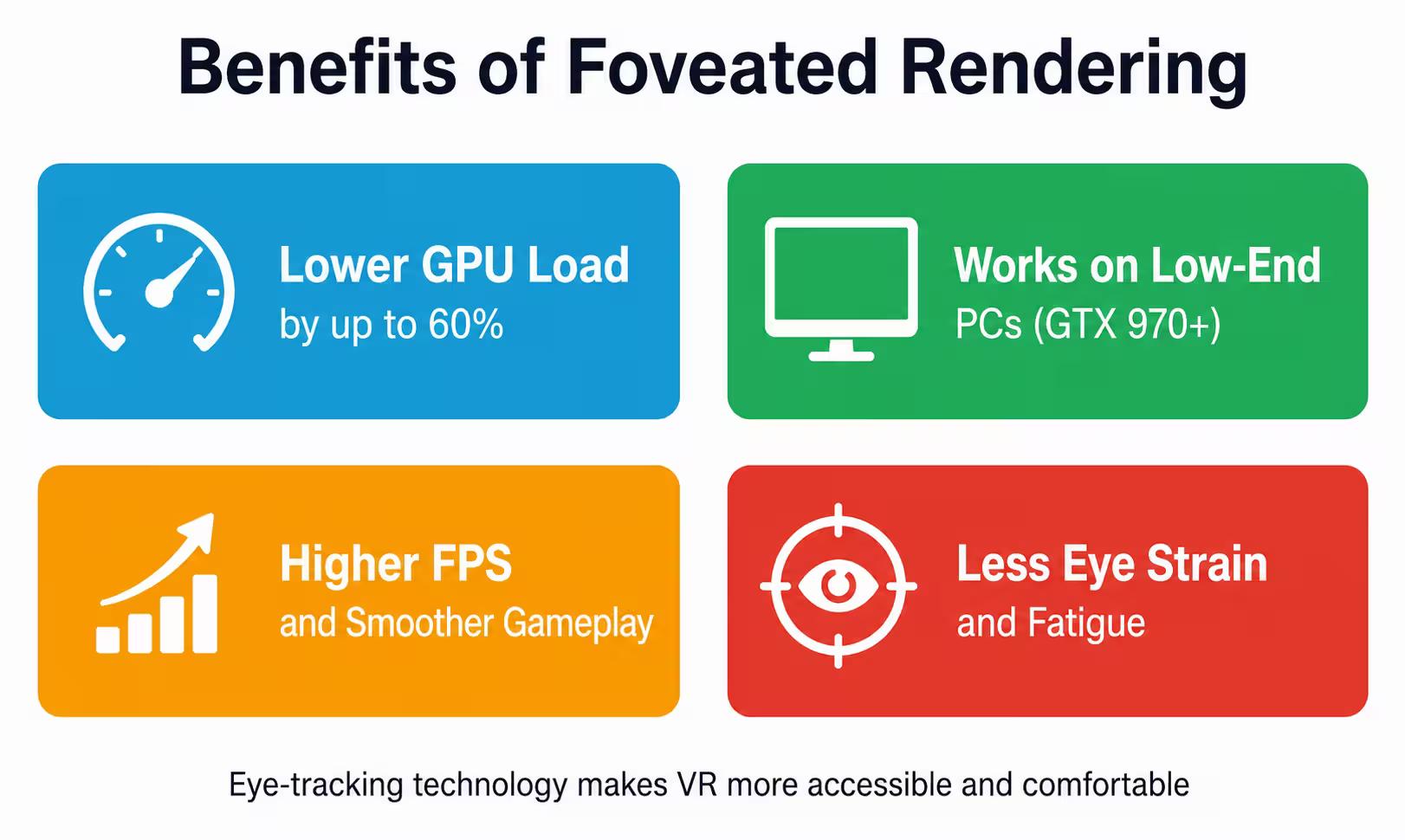
Fove rendering is a game-changer for VR. It works simply: the human eye only sees the central part of its field of view (the fovea) clearly, while peripheral vision is blurry. Steam Frame uses built-in eye-tracking sensors to detect where the user is looking and render high-resolution images only in that area. The rest of the image is rendered at a lower level of detail, which is still imperceptible to humans.
The result? GPU load is reduced by 40–60%, allowing AAA games to run in VR even on systems with an NVIDIA GeForce GTX 970 or AMD RX 480—the minimum requirements for Valve Index, according to the official documentation.
How does this feel in practice?
Judging by initial test impressions, foveated rendering in Steam Frame works seamlessly. Users see no artifacts or transitions between areas of focus—everything looks natural.
At the same time, performance improves dramatically. Thanks to foveated rendering, demanding games can run on lower-end systems with improved performance.
According to user reviews, Steam Frame delivers a significant performance improvement for demanding games thanks to foveated rendering.

Find your VR headset at JustBuy
JustBuy is the place to quickly find VR headsets and virtual reality accessories. Our catalog features current models, including alternatives to the Valve Steam Frame and other solutions for various use cases.
Here you can easily compare devices, check availability, and immediately understand which options suit your needs and budget.
Looking for where to buy a VR headset and accessories?
At JustBuy, you can:
Select current VR headset models and accessories
Compare specifications and find the perfect option
Check availability, price, and delivery options
Place an online order or get a consultation
👉Contact JustBuy, to quickly find a VR headset and start using virtual reality technology without any hassle.
Thin "pancake" lenses – maximum clarity, minimal weight
The Steam Frame uses pancake lenses (thin lenses with multi-layered light reflection), which have become the standard in modern VR headsets.
The advantages are obvious: the device is lighter, the frame is thinner, and image quality is improved thanks to reduced distortion at the edges. Compared to the Fresnel lenses used in the Valve Index, pancake lenses provide a sharper image without the "god rays" effect—a halo of light around bright objects on a dark background.
There is a tradeoff, however: pancake lenses transmit less light, so screens need to be brighter. Valve addressed this by using high-brightness LCD panels while maintaining rich color reproduction.
The Steam Frame is also a fully-fledged standalone PC.
One of the most exciting features of the Steam Frame is its ability to run in standalone mode without being connected to a PC. The headset is equipped with an ARM-based processor and a GPU capable of running medium- and high-complexity games locally.
The operating system is SteamOS, specifically adapted for VR. This means access to the entire Steam library, including games optimized for offline mode.
Of course, the graphics in standalone mode will be inferior to PC VR, but it's suitable for casual games and social VR applications. This is more than enough for educational content.
6 GHz Wireless Streaming
For heavy gaming, the Steam Frame offers a wireless connection to your PC via Wi-Fi 6E (6 GHz). This ensures low latency (less than 20 ms) and high throughput for streaming uncompressed high-definition video.
PC VR requirements according to the official documentation:
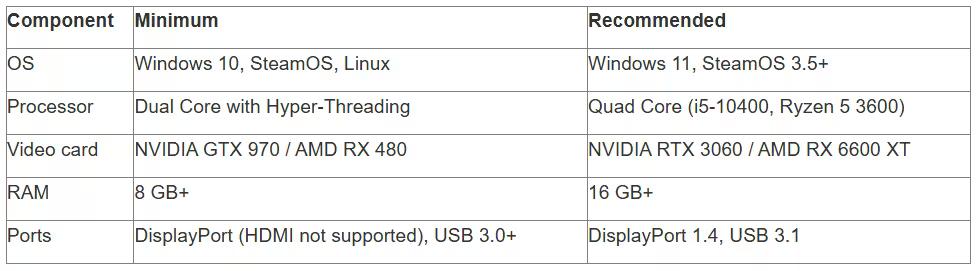
Please note: DisplayPort is required. HDMI is not supported due to bandwidth limitations for high refresh rates.
Premium Audio
The Steam Frame inherits the Valve Index audio system—integrated near-field speakers that sit close to your ears without touching them.
This solution offers several advantages:
High-quality spatial sound without pressure on your ears
Comfort—you can quickly hear others without removing the headset
Hygienic—no skin contact, making it easy to share the headset
For those who prefer complete isolation, a 3.5 mm headphone jack is provided.
The audio supports low-latency 3D audio, which is critical for shooters and horror games where audio cues are part of the gameplay.
Steam Frame Controllers—one package for VR and regular gaming
Along with the headset, Valve is releasing an updated Steam Controller, which works in both VR and traditional PC or Steam Deck games. The controllers are equipped with:
High-resolution tactile touchpads
Buttons with customizable response
Gyroscopes for precise aiming
Adaptive triggers (similar to Sony's DualSense)
In VR mode, the controllers are tracked via the headset's cameras (inside-out tracking), providing precision comparable to Valve Index base stations, but without the need for external hardware.
Battery life is up to 8 hours of active play. Charging is via USB-C.
SteamOS—the full Steam experience on your VR device
SteamOS is Valve's Linux distribution, used in Steam Deck and now optimized for VR. It offers seamless integration with your Steam library, cloud saves, and social features.
Key features of SteamOS on Steam Frame:
Instant resume—the headset powers on in 2-3 seconds and immediately returns you to the game from a paused state
Cloud saves—progress is synced between your PC, Steam Deck, and Steam Frame
Proton—a compatibility layer that lets you run Windows games on Linux without losing performance
Built-in store—access thousands of VR games and apps directly from the headset
Valve provides free Steam Frame dev kits for developers, which should accelerate the release of exclusive games and optimized content.
Game Compatibility
Steam Frame supports the entire SteamVR library, including games for Valve Index, HTC Vive, and other PC VR headsets. Thanks to the OpenXR API, the headset is also compatible with Windows Mixed Reality games and some Oculus exclusives via third-party patches.
Popular games already confirmed for the Steam Frame include:
Half-Life: Alyx
Beat Saber
Boneworks / Bonelab
No Man's Sky VR
Microsoft Flight Simulator VR
Pavlov VR
Many developers have already announced patches to support foveated rendering, which will improve performance by 30-50% without losing quality.
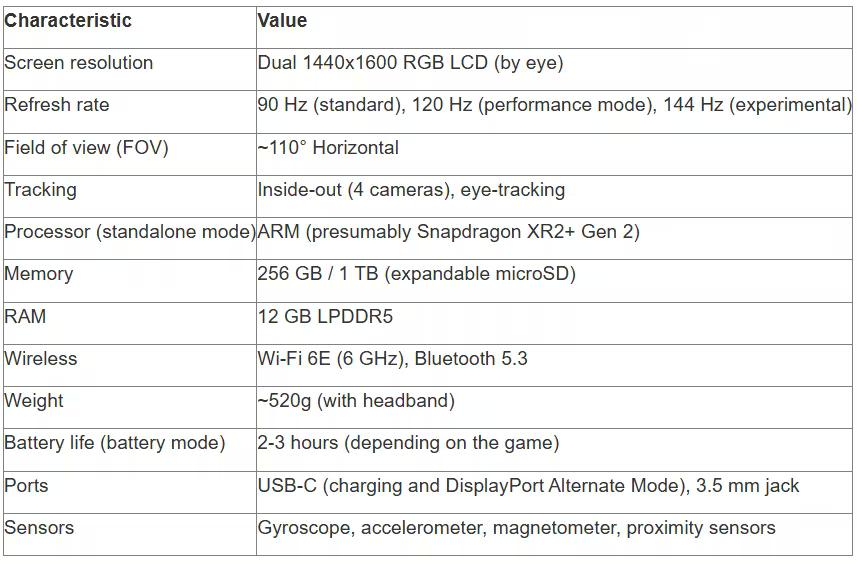
Steam Frame Specifications (full table)
Free Steam Frame Dev Kits for Developers
Valve has launched a developer program. Valve provides developers with dev kits for testing and optimizing their games.
Participation requirements:
At least one published game on Steam (not necessarily VR)
Active development of a VR project (verified by screenshots or gameplay)
Consent to publish the game within 12 months of receiving the dev kit
Applications are accepted through the official Valve Developer Community portal. Remove or soften this sentence
Steam Frame price and release date
The official release date for Steam Frame is early 2026. The exact release date has not been announced.
Estimated prices (not officially confirmed by Valve):
Steam Frame 256GB — $499–$599
Steam Frame 1TB — $699–$799
Package includes:
Steam Frame VR headset
Two Steam Frame Controllers
USB-C charger (65W)
USB-C to USB-C cable (3m)
Microfiber cloth
Documentation and warranty card
Pre-orders will likely open 4–6 weeks before release. Stay tuned for official announcements at store.steampowered.com.
Is a Steam Frame worth buying in 2026?
That's the question. And the answer depends on your needs.
The Steam Frame is worth buying if:
You already have a mid-range PC (GTX 970 / RX 480 or higher) and want to try PC VR without expensive upgrades
You value the Steam library and compatibility with thousands of games, not the Meta ecosystem
You value freedom of OS choice (SteamOS, Windows, Linux) and don't want to be tied to a proprietary platform
You are interested in eye-tracking and foveated rendering features for future games
You are willing to wait until release (early 2026) and don't want to buy the Quest 3 right now
It might be worth waiting or choosing an alternative if:
You don't have a gaming PC and plan to use the headset only in standalone mode — the Quest 3 is cheaper and already available
You want maximum lightness and portability — the Quest 3 weighs 515g versus ~520g for the Steam Frame (the difference is insignificant, but the Quest is more compact in a case)
You are heavily involved in the Meta ecosystem (friends' accounts, Meta Store purchases) — switching to Steam will require repurchasing games.
Price/Quality Comparison
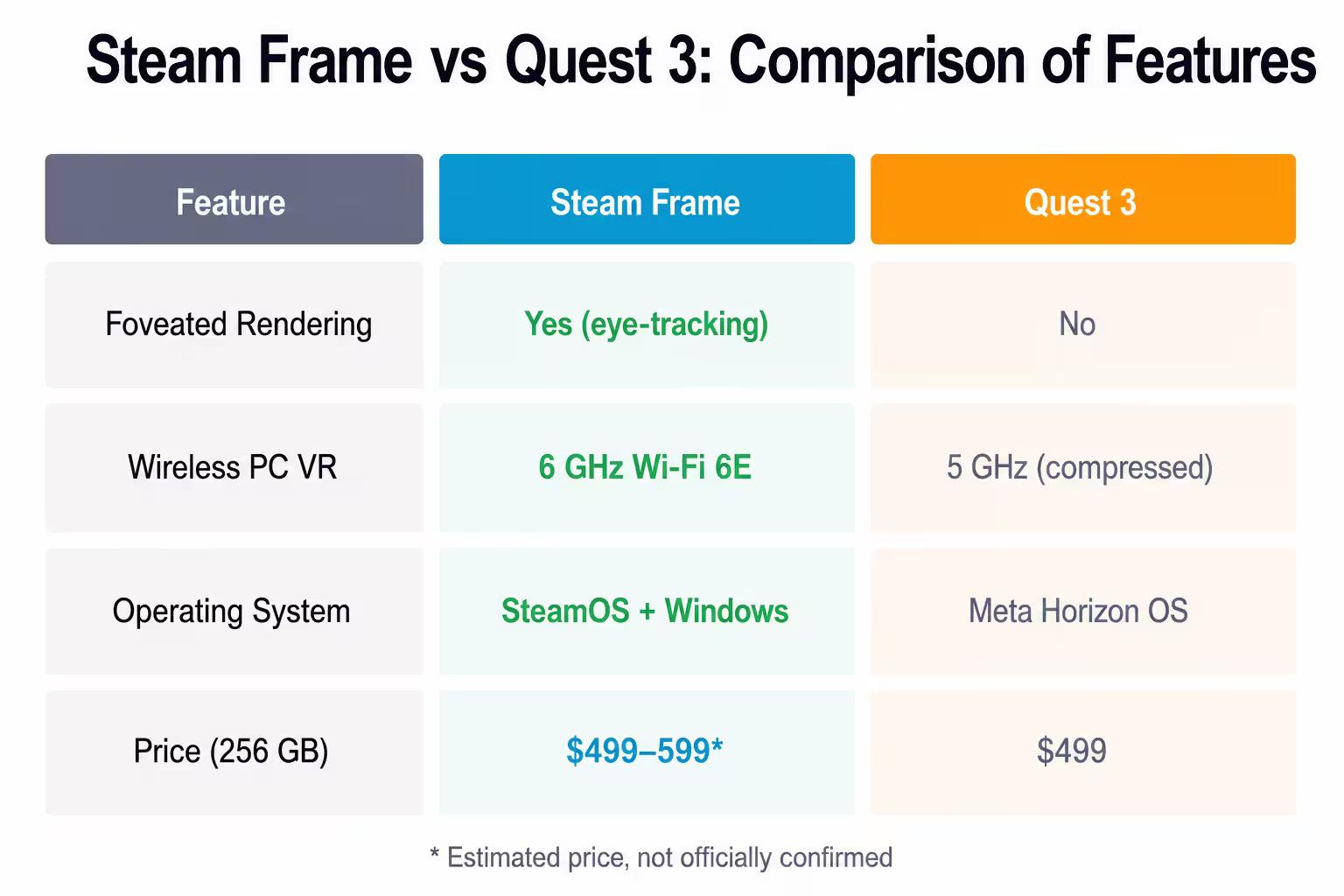
At $499–$599 for the base model, the Steam Frame competes with the Quest 3 ($499 for 128 GB) and PlayStation VR2 ($549, but requires a PS5).
The Steam Frame's advantage is its versatility. It can be used as a standalone headset, a PC VR headset, and is compatible with Linux. No competitor offers such flexibility.
On the other hand, the Quest 3 is already on the market, has a large user base, and a huge library of standalone games. The Steam Frame will have some catching up to do.
FAQ — Valve Steam Frame: Frequently Asked Questions
When will the Steam Frame be released and how much will it cost?
The Steam Frame is scheduled to release in early 2026, likely in March or April. The 256GB version is expected to be priced between $499 and $599, while the 1TB model will be priced between $699 and $799. Valve has not yet confirmed the official price.
Does Steam Frame require a powerful PC?
No, thanks to foveated rendering technology, Steam Frame can run even on systems with an NVIDIA GeForce GTX 970 or AMD RX 480. Minimum requirements include a Dual-Core processor with Hyper-Threading, 8 GB of RAM, DisplayPort (HDMI is not supported), and USB 3.0+. For the best experience, an RTX 3060 or RX 6600 XT is recommended.
Can I use Steam Frame without a PC?
Yes, Steam Frame supports standalone mode. The integrated ARM processor and SteamOS allow you to run games locally without connecting to a computer. Wireless PC connectivity via Wi-Fi 6E (6 GHz) is available for modern AAA games.
How is the Steam Frame different from the Quest 3?
The Steam Frame offers foveated rendering with eye-tracking, wireless 6 GHz transmission without heavy video compression, and runs on SteamOS with direct access to the Steam library. The Quest 3 uses H.265 compression and is more deeply integrated into the Meta ecosystem. The Steam Frame is also available for Windows and Linux for PC VR.
Does the Steam Frame require base stations?
No, the headset uses inside-out tracking via the built-in cameras. Base stations like the Valve Index aren't required, making setup easier and increasing portability.
Does the Steam Frame support games from the SteamVR library?
Yes, the Steam Frame is fully compatible with the entire SteamVR library, including titles for the Valve Index, HTC Vive, and other PC VR headsets. It also supports the OpenXR API for cross-platform VR applications.
What is the refresh rate of the Steam Frame?
The Steam Frame supports three display modes: 90Hz (standard), 120Hz (performance mode), and 144Hz (experimental mode for high-end systems). The available refresh rate depends on your PC's performance and the specific game.
Bottom Line: The Steam Frame is Valve's most ambitious VR headset ever.
The Steam Frame is Valve's attempt to capture the mass VR market without sacrificing the advantages of the PC platform. Foveated rendering, wireless PC VR at 6 GHz, standalone mode on SteamOS, support for the entire Steam library—it all sounds almost too good to be true.
Of course, questions remain. How long will the battery last in real games? How well does foveated rendering work in dynamic scenes? Will there be exclusives that truly unlock the technology's potential?
But one thing is clear: Valve is back in the game. And if the Steam Frame delivers on even half of its promises, the VR industry will never be the same.
Stay tuned for official news on Valve's website, and don't miss the launch of pre-orders in the coming months.