

Best Video Cameras for Cinema: from compact solutions to professional tools
March 30, 2026
In 2026, choosing a video camera for cinema is no longer just buying another gadget. It is the choice of a tool that either helps you shoot exactly as you envisioned, or constantly reminds you of itself with inconveniences on set. Modern cameras have changed a lot: now what matters is not only resolution and frame rate, but also how comfortable it is to shoot handheld, how the stabilization works, how flexibly you can set up sound, and how easy it is to work with the material later in editing and color correction.
Here are several models that filmmakers most often consider - from those who shoot short films and corporate videos to those who work on more serious projects.
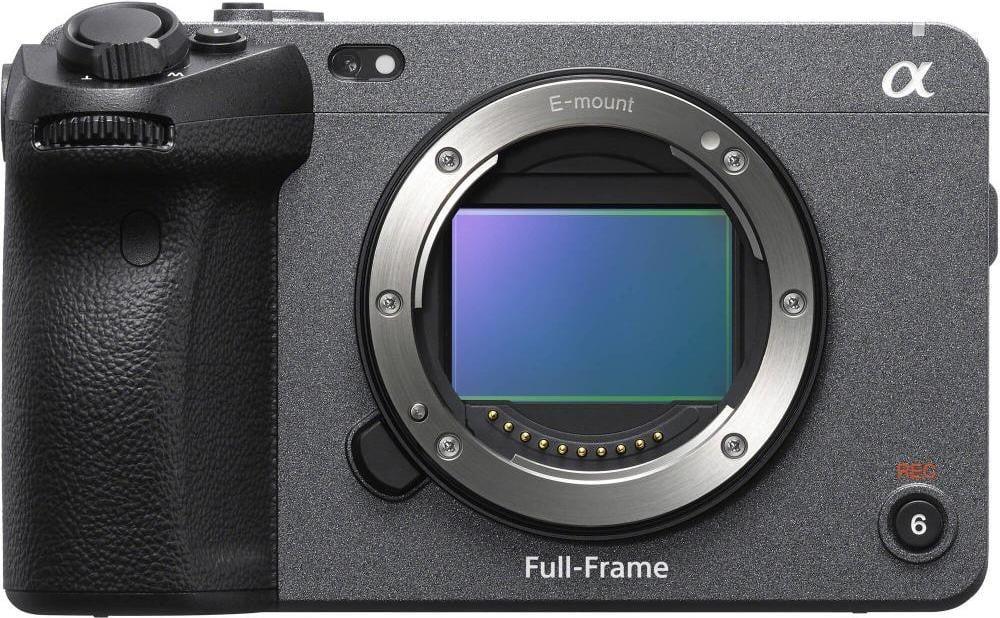
1. Sony FX3A Body (ILMEFX3A)
Sony FX3A Body is a fairly compact video camera that is often taken when you need to shoot cinema in motion. The screen allows you to quickly check the frame, and even in bright light everything is clearly visible.
The camera works well with sound - you can record up to four channels. There is a hot shoe to attach a microphone or light. In general, it feels like a convenient tool for those who often shoot outside the studio.
Characteristics:
Video resolution: 3840x2160 (4K) up to 60 fps, in some modes up to 120 fps
Sensor: 35.8 mm CMOS, 12.9 megapixels
Image stabilizer: optical
Screen: 3 inches, 1,440,000 dots
Sound: PCM 2-channel (48 kHz, 16/24 bit) and 4-channel (48 kHz, 24 bit)
Recording formats: Raw, MPEG-4, H.264, H.265
Hot shoe: yes
Memory card support: SD / SDHC / SDXC
Auto exposure: 11 modes
White balance: auto/manual
Wireless modules: NFC, IEEE 802.11b/g/n
Dimensions: 129.7 x 77.8 x 84.5 mm
Advantages:
You can record sound in four channels - convenient for interviews or atmosphere on set.
The hot shoe allows you to quickly attach the necessary accessory.
The compact body does not tire your hand even after several hours of shooting.
High frame rate modes provide a reserve for slowing down dynamic scenes.
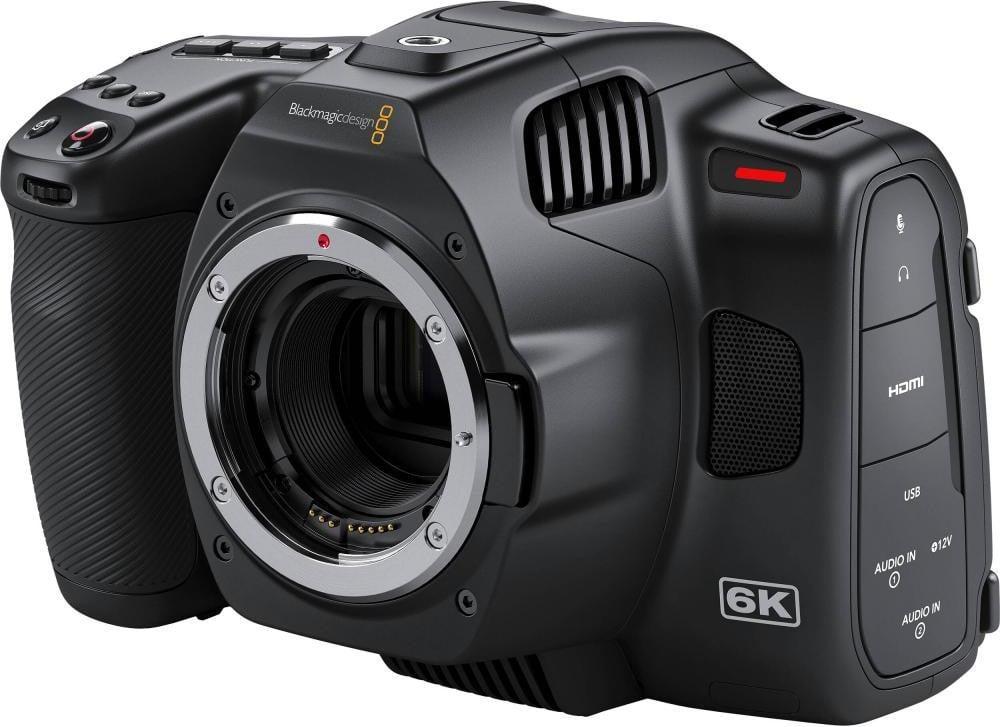
2. Blackmagic Design Pocket Cinema Camera 6K Pro
Blackmagic Design Pocket Cinema Camera 6K Pro looks like a small box, but it has serious internals. The camera is quite light for its class, and it is realistic to take it with you on location. The large touch screen helps you immediately see how the frame will look, especially when working with color and light.
The Super 35 sensor gives a pleasant picture with good depth. If you need to crop the frame or heavily pull colors in editing - there is a reserve here.
Characteristics:
Video resolution: 6K (6144 x 3456) up to 50 fps, 4K DCI up to 60 fps, 1080p up to 120 fps
Sensor: Super 35, 23.10 x 12.99 mm
Screen: 5 inches, touch HDR
Color depth: 12 bit
Memory cards: CFast 2.0 and SD/SDHC/SDXC
Mount: Canon EF
Photo mode: up to 4096 x 2160
Weight: 1238 grams
Dimensions: 180 x 112 x 123 mm
Recording modes: 6Kp29.97, 6Kp25, 6Kp50, 4KDCIp60 and others
Advantages:
6K resolution leaves a lot of space for cropping and color correction.
The large screen is convenient to use for precise adjustments on location.
Low weight allows you to shoot longer without fatigue.
Support for CFast and SD provides flexibility with cards.
12-bit depth helps preserve details in shadows and bright areas.
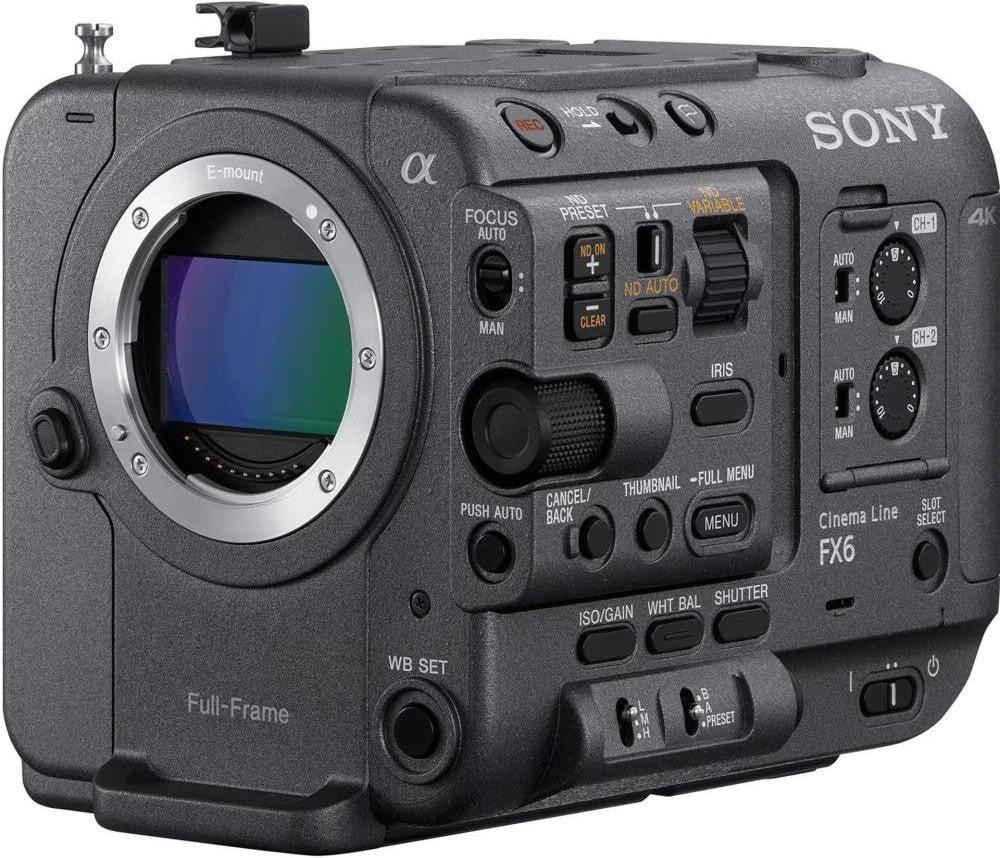
3. Sony FX6 Body (ILMEFX6TCEE)
Sony FX6 Body is already a more serious camera, although in size it still remains quite convenient for location work. The electronic viewfinder is a great help when the sun is shining directly into your eyes - the picture in it remains clear and does not glare. The camera is equipped with full professional connectors, so you can calmly connect an external microphone, monitor or recorder without unnecessary adapters. In general, it feels like a working tool that you can rely on in various shooting conditions.
Characteristics:
Video resolution: 4096x2160 (4K) up to 60 fps, up to 120 fps in some modes
Sensor: 35.8 mm CMOS, 12.9 megapixels
Screen: 3.5 inches, 2,760,000 dots
Viewfinder: electronic
Inputs: SDI, XLR, HDMI
Memory cards: SDHC, SDXC, CF express Type A
Sound: LPCM 2-channel and 4-channel (48kHz, 16/24 bit)
Auto exposure: 12 modes
White balance: auto/manual
Dimensions: 114 x 116 x 153 mm
Advantages:
The electronic viewfinder helps a lot in bright lighting.
Professional connectors simplify work with external sound and monitors.
High frame rate is convenient for subsequent slow motion.
CF express support speeds up recording of large files.
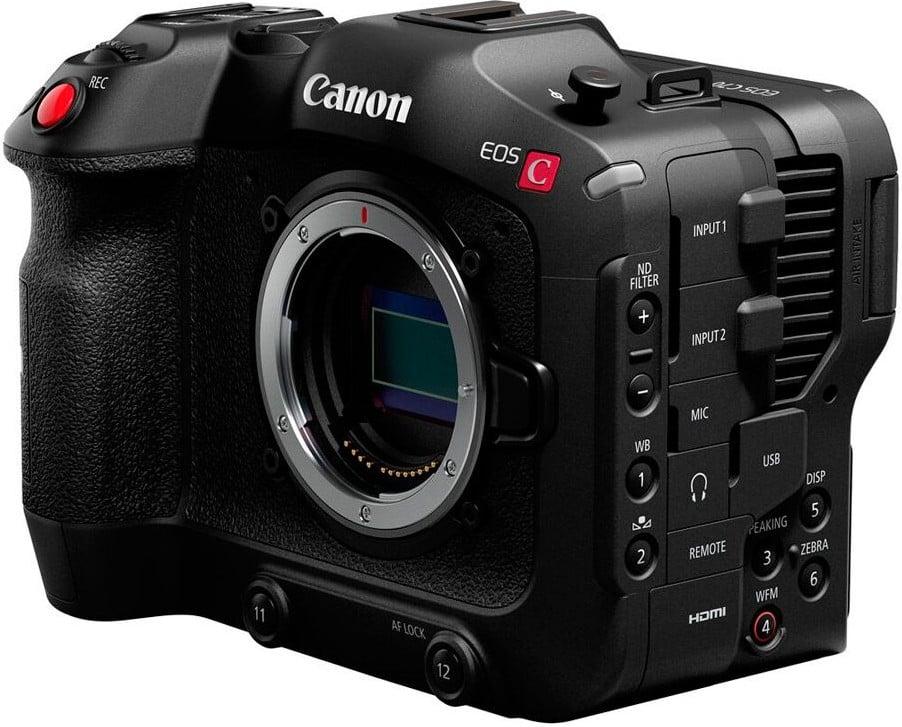
4. Canon EOS C70
Canon EOS C70 turned out to be quite compact for its category, and this is felt immediately as soon as you take it in your hands. The body is not too large and not heavy, so it is convenient to carry it with you all day on shoots outside the studio. The 3.5-inch screen provides a normal view, and details are clearly visible on it even when the lighting changes.
The camera easily works with Canon lenses, which allows you to quickly change optics for the task - from wide angle to portrait. It records clean 4K, and at the same time does not require any complex settings if there is little time. As a result, this is an option when you need a reliable camera, but without extra weight and dimensions.
Characteristics:
Video resolution: 3840x2160 (4K)
Sensor: 26 mm, 9 megapixels
Screen: 3.5 inches
Recording format: MP4
Memory cards: SDXC/SDHC
White balance: auto/manual
Photo mode: up to 4096 x 2160, 3840 x 2160, 2048 x 1080, 1920 x 1080
Dimensions: 160 x 130 x 116 mm
Battery: BP-A30 included
Advantages:
Small and relatively light body is convenient for mobile shooting.
Good compatibility with Canon lenses.
The 3.5-inch screen simplifies frame control on location.
4K support provides a quality reserve for editing.
It is convenient to work both in automatic and manual white balance mode.
5. Sony FX30 Body (ILMEFX30B)
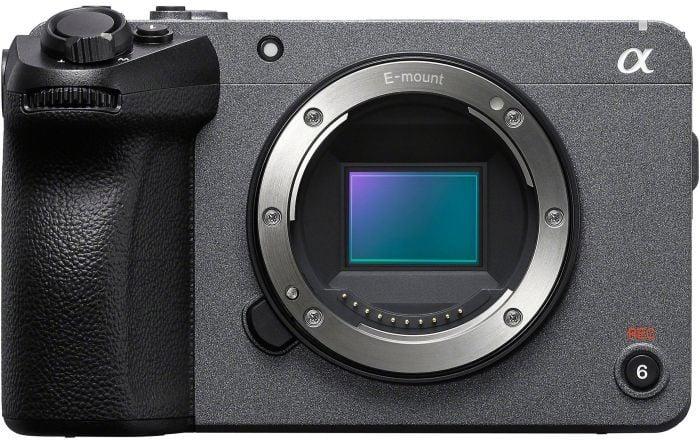
Sony FX30 Body stands out because it has a fairly large APS-C sensor with high resolution, so the picture is detailed both in 4K and when shooting static frames. The 3-inch screen with high dot resolution makes it convenient to check focus and composition even while moving.
The camera supports shooting at high frame rates, which is useful when you want to create beautiful slow-mo in post. At the same time, the body remained compact, and holding it for a long time is not tiring. In general, this is a universal option for those who shoot both video and sometimes take photos with the same camera.
Characteristics:
Video resolution: 3840x2160 (4K) 60 fps, up to 120 fps in some modes, also 4672 x 2628
Sensor: 25.1 x 16.7 mm CMOS, 26.1 megapixels
Stabilizer: optical
Screen: 3 inches, 2,400,000 dots
Hot shoe: yes
Memory cards: SD / SDHC / SDXC
Recording formats: Raw, MPEG-4, H.264, H.265
Auto exposure: 14 modes
White balance: auto/manual
Dimensions: 129.7 x 77.8 x 84.5 mm
Weight: 562 grams
Advantages:
High sensor resolution provides good detail.
The clear screen helps to precisely adjust the frame.
Support for Raw and high frame rates is convenient for post-production.
Compact size and low weight do not interfere with working for a long time.
Conclusion
In the end, everything comes down to a fairly simple question: for what specific tasks the camera is needed and in what conditions you will have to shoot most often. For one filmmaker, the most important thing is low weight and convenience for long handheld work. For another - a large sensor and a reserve in dynamic range, so that later you can calmly work with color even in complex lighting. For a third, reliable connectors and flexibility in connecting external equipment are needed so as not to waste time on adapters. Each of these models copes with its task in its own way. But in the end, no camera will replace the operator's eye, the sense of light and the ability to catch the right moment. The choice should be made not by the number of pixels and not by a loud name, but by which device will be simpler and more pleasant to work with on your shoots. And then practice decides everything. The more you shoot, the faster you understand what is really missing next time.