

A new era for L-mount in Ukraine: Viltrox AF 16mm f/1.8 autofocus wide-angle lens
June 3, 2026
In Brief: The Viltrox AF 16mm f/1.8 L—the brand’s first native autofocus lens for the L-mount system—offers photographers a full-frame ultra-wide-angle option with excellent optics (15 elements in 12 groups, including 4 ED and 3 aspherical elements), a fast STM motor, weather-resistant construction, and an affordable €599 price tag. It is a genuine alternative to premium Leica, Panasonic, and Sigma optics for L-mount cameras.
The L-Mount Alliance has traditionally been positioned as a premium ecosystem. Leica, Panasonic, and Sigma built a system where image quality took priority over affordability. However, the situation is changing.
Viltrox officially joined the L-Mount Alliance in September 2025 and soon introduced its first native autofocus lens for the mount.
The AF 16mm f/1.8 L is more than just another wide-angle lens. It signals that the L-mount ecosystem is becoming more accessible to a broader audience, including photographers and videographers.
Why This Matters for L-Mount Users
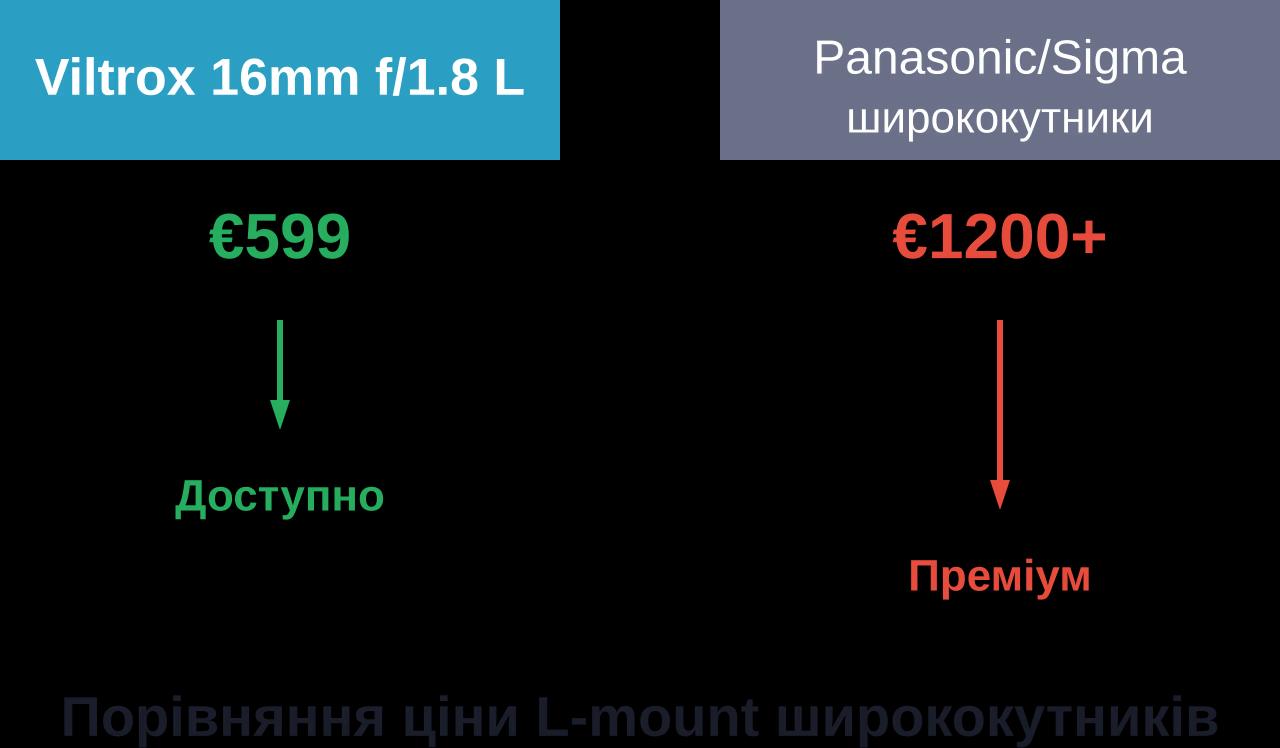
Before Viltrox entered the market, autofocus lens options for L-mount were largely limited to Leica, Panasonic, and Sigma. Wide-angle prime lenses typically started at €1,000 or more.
Viltrox offers the 16mm f/1.8 L for €599 or approximately $550 USD according to the official website (pricing varies by region). That makes it nearly half the price of its closest competitors.
At the same time, the lens supports the native L-mount communication protocol, providing full autofocus functionality, face and eye detection, EXIF data transmission, and other camera features.
Technical Specifications: What’s Inside
The Viltrox AF 16mm f/1.8 L features an optical design consisting of 15 elements in 12 groups, including 4 extra-low dispersion (ED) elements and 3 aspherical elements.
This combination effectively controls chromatic aberration and coma—two critical factors for ultra-wide-angle lenses, especially in astrophotography.
Key Specifications
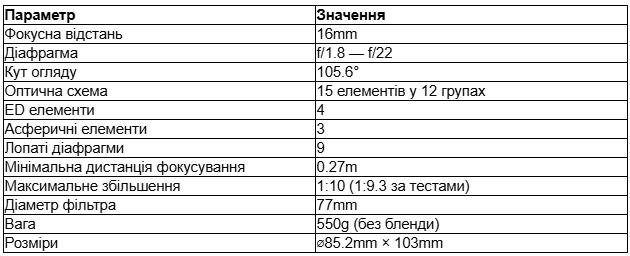
The 77mm filter thread is a major advantage. Unlike many ultra-wide-angle lenses with bulbous front elements, this lens supports standard circular filters.
This reduces costs—specialized filter systems can cost hundreds of euros—and simplifies field work.
Choose a Wide-Angle Lens at JustBuy
JustBuy offers photography and video equipment, making it a useful destination for anyone following the latest gear releases. You can explore available wide-angle lenses, cameras, and accessories for landscapes, interiors, video production, and creative projects.
When selecting a wide-angle lens, factors such as mount compatibility, aperture, size, autofocus performance, and shooting scenarios are important. JustBuy can help you compare options and build a kit tailored to your needs.
Looking for a Wide-Angle Lens?
JustBuy can help with:
Choosing the right wide-angle lens
Selecting compatible cameras and accessories
Comparing specifications and available bundles
Providing pre-purchase consultation
👉 Contact JustBuy to find the right lens for your shooting needs.
Autofocus and Focusing: Fast and Quiet
The lens uses an Advanced Lead-screw STM (Stepping Motor). According to independent tests, autofocus performance is both fast and accurate for still photography and video.
Viltrox implemented seamless switching between AF and MF using a dedicated physical switch on the lens barrel. The focus ring occupies approximately 30% of the lens body, providing comfortable manual control.
An important benefit for videographers is the lens’s minimal focus breathing (changes in angle of view while focusing), which is critical for professional video work.
Focus Testing on the Leica SL2
According to Macfilos (March 2026), testing on the Leica SL2 demonstrated reliable autofocus performance across various lighting conditions. Face and eye detection functioned correctly.
The minimum focusing distance of 0.27m enables creative compositions featuring prominent foreground elements, especially when shooting wide open at f/1.8.
Optical Performance: What the Tests Show
OpticalLimits published a detailed review of the Nikon Z version in May 2024. Although it uses a different mount, the optical design remains identical.
Sharpness
At f/1.8, the center of the frame delivers high sharpness suitable for professional use. Corner performance trails behind, but this is typical for ultra-wide-angle lenses at maximum aperture.
Stopping down to f/2.8 significantly improves sharpness across the frame. Peak performance is achieved around f/5.6.
Distortion
According to Macfilos (March 2026), measured barrel distortion is approximately −1.1% in uncorrected RAW images.
This is an exceptional result for a 16mm lens. Most modern wide-angle lenses rely heavily on software correction, whereas images from this lens remain highly usable even without it.
Vignetting
At f/1.8, light falloff reaches approximately 3 EV at the corners, which is noticeable. However, in-camera correction reduces this to roughly 1.2 EV, making it much more manageable.
At f/2.8 and smaller apertures, vignetting becomes minimal.
Coma and Chromatic Aberration
For astrophotography, controlling coma—the distortion of point light sources near the edges of the frame—is crucial.
The three aspherical elements effectively suppress coma. According to Phillip Reeve's testing (October 2024) of the Sony version, coma remains present in the corners but is significantly better controlled than in most budget ultra-wide-angle lenses.
The four ED elements also provide excellent chromatic aberration control. Purple fringing along high-contrast edges is virtually absent.
Build Quality and Ergonomics
Viltrox did not prioritize maximum compactness with this lens. Weighing 550g without the lens hood, it is fairly substantial for a prime lens.
The body is constructed entirely from metal and features dust- and moisture-resistant sealing. For photographers working in challenging conditions such as rain, snow, or rapidly changing temperatures, this is a significant advantage.
Controls and Features
The lens includes:
A wide textured focus ring occupying approximately 30% of the lens barrel
A central LCD display showing aperture and focusing distance information
An AF/MF switch along with two customizable Fn buttons
A de-click aperture switch designed for video recording
An aperture ring with smooth adjustment capability
A USB port for firmware updates
A petal-shaped lens hood is included and attaches via a bayonet mount.
Best Use Cases for This Lens
Astrophotography
The combination of a 16mm focal length, f/1.8 aperture, effective coma control, and minimal chromatic aberration makes this lens a natural choice for night sky photography.
According to Viltrox, the lens was specifically designed with astrophotographers in mind. Its ability to gather large amounts of light at f/1.8 is critical for capturing the Milky Way and other celestial subjects.
Landscape and Architectural Photography
The 105.6° angle of view allows photographers to capture expansive landscapes or fit large architectural structures into the frame even when shooting in confined spaces.
Effective distortion control helps keep vertical lines relatively straight, even before software correction is applied.
Video Production
Minimal focus breathing, a de-clickable aperture ring, a smooth focus ring, and a quiet STM motor make this lens particularly attractive for videographers.
Whether shooting vlogs, documentaries, or cinematic projects, the 16mm f/1.8 delivers dramatic perspective and strong low-light performance.
Street Photography
While 16mm may seem excessively wide for street photography, that extreme perspective can create a unique visual style. The ability to get close to subjects while preserving environmental context often produces compelling results.
Compatibility: Which Cameras Are Supported?
The Viltrox AF 16mm f/1.8 L is officially compatible with all full-frame and APS-C L-mount cameras.

On APS-C cameras, the effective focal length is approximately 24mm, making it a versatile wide-angle option for travel and documentary photography.
Alternatives: What Should You Compare It Against?
The ultra-wide-angle L-mount segment remains relatively limited, with only a handful of direct competitors.
Panasonic LUMIX S 14–28mm F4–5.6 MACRO
A professional-grade zoom lens offering a versatile focal range, weather sealing, and stabilization support.
The main drawback is its relatively slow maximum aperture of f/4, which is approximately 1.3 stops slower than the Viltrox.
Sigma 14-24mm F2.8 DG DN Art
A flagship zoom lens featuring a constant f/2.8 aperture and exceptional optical performance.
However, it costs over €1,300, weighs nearly 1kg, and lacks standard front filter threads.
Leica Summicron-SL 16-35mm f/2.8 ASPH
A benchmark lens in terms of quality, but also one with a premium price tag exceeding €3,000.
For most photographers, it simply falls outside a realistic budget.
The Viltrox occupies a unique position: a fixed 16mm focal length, bright f/1.8 aperture, respectable build quality, and a highly competitive price.
Drawbacks and Limitations
No lens is perfect, and the Viltrox 16mm f/1.8 L has several considerations worth noting.
Corner Sharpness at f/1.8
At maximum aperture, corner sharpness lags behind center performance. This is not a major issue for most applications, but photographers seeking edge-to-edge sharpness will want to stop down to f/2.8–f/4.
Vignetting
Approximately 3 EV of light falloff at f/1.8 is significant. While software correction helps, it can introduce additional noise in the corrected corner areas.
Weight and Size
At 550g, the lens is not particularly lightweight for a prime. On compact bodies such as the Sigma fp, the setup may feel front-heavy.
Availability
At the time of writing, there is no official Viltrox distributor in some regions, meaning purchases may require ordering from international retailers such as B&H or Amazon, or sourcing through independent sellers.
Final Verdict: Is It Worth Buying?
The Viltrox AF 16mm f/1.8 L is more than just another lens release—it represents a significant shift within the L-mount ecosystem.
For the first time, Leica, Panasonic, and Sigma users have access to an affordable ultra-wide-angle prime lens featuring a bright f/1.8 aperture, native autofocus, and solid build quality.
At its price point, it is not expected to outperform Leica’s reference-grade optics or Sigma’s top-tier Art series lenses.
However, for landscape photography, astrophotography, video production, and creative perspective work, it delivers capabilities typically associated with premium equipment while costing little more than a mid-range zoom lens.
If you own an L-mount camera and need a wide-angle lens that won't break the bank, the Viltrox 16mm f/1.8 L deserves serious consideration.
Frequently Asked Questions (FAQ)
Does the Viltrox 16mm f/1.8 L work with Leica SL cameras?
Yes. The lens is fully compatible with the Leica SL, SL2, SL2-S, and SL3. It uses the native L-mount communication protocol, providing autofocus support, face and eye detection, and EXIF data transmission. According to Macfilos testing (March 2026), autofocus performance on the Leica SL2 was stable and reliable.
How much does the Viltrox AF 16mm f/1.8 L cost?
The official retail price of the L-mount version is €599 according to the Viltrox website. Availability and final pricing may vary depending on local taxes, shipping costs, exchange rates, and retailer markups.
Can standard filters be used with this lens?
Yes, and this is one of the lens's major advantages. The Viltrox 16mm f/1.8 L features a standard 77mm filter thread. Unlike many ultra-wide-angle lenses with bulbous front elements, it does not require expensive specialized filter systems. Standard UV, polarizing, ND, and graduated filters can be used without issue.
How well does the lens perform for astrophotography?
Very well. The combination of a 16mm focal length, bright f/1.8 aperture, and effective coma control provided by the three aspherical elements makes it an excellent option for night sky photography. According to Phillip Reeve's testing, coma is present in the extreme corners but is significantly better controlled than in most budget-friendly alternatives. While premium Sigma and Leica lenses may still offer superior performance, the Viltrox is among the strongest options available at its price point.
Does the lens support Eye-AF on the Panasonic Lumix S5 II?
Yes. The Viltrox AF 16mm f/1.8 L fully supports face and eye detection on compatible L-mount cameras, including the entire Panasonic Lumix S lineup, such as the S1, S5, S5 II, S5 IIX, and S9. Because it uses the native L-Mount Alliance communication protocol, all major autofocus functions are supported.
Does the Viltrox 16mm have focus breathing issues for video?
No. One of the lens’s strongest features is its minimal focus breathing. According to both Viltrox and independent video reviews, changes in the angle of view during focus transitions are very small, making the lens well suited for professional video production. The de-clickable aperture ring and smooth manual focus operation further enhance its video capabilities.
What is the difference between the L-mount and Sony E-mount versions of this lens?
The optical design is identical across all versions, consisting of 15 elements in 12 groups, including 4 ED and 3 aspherical elements. The primary differences are the mount itself and the electronic communication protocol used by each camera system. Weight may vary slightly—typically by 5–10g—due to differences in mount construction. Optical performance, sharpness, aberration control, and image quality remain essentially the same across the L-mount, Sony E-mount, and Nikon Z-mount versions.