

Jackery Power Station for Home, Travel and Backup Power
February 19, 2026
Jackery has long been associated with portable autonomous power. These stations are often chosen for apartments, country houses, outdoor trips, and as a backup during power outages. The format is simple - a compact body, built-in battery, and 220 V outlets that allow you to connect regular appliances without adapters or complicated setups.
The brand's lineup is wide. There are lightweight models for laptops and lighting, and there are more serious stations that can already handle a refrigerator, boiler, or power tools. The difference is not only in capacity but also in the approach to usage - in some cases mobility is important, in others a power reserve for several hours of autonomous operation matters.
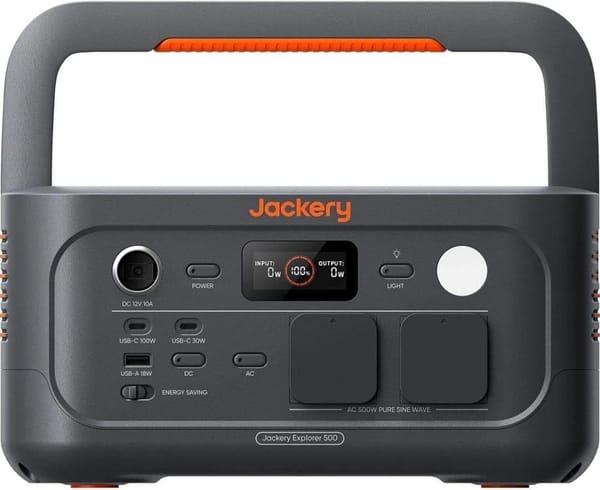
1. Jackery Explorer 500 V2
Jackery Explorer 500 V2 is suitable for basic backup power at home and on trips. The body is compact, with a carrying handle and a simple display. Two 230 V outlets allow you to connect main appliances, plus there are USB ports and a car outlet. Connection is straightforward - intuitive power-on, readable indicators.
The power is sufficient for a laptop, router, lighting, and other low-power devices. It uses a LiFePO4 battery with a high number of cycles. Charging is supported from the grid, car, and solar panels. It has a UPS function for automatic switchover to battery power during outages.
Key features:
Two AC 230 V outlets
USB Type-A and two USB Type-C
12 V car outlet
Support for charging from grid, car, and solar panel
Display for monitoring load and charge level
UPS function
Specifications:
Battery capacity: 512 Wh
Continuous power: 500 W
Battery type: LiFePO4
Device connection: via AC 230 V, USB Type-A/C, and car outlet
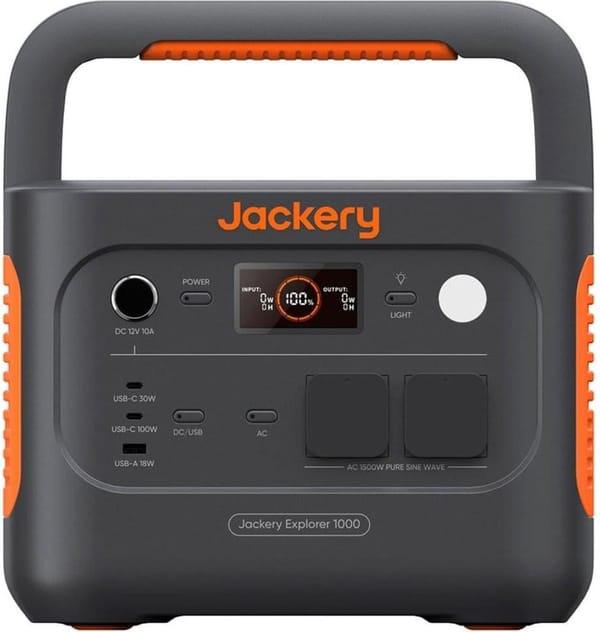
2. Jackery Explorer 1000 V2
Jackery Explorer 1000 V2 is designed for more serious loads. The body remains compact for its class, with a carrying handle and an informative screen. Two 230 V outlets allow connection of household appliances of low to medium power. There are USB ports for gadgets and a 12 V output for car devices.
The LiFePO4 battery is designed for frequent cycles. Charging is supported from the grid, solar panels, and car. The built-in protection system monitors voltage and temperature, while the UPS function ensures stable power during short outages.
Key features:
Two AC 230 V outlets
USB Type-A and two USB Type-C
12 V car output
Solar charging support
Informative display
UPS function
Specifications:
Battery capacity: 1070 Wh
Continuous power: 1500 W
Battery type: LiFePO4
Device connection: via AC 230 V, USB Type-A/C, and car outlet
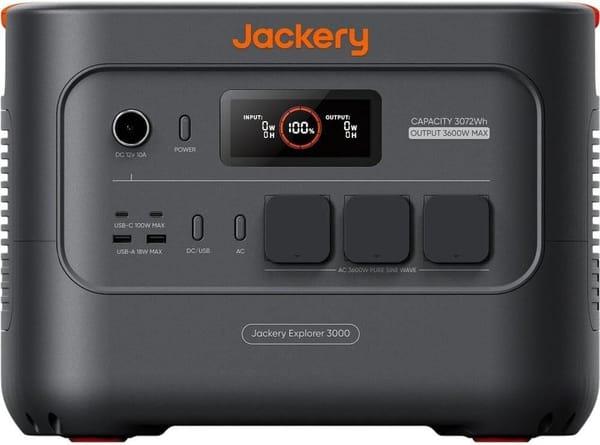
3. Jackery Explorer 3000 V2
Jackery Explorer 3000 V2 is designed for long-term autonomous power supply at home or on trips. The body is larger, with carrying handles and a screen displaying input and output power. Three 230 V outlets allow simultaneous connection of several devices.
The inverter delivers a pure sine wave and is designed for high loads. UPS mode, charging from the grid, car, and solar panels are supported. There is an option to connect an additional battery to increase energy reserve.
Key features:
Three AC 230 V outlets
USB Type-A and USB Type-C with fast charging support
12 V car outlet
Solar panel support
Option to connect an additional battery
UPS function
Specifications:
Battery capacity: 3072 Wh
Continuous power: 3600 W
Battery type: LiFePO4
Device connection: via AC 230 V, USB Type-A/C, and car outlet
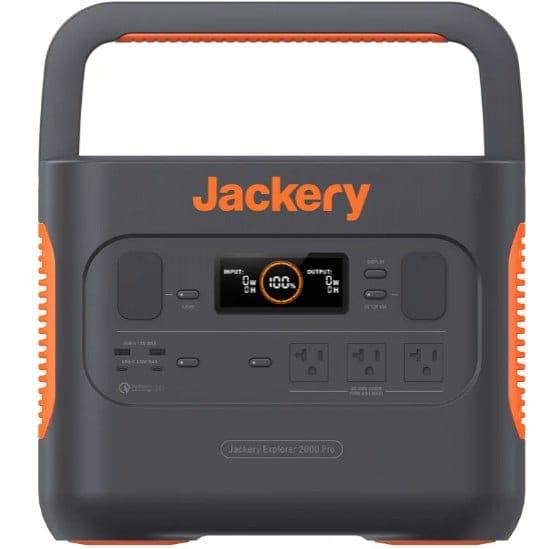
4. Jackery Explorer 2000 Pro
Jackery Explorer 2000 Pro is designed to power equipment with noticeable energy consumption. The body is large, with a carrying handle and a screen showing charge level and current load. Two 230 V outlets allow connection of household appliances, plus USB ports and a car outlet are provided. The format suits home, travel, or temporary off-grid use.
It uses a Li-ion NMC battery. Charging from the grid, car, and solar panels is supported. Pure sine wave output ensures stable power for sensitive equipment. The design is focused on simultaneous operation of multiple devices without complicated settings.
Key features:
Two AC 230 V outlets
Two USB Type-C and two USB Type-A
12 V car outlet
Support for charging from grid, car, and solar panels
Display for parameter monitoring
Pure sine wave output
Specifications:
Battery capacity: 2160 Wh
Continuous power: 2200 W
Battery type: Li-ion NMC
Device connection: via AC 230 V, USB Type-A/C, and car outlet
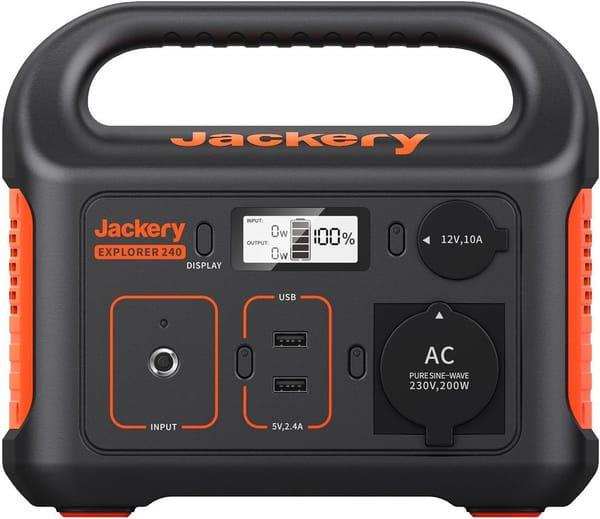
5. Jackery Explorer 240EU
Jackery Explorer 240EU is a compact and lightweight option for basic tasks. The body is small, with a handle and display. One 230 V outlet is suitable for low-power devices, plus there are USB ports and a car outlet. Connection is simple, without additional modes.
The power is enough to charge smartphones, a laptop, lighting, or a portable refrigerator. The Li-ion NMC battery is designed for a standard number of cycles. Charging is possible from the grid, car, and solar panel, which is convenient for travel use.
Key features:
One AC 230 V outlet
Two USB Type-A
12 V car outlet
Solar charging support
Display showing charge level
Compact format
Specifications:
Battery capacity: 240 Wh
Continuous power: 200 W
Battery type: Li-ion NMC
Device connection: via AC 230 V, USB Type-A, and car outlet
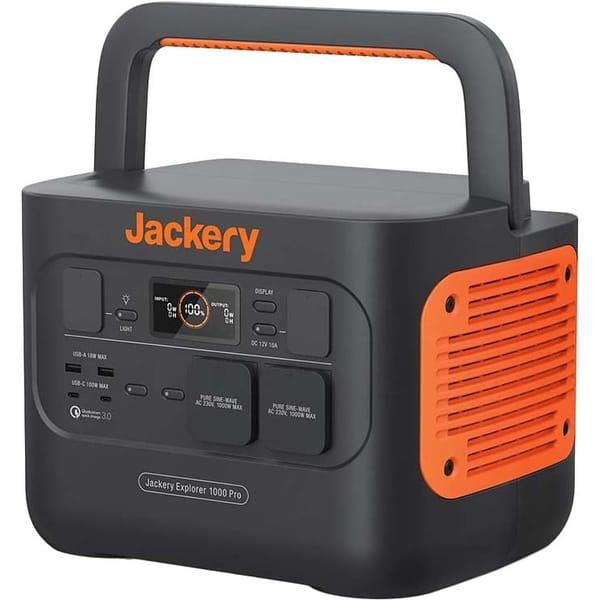
6. Jackery Explorer 1000 PRO
Jackery Explorer 1000 PRO is suitable for off-grid use at home or away from the grid. The medium-sized body has a carrying handle and a screen for monitoring parameters. Two 230 V outlets allow connection of household appliances, plus USB Type-A, USB Type-C, and a car outlet are available.
The battery uses Li-ion NMC technology. Charging from the grid, car, and solar panels is supported. Pure sine wave output ensures stable power for sensitive electronics. The format is oriented toward backup use and travel tasks.
Key features:
Two AC 230 V outlets
Two USB Type-C and two USB Type-A
12 V car outlet
Support for charging from grid, car, and solar panels
Display for operation monitoring
Pure sine wave output
Specifications:
Battery capacity: 1002 Wh
Continuous power: 1000 W
Battery type: Li-ion NMC
Device connection: via AC 230 V, USB Type-A/C, and car outlet
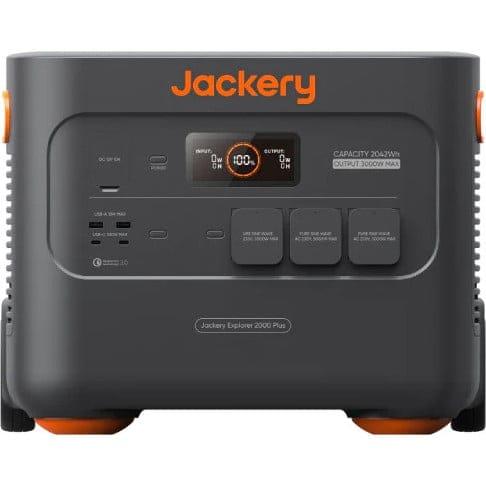
7. Jackery Explorer 2000 Plus
Jackery Explorer 2000 Plus is designed to power high-load equipment. The large body features a handle and wheels for movement, plus a display for parameter monitoring. Three 230 V outlets allow simultaneous connection of several devices, with additional USB ports and a car outlet available.
It uses a LiFePO4 battery with an extended cycle life. Charging from the grid and solar panel connection are supported. Pure sine wave output ensures stable operation of household appliances and electronics. The format suits home, workshop, or travel use when a significant energy reserve is needed.
Key features:
Three AC 230 V outlets
Two USB Type-C and two USB Type-A
12 V car outlet
Solar charging support
Display for parameter display
Wheels and handle for transportation
Pure sine wave output
Specifications:
Battery capacity: 2042.8 Wh
Continuous power: 3000 W
Battery type: LiFePO4
Device connection: via AC 230 V, USB Type-A/C, and car outlet
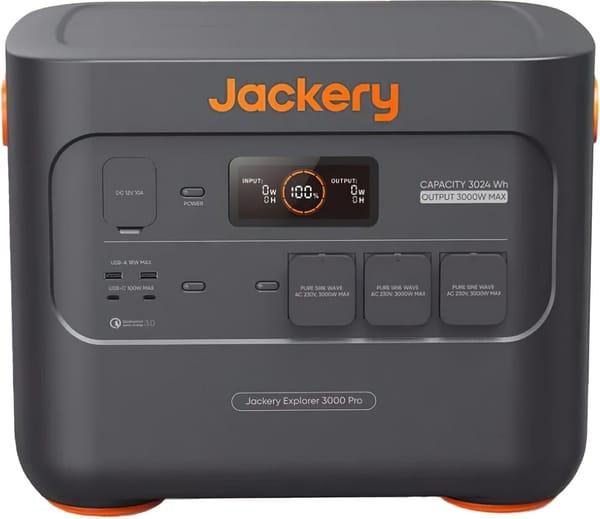
8. Jackery Explorer 3000 Pro
Jackery Explorer 3000 Pro is designed for long-term autonomous power supply at home or off-grid. The large body has a handle and wheels for easy movement. Three 230 V outlets allow simultaneous connection of household appliances and electronics. Additional USB Type-C, USB Type-A, and DC outputs are provided.
The battery uses Li-Ion technology. Charging from the grid, car, and solar panels is supported. It has a UPS function for backup power. The display shows main operating parameters, simplifying load and charge level monitoring.
Key features:
Three AC 230 V outlets
Two USB Type-C and two USB Type-A
Two DC outputs and car outlet
Solar charging support
UPS function
Display for parameter monitoring
Wheels for transportation
Specifications:
Battery capacity: 3024 Wh
Continuous power: 3000 W
Battery type: Li-Ion
Device connection: via AC 230 V, USB Type-A/C, DC, and car outlet
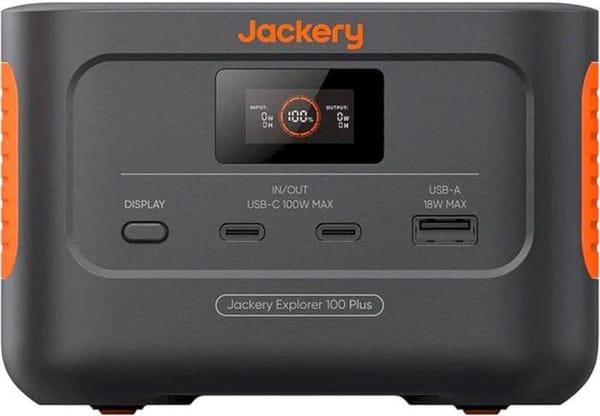
9. Jackery Explorer 100 Plus
Jackery Explorer 100 Plus is a compact option for charging gadgets. The small body features a display showing charge level. There are no 230 V outlets; power is supplied via USB Type-C and USB Type-A. The format is convenient for travel, working outside the office, or as an extra power source in a backpack.
It uses a LiFePO4 battery with a cycle life suited for regular use. Charging is possible via USB Type-C and with solar panel connection. Power Delivery protocol is supported for fast charging of compatible devices.
Key features:
Two USB Type-C
One USB Type-A
Power Delivery support
Solar panel connection option
Display for charge monitoring
Compact format
Specifications:
Battery capacity: 90 Wh
Continuous power: 128 W
Battery type: LiFePO4
Device connection: via USB Type-A and USB Type-C
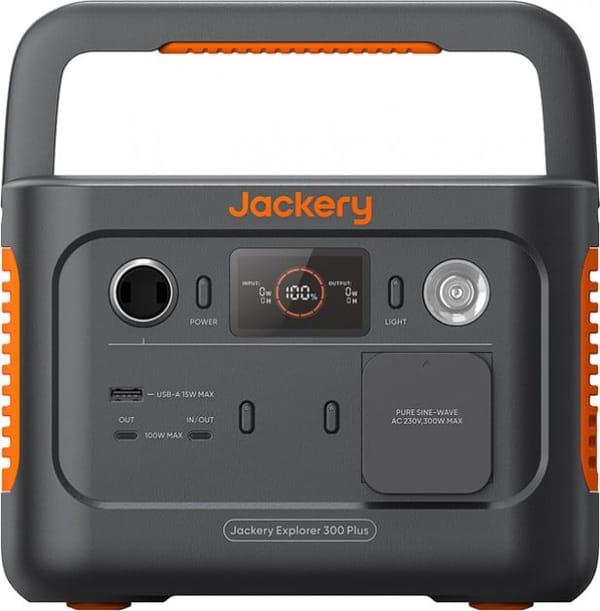
10. Jackery Explorer 300 Plus
Jackery Explorer 300 Plus is a compact option for home and travel. The lightweight body has a handle and display for charge level monitoring. One 230 V outlet suits low-power devices, plus USB Type-C, USB Type-A, and a car outlet are provided. Connection is straightforward, without complicated modes.
The battery uses LiFePO4 technology and is designed for long-term use. Charging from the grid, car, and solar panel is supported. Pure sine wave output ensures stable operation of connected devices. The format is convenient for travel use and backup power for small appliances.
Key features:
One AC 230 V outlet
Two USB Type-C with Power Delivery support
One USB Type-A
12 V car outlet
Solar charging support
Display for parameter monitoring
Built-in flashlight
Specifications:
Battery capacity: 288 Wh
Continuous power: 300 W
Battery type: LiFePO4
Device connection: via AC 230 V, USB Type-A/C, and car outlet
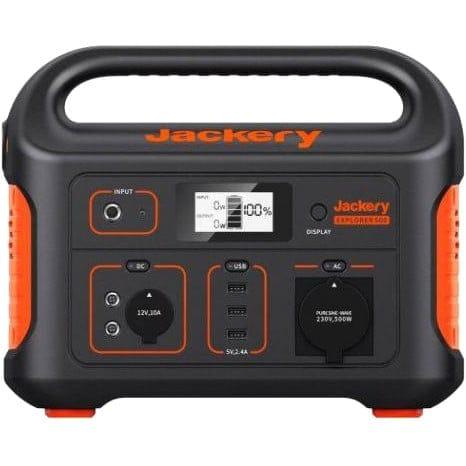
11. Jackery Explorer 500EU
Jackery Explorer 500EU is designed to power medium-power equipment. The compact body has a handle and display showing load and charge level. One 230 V outlet allows connection of household appliances, plus three USB Type-A ports and a car outlet are available.
It uses a Li-ion NMC battery. Charging from the grid, car, and solar panel is supported. Pure sine wave output ensures stable power for electronics. The format suits home, travel, and situations requiring an autonomous power source without complicated settings.
Key features:
One AC 230 V outlet
Three USB Type-A with fast charging support
12 V car outlet
Solar panel support
Display for parameter display
Pure sine wave output
Specifications:
Battery capacity: 518 Wh
Continuous power: 500 W
Battery type: Li-ion NMC
Device connection: via AC 230 V, USB Type-A, and car outlet
How to choose a Jackery power station
A power station is selected based on specific usage scenarios. Supporting a router and laptop during a blackout is one thing; powering a refrigerator, boiler, or tools is another. Power, battery capacity, and body format directly depend on the tasks.
Power
The first thing to look at is how many watts the connected equipment requires. For small electronics and lighting, a compact model will suffice. For household appliances or simultaneous operation of several devices, a station with a more serious power reserve is needed.
It is also important to consider peak load. Some appliances briefly consume more energy at startup than in normal mode.
Battery capacity
Capacity determines the duration of autonomous operation. A small capacity suits short interruptions. If a reserve for several hours or overnight is needed, choose models with a larger battery. It is better to focus on the actual runtime of the equipment rather than just the number in the specs.
Battery type
Jackery models use LiFePO4 and Li-ion NMC. LiFePO4 is designed for a higher number of cycles and suits regular use. Li-ion NMC is usually lighter and found in mobile formats. If the station will be used frequently, battery lifespan matters.
Ports and connections
The number of AC outlets and ports directly affects convenience. One outlet is enough for a single device. If simultaneous operation of several devices is planned, choose a model with multiple outputs.
USB Type-C is convenient for laptops and modern gadgets. A car outlet is useful for 12 V equipment.
Charging options
Most stations support charging from the grid, car, and solar panels. A regular outlet is sufficient at home. For travel or outdoor use, compatibility with solar panels is convenient.
Size and mobility
Compact models are easier to carry and store. More powerful stations are larger and heavier but provide greater energy reserves. The choice usually comes down to a balance between dimensions and required autonomy.
Conclusion
A Jackery power station is not about having a reserve "just in case" - it is about a clear energy backup for specific tasks. The lineup includes both compact models for gadgets and short outages and more powerful options for home, workshop, or travel use. The difference between them is not in the name but in real capabilities - power, capacity, and number of connections.
The approach is simple: first determine exactly what needs to be powered and for how long, then choose the model. When the parameters match the tasks, the station is neither overloaded nor sitting idle. This is a case where peace of mind is truly achieved through calculation, not excess.